
Supreme Court Releases Draft AI Rules For Courts; Lawyers Must Disclose Use Of AI In Pleadings
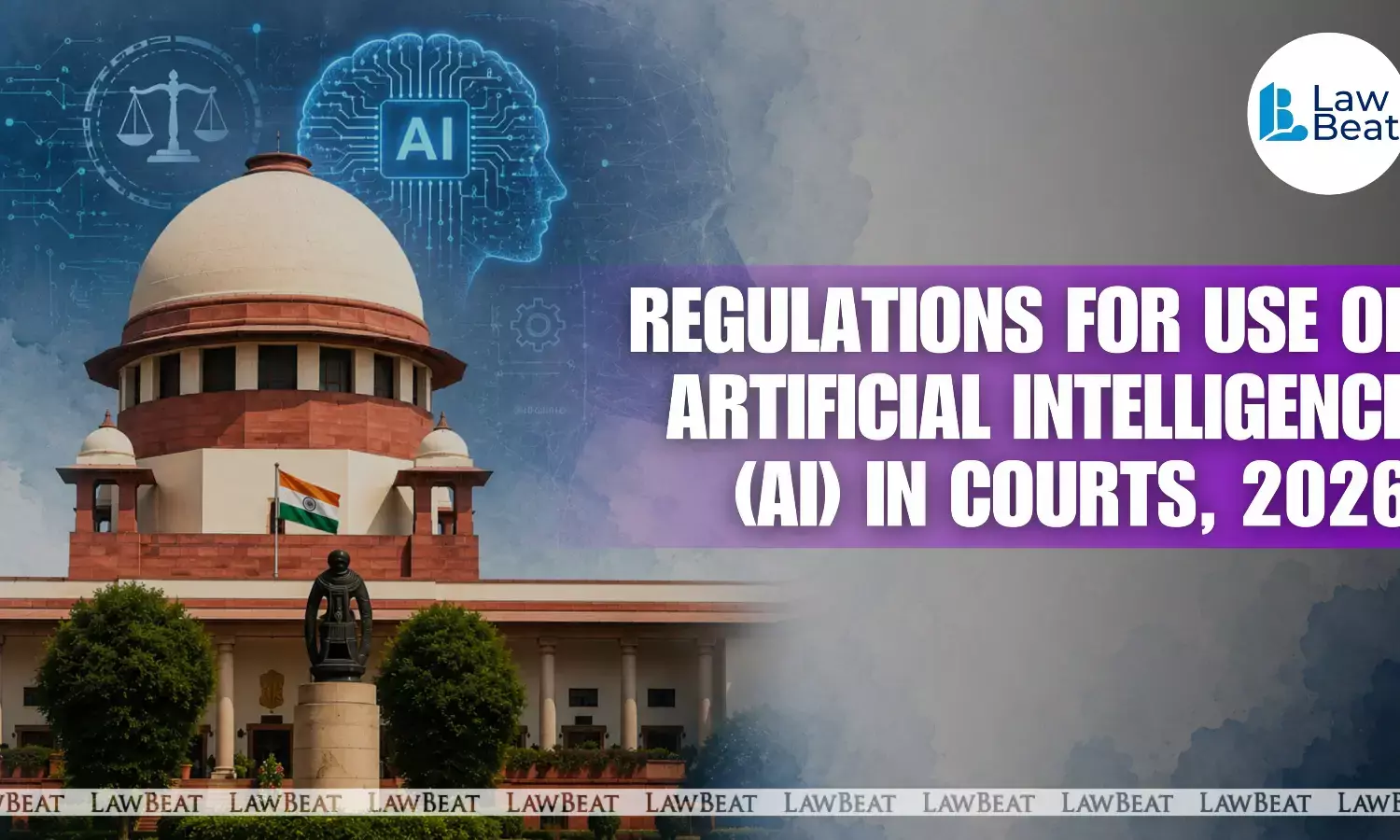
Supreme Court has released draft AI Regulations 2026, proposing a comprehensive framework for the use of artificial intelligence in courts while mandating human oversight and judicial accountability
In a significant step towards regulating the use of Artificial Intelligence (AI) in the justice delivery system, the Supreme Court on Wednesday released a comprehensive draft framework governing the use of AI across courts and tribunals in India, making it clear that while technology can assist the judiciary, it can never replace human judges.
The draft "Regulations for Use of Artificial Intelligence (AI) in Courts, 2026", prepared under the aegis of the Supreme Court's AI Committee, has been placed in the public domain for comments and suggestions until June 20, 2026.
One of the most notable features of the proposed framework is a mandatory disclosure requirement for lawyers and litigants who use AI tools while preparing pleadings, documents, submissions or evidence.
Under draft Regulation 43(3), any party or legal representative using AI in the preparation or submission of material before a court must disclose the AI-assisted nature of such material at the time of filing. Courts would also be empowered to seek details regarding the AI system used, the extent of assistance provided, and the verification measures adopted to ensure accuracy.
The regulations further make it clear that parties cannot evade responsibility by attributing mistakes to AI. If a pleading, document or piece of evidence is found to be false, fabricated, misleading or inaccurate because of AI-generated content, the person submitting it will bear full responsibility and cannot rely on the AI-generated nature of the material as a defence.
Human Judges remain supreme
At the heart of the draft regulations lies the principle of "human primacy."
The framework repeatedly emphasises that AI systems must function only in an assistive capacity and cannot substitute judicial decision-making. "Every AI System shall function solely in an assistive capacity and shall not supplant or compromise the independent exercise of judicial authority by a duly appointed judicial officer," the draft states.
Accordingly, AI tools cannot decide cases, determine judicial outcomes, pass sentences, assess witness credibility, decide bail eligibility or interfere with judicial deliberations. Accountability for judicial decisions will continue to rest exclusively with judges and court officials.
The regulations also recognise the phenomenon of AI "hallucinations"; instances where AI systems generate plausible but inaccurate or fabricated information. Such outputs would remain advisory in nature and require human verification before being relied upon.
What AI can be used for
The proposed framework permits the use of AI in a broad range of judicial and administrative functions aimed at improving efficiency and access to justice.
These include legal research, citation verification, document summarisation, translation of judgments and pleadings, automated transcription of court proceedings, drafting assistance, case management, cause-list preparation, hearing scheduling, record management, accessibility services for persons with disabilities and AI-powered assistance for litigants seeking information about court processes.
Draft Regulation 16 specifically states that courts should actively deploy AI tools that demonstrably improve access to justice, reduce delays and enhance administrative efficiency, provided they do not replace human decision-making or predict dispute outcomes.
The regulations even create a "presumption in favour of responsible AI adoption," signalling the judiciary's intent to embrace technological innovation while maintaining appropriate safeguards.
Strict Prohibitions
At the same time, the framework draws firm red lines around certain uses of AI.
Courts would be prohibited from using AI systems to predict future conduct of litigants, witnesses or accused persons. The use of AI-based risk scoring to assess recidivism, flight risk or bail eligibility is expressly barred.
The regulations also prohibit AI systems from evaluating witness credibility, conducting surveillance of judges, lawyers or litigants, interfering with judicial deliberations or employing opaque "black-box" algorithms in matters affecting rights or personal liberty.
Draft Regulation 20 specifically states that no AI system shall be used for the surveillance or continuous monitoring of judicial officers, advocates, litigants or any person connected with court proceedings.
New AI Governance Structure
To oversee implementation, the draft regulations propose the creation of a permanent Apex Body at the Supreme Court level comprising Supreme Court judges, Chief Justices and judges of High Courts, technology experts, cybersecurity specialists, finance experts, legal practitioners and government representatives.
The body would set national standards, approve AI systems, coordinate implementation across courts and publish annual governance reports.
The framework also envisages AI Committees and dedicated AI Secretariats in the Supreme Court and every High Court, alongside a proposed Centre of Research and Excellence on Artificial Intelligence (CoRE-AI) to evaluate AI tools and support judicial innovation.
Every AI system deployed in courts would be subject to annual technical, legal and ethical audits. Courts would also maintain AI Registers documenting approved tools, audit findings and AI-related incidents, while a dedicated AI Incident Database would track errors, bias, security breaches and system failures.
Data Protection and Vendor Restrictions
The proposed framework mandates compliance with the Digital Personal Data Protection Act, 2023 and imposes strict safeguards on judicial data. Personal data cannot be used to train or refine AI systems without approval, while sensitive judicial information would be subject to heightened protections.
Private technology vendors seeking to participate in court AI systems would require prior approval and would be bound by contractual obligations relating to data ownership, cybersecurity, audit rights and liability. Importantly, where AI tools are developed using court data or resources, courts would retain ownership or a perpetual royalty-free licence over such systems and their outputs.
The Supreme Court has invited stakeholders, legal professionals, technology experts and members of the public to submit comments on the draft regulations at email ID office.regcc@sci.nic.in by June 20, 2026, before the framework is finalised. The proposed rules, if adopted, would govern the use of AI across the Supreme Court, High Courts, subordinate courts, tribunals and statutory adjudicatory bodies throughout the country.