
Supreme Court Reserves Order On Centre’s Plea For Prospective Application Of OBC Creamy Layer Judgment
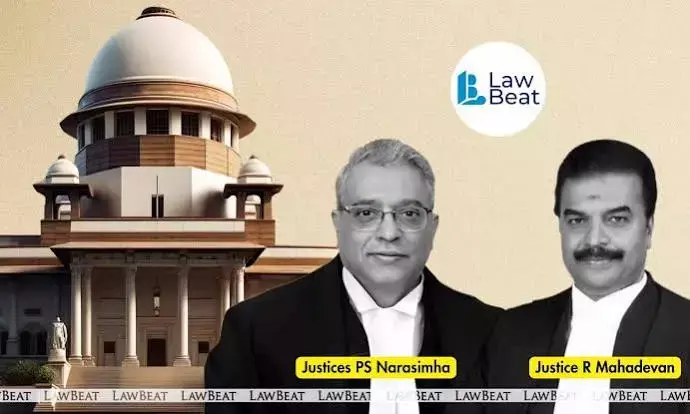
Supreme Court reserves order on Centre’s plea seeking prospective application of March 11 OBC creamy layer judgment
The Supreme Court on Thursday reserved its order on the Centre’s plea seeking prospective application of its March 11 judgment concerning determination of creamy layer status among Other Backward Class (OBC) candidates.
The Bench of Justices P.S. Narasimha and R. Mahadevan heard the application filed by the Union government seeking a two-year period to operationalise the judgment, which held that OBC candidates cannot be excluded from reservation benefits solely on the basis of their parents’ salary income where the relevant criteria require consideration of their occupational status.
Solicitor General Tushar Mehta and Additional Solicitor General Aishwarya Bhati appeared for the Centre.
The Centre submitted that it was not seeking a review of the March 11 judgment but only a limited deferral of its implementation for two years. It argued that the additional time was required to undertake an equivalence exercise for posts in Public Sector Undertakings (PSUs) and private employment with Group A and Group B government posts.
The Centre further submitted that immediate application of the judgment to past and ongoing recruitments could affect appointments, seniority and cadre allocation and result in what it described as “complete administrative chaos”.
During the hearing, the Bench noted that the March 11 judgment had already granted the authorities six months to implement the directions and questioned the Centre about the timing of its application, which was filed towards the end of August.
Bhati submitted that the Civil Services Examination recruitment rules for the previous and current years had already been issued and that some candidates were relying on the March judgment to seek enhanced allocation opportunities under the OBC reservation category.
The Centre also raised concerns about the impact of applying the judgment to candidates whose parents were employed in PSUs and private organisations, particularly where equivalence of their posts with government posts had not yet been determined.
The March 11 judgment arose from appeals filed by the Centre against orders of various High Courts concerning OBC candidates whose parents were employed in PSUs and other organisations.
In its judgment, the Supreme Court upheld the High Court orders directing reconsideration of the candidates’ claims under the 1993 Office Memorandum governing OBC creamy layer determination. The Court held that treating children of persons employed in PSUs or private employment as excluded from reservation benefits solely on the basis of salary income, without reference to their posts, could result in unequal treatment of similarly placed persons.
The Court had directed the authorities to implement the principles laid down in the judgment within six months.
The Centre’s application was opposed by the candidates who had benefited from the March judgment. Senior Advocates Basav Prabhu Patil, Sanjay Hegde and P. Wilson, along with Advocate Prateek Chadha, argued that the Centre’s plea effectively sought a review of the judgment and should not be entertained.
Earlier this month, the Supreme Court had declined to stay the March judgment while issuing notice on the Centre’s application, observing that the question of prospective application would be considered after hearing the parties.
The Court has now reserved its order on the Centre’s plea.
Background
In March the Supreme Court had said that the purpose of excluding the “creamy layer” from OBC reservation is to ensure that socially advanced sections within the Other Backward Classes do not take away benefits meant for genuinely backward groups, and not to create artificial distinctions between people who are otherwise similarly placed.
In its application before the Supreme Court, the government has argued that the March 11 judgment “altering settled position” on creamy layer criteria was delivered five days after the final result of CSE-2025 had already been declared. It has said that CSE-2025 “stood substantially concluded prior to the pronouncement of the judgment” and is presently at the “terminal stage of service allocation”.
The Centre has further argued that a “mechanical or unqualified application of the ratio of the said judgment, with retrospective effect, to the already-concluded selection process of CSE-2025” would create “a peculiar and acute anomaly amounting to discrimination inter se candidates of the very examination cycle sought to be benefited”.
In the impugned decision, a Bench of Justices PS Narasimha and R Mahadevan upheld judgments of the Delhi, Madras and Kerala high courts, which had held that treating employees of private entities and PSUs differently from Government employees and their children for deciding reservation benefits would amount to hostile discrimination.
Court was hearing a batch of appeals filed by the Union government against high court judgments that had directed successful OBC candidates in the Civil Services Examination to be treated as falling within the non-creamy layer category. The bench held that deciding creamy layer status solely on the basis of income, without considering the categories of posts and status parameters laid down in the 1993 Office Memorandum (OM), is legally unsustainable.
It further said that giving excessive importance to a 2004 clarification letter, to the extent that income alone becomes the deciding factor without considering the parents’ status or category of service, would defeat the framework of exclusion envisaged under the 1993 OM. To be noted, the 1993 OM is the central policy document issued by the Union government on September 8, 1993 for identifying the “creamy layer” among OBCs and excluding them from reservation benefits. It was issued following the Supreme Court’s ruling in the case of Indra Sawhney v. Union of India and others.
The 2004 letter was a clarification issued on October 14, 2004 by the Department of Personnel and Training (DoPT), working under Ministry of Personnel, Public Grievances and Pensions, regarding application of the creamy layer test where equivalence of PSU/private sector posts with government posts had not been determined. “Mere determination of the status of a candidate as to whether he/she falls within the creamy layer or the non-creamy layer of the OBCs cannot be decided solely on the basis of the income,” the Bench observed in the present matter.
Court said a combined reading of the 1993 OM and the October 14, 2004 clarification letter makes it clear that salary income alone cannot determine whether a candidate falls within the creamy layer. According to the Bench, the status and category of the posts held by a candidate’s parents are also important factors. It explained that exclusion under Categories I to III of the Schedule is based on status rather than purely on income, since advancement in the government service hierarchy is considered a sign of social progression, irrespective of fluctuating salary levels.
“The evolution of the non-creamy layer principle demonstrates that the 1993 OM read with the 2004 Letter, preserves the primacy of status based exclusion and confines economic exclusion to the structured parameters of Category VI. Salary income cannot be mechanically aggregated in a manner that defeats the constitutional objective articulated in Indra Sawhney,” Court said. The Bench also reiterated that any classification under Article 14 of the Constitution must satisfy two conditions: there must be a clear distinction between groups, and that distinction must have a rational connection with the objective sought to be achieved. “If similarly situated persons are subjected to differential treatment without a constitutionally sustainable basis, such action would fall foul of Article 14,” Court had said.
Case Title: Union of India v. Rohith Nathan and Anr. etc
Bench: Justices PS Narasimha and R Mahadevan
Hearing Date: September 24, 2026