
Supreme Court Reserves Verdict on Justice Yashwant Varma’s Plea Against Parliamentary Committee
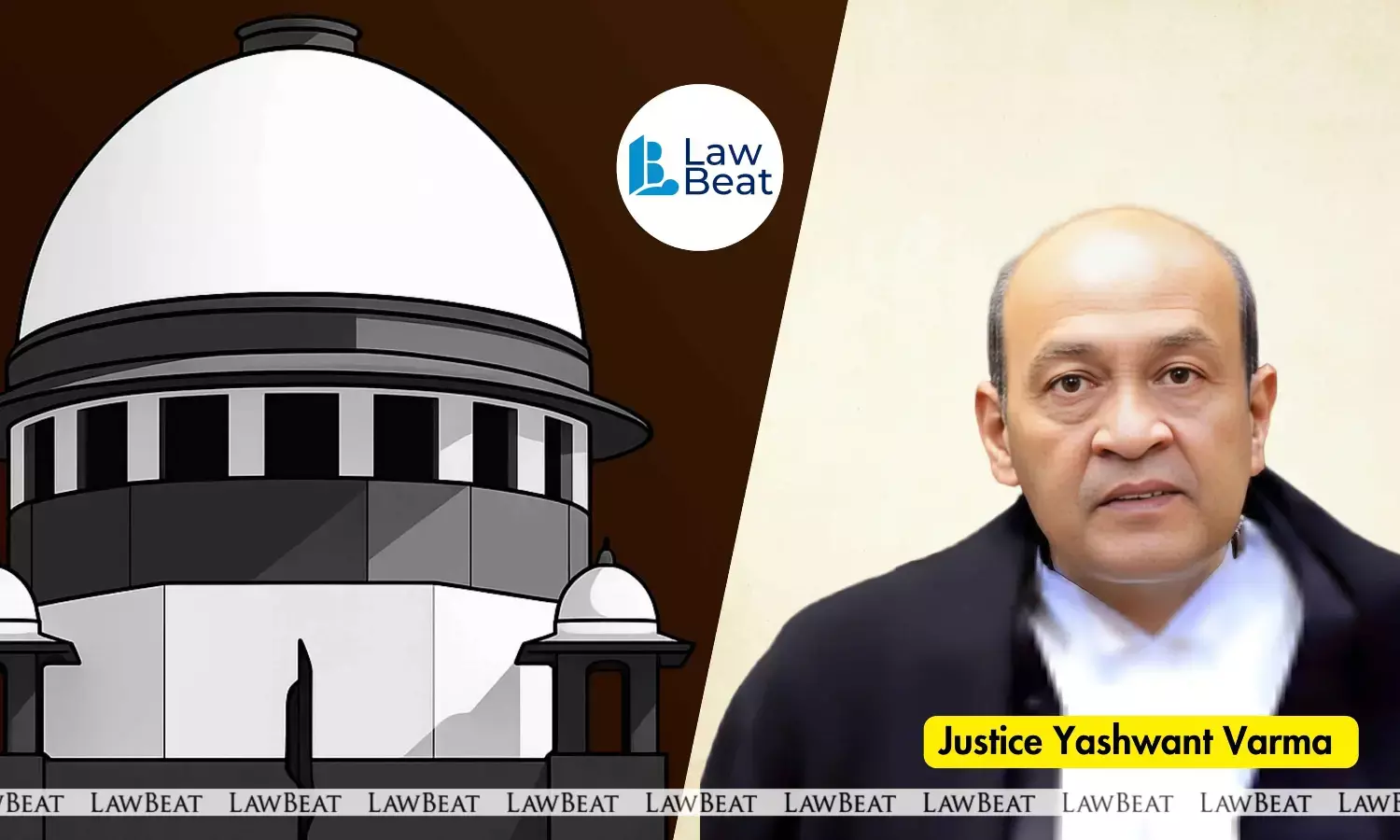
Supreme Court reserved judgment on Justice Yashwant Varma’s plea challenging the legality of the Parliamentary Committee probing alleged cash recovery from his official residence
The Supreme Court on Thursday reserved judgment on a writ petition filed by Justice Yashwant Varma challenging the legality of the Parliamentary Committee constituted under the Judges (Inquiry) Act, 1968, to probe the alleged recovery of unaccounted cash from his official residence.
The Bench of Justices Dipankar Datta and Satish Chandra Sharma continued hearing the matter a day after being informed that the impeachment motion against Justice Varma had been rejected by the Deputy Chairman of the Rajya Sabha.
Senior Advocate Sidharth Luthra, appearing for Justice Varma, argued that two identical motions based on the same facts and allegations were initiated simultaneously in the Lok Sabha and the Rajya Sabha, raising a serious constitutional question on whether co-equal Houses of Parliament could allow such proceedings to meet different fates.
Luthra strongly criticised the rejection by the Deputy Chairman, contending that it was done mechanically without application of mind. He pointed to the Secretary General’s note forming the basis of the decision, arguing that the Deputy Chairman had merely signed off on it without independent consideration. Referring to Articles 124(4) and 124(5) of the Constitution, Luthra submitted that the power to deal with impeachment proceedings was exclusively governed by the constitutional scheme and the Judges (Inquiry) Act, leaving no room for substitution by other constitutional provisions.
Justice Datta, however, questioned whether such an interpretation would create a constitutional vacuum, particularly in situations where the Chairman of the Rajya Sabha was absent or the office was vacant. He observed that the law could not be interpreted in a manner that paralysed constitutional functioning.
Senior Advocate Mukul Rohatgi, also representing Justice Varma, argued that Article 91, which deals with the powers of the Deputy Chairman, had no application to impeachment proceedings. He maintained that the removal of a judge was a “special business” under Article 124(5), distinct from the normal functioning of Parliament. Rohatgi warned that permitting the Deputy Chairman to act could lead to conflicts of interest, especially if the Deputy Chairman or a person appointed to preside over the House happened to be a signatory to the impeachment motion.
Rohatgi described the role of the Chairman as that of a neutral constitutional arbiter, akin to a judge, stressing that neutrality was critical at every stage of the impeachment process. He also took strong exception to the Secretary General’s note, calling it procedurally flawed and arguing that it effectively amounted to a “judgment” authored by an authority not contemplated under the Constitution or the Act.
Responding for the two houses of parliament, Solicitor General Tushar Mehta defended the process, submitting that the Judges (Inquiry) Act aimed to avoid anomalous situations such as multiple committees examining the same allegations. He argued that the proviso to the Act did not confer any vested right on the judge concerned and that admission of a motion was not automatic. According to Mehta, the Speaker or Chairman was required to apply their mind after examining the available material.
Mehta warned that excluding the Deputy Chairman from exercising powers in the Chairman’s absence would render the statutory scheme unworkable and defeat the object of the Act. He emphasised that the law sought to balance judicial independence with parliamentary accountability, and any interpretation that crippled the mechanism for inquiry had to be avoided.
The Bench repeatedly underscored the need to ensure that there was no constitutional stalemate and questioned whether the petitioner had demonstrated any real or grave prejudice caused by the procedure adopted. Justice Datta noted that constitutional institutions could not be left in limbo merely because of a temporary vacancy.
After extensive arguments the Court reserved its judgment.
According to the petition, while both motions satisfied the statutory requirement of being signed by the requisite number of Members of Parliament, only the Lok Sabha motion was admitted. On August 12, 2025, the Speaker of the Lok Sabha admitted the motion and proceeded to constitute a three-member inquiry committee. The motion in the Rajya Sabha, however, was never admitted.
Case Title: X v. O/O Speaker of the House of the People
Bench: Justices Dipankar Datta and Satish Chandra Sharma
Hearing Date: January 8, 2026