
Supreme Court Stays Key Part Of Delhi HC Ruling On Law Students’ Attendance, Calls It “Legislating Literally”
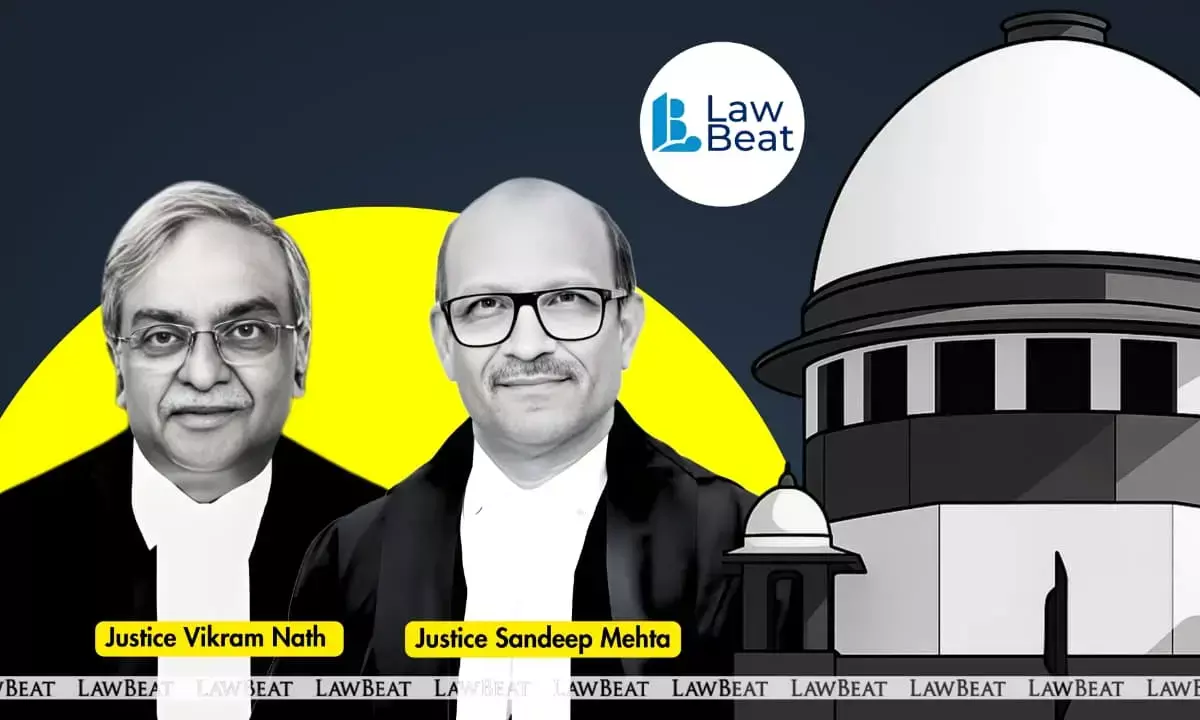
Supreme Court stayed a key part of the Delhi High Court ruling on law students’ attendance norms
The Supreme Court on Tuesday stayed a crucial portion of a Delhi High Court judgment which had held that law students cannot be barred from appearing in examinations solely on the ground of shortage of attendance.
The Bench of Justices Vikram Nath and Sandeep Mehta was hearing a batch of pleas challenging the High Court ruling, including petitions concerning mandatory attendance requirements in law colleges and National Law Universities.
The matter arises from a November 2025 Delhi High Court ruling which had held that no student enrolled in a recognised law college or university can be debarred from examinations or academic progression only on the ground of insufficient attendance. That judgment stemmed from proceedings connected to the suicide of a law student in a case that had triggered broader institutional scrutiny over attendance norms in legal education.
During the hearing today, the Court questioned the delay by the Bar Council of India (BCI) in approaching the apex court, noting that earlier petitions had been filed by private individuals and not by the statutory body itself. “All the NLUs are suffering. No student wants mandatory attendance. Even those who have passed out are supporting the students,” the Bench observed while issuing notice in the matter.
One of the petitioners, Prakruthi Jain, also challenged the use of biometric attendance systems in law colleges, arguing that there were no adequate safeguards regarding protection and handling of students’ biometric data and that the process would be outsourced to private intermediaries.
The Court, however, clarified that no final view had yet been taken on the issue and said educational institutions would be given an opportunity to respond.
Senior Advocate Mukul Rohatgi, appearing in the matter, argued that the Delhi High Court judgment effectively rewarded indiscipline among students who were avoiding classes.
In response, the Bench asked whether the High Court judgment actually conferred any right upon students to abstain from attending colleges.
The Court also remarked that “the High Court has legislated literally” while passing the impugned ruling.
Issuing notice returnable on July 21, the Supreme Court ordered that the operation of paragraph 249 of the Delhi High Court judgment shall remain stayed prospectively. It further clarified that High Courts dealing with similar attendance-related disputes would remain free to pass appropriate orders in pending cases.
The matter will next be heard on July 21.
The petition filed by NMIMS through AoR Kanu Agrawal contends that the High Court judgment undermines the regulatory framework governing legal education under Rule 12 of the BCI Rules on Legal Education, 2008, which prescribes a minimum 70 per cent attendance requirement with limited relaxation in exceptional cases. The university argued that classroom instruction remains central to legal training, particularly in integrated five-year law programmes where students enter directly after school. It stressed that co-curricular activities such as moot courts, internships and seminars, while important, cannot replace structured classroom teaching.
On the regulatory side, the petition argued that Rule 12, framed under the Advocates Act, 1961, is valid delegated legislation and can only be struck down on limited constitutional grounds. It further cautioned that removing attendance thresholds would create inconsistency and make enforcement of academic discipline difficult across institutions.
The plea also highlighted what it described as a “floodgate effect” of litigation following the High Court ruling, with multiple students approaching courts to bypass attendance requirements. It argued that such an outcome undermines institutional autonomy and destabilises the structure of legal education.
At the same time, NMIMS contended that judicial directions cannot rewrite or dilute regulatory thresholds fixed by expert bodies like the BCI, and that courts should defer to such specialised regulators on academic standards.
Case Title: Prakruthi Jain v. BCI, Keyur Akkiraju v. BCI and SVKM's Narsee Monjee Institute of Management Studies v. Bar Council of India
Bench: Justices Vikram Nath and Sandeep Mehta
Hearing Date: May 26, 2026