
Supreme Court Tells State Governments: Cannot Decline Raising District Judges' Retirement Age Due To Financial Burden
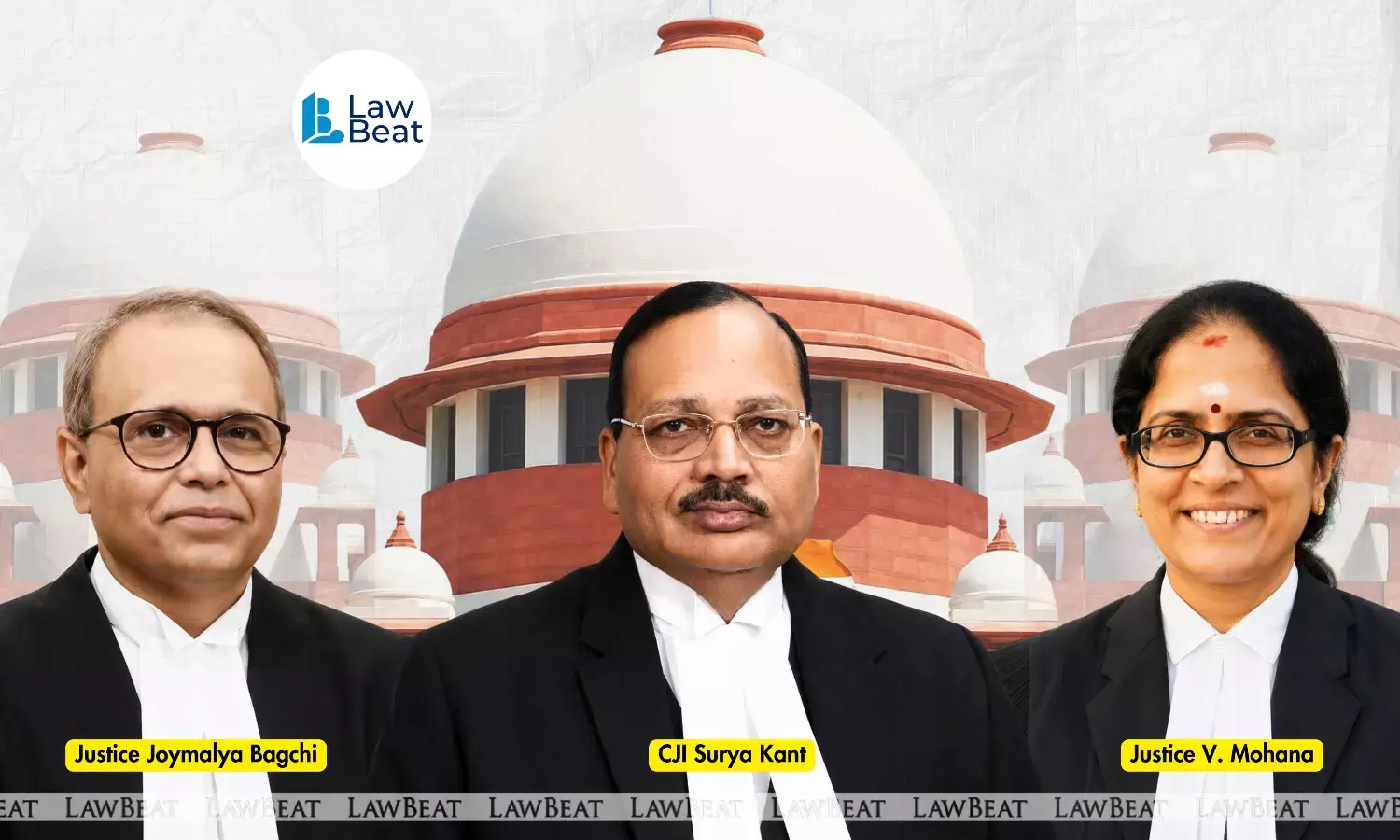
The Supreme Court directed States and Union Territories to consult their respective High Courts on enhancing the retirement age of District Judges to 61 years, while reserving the question of a uniform retirement age of 62
The Supreme Court has made it clear to the State governments that they cannot cite financial burdens to oppose raising the retirement age of judicial officers.
A Bench of Chief Justice of India Surya Kant, Justice Joymalya Bagchi and Justice V Mohana has directed various States to urgently reconsider their opposition and said, "The reasons assigned by the different State governments for declining to enhance the age of retirement of judicial officers on the ground of additional financial burden appear to be misconceived".
States have been urged to take an independent and pragmatic decision on enhancing the retirement age of judicial officers, preferably within two weeks, irrespective of the retirement age applicable to other government employees.
"We have no reason to doubt that the continuation of experienced and seasoned judicial officers would entail a lesser financial liability than what the State would incur upon their retirement," the Court added.
On July 22, the Supreme Court had directed all States and Union Territories to take a decision, in consultation with their respective High Courts, on enhancing the retirement age of District Judges to 61 years, while indicating that it would soon decide whether the age of superannuation should be uniformly fixed at 62 years across the country.
The Bench was hearing the long-pending All India Judges Association matter, which is examining, among other issues, whether the retirement age of members of the district judiciary should be enhanced to 62 years on a pan-India basis, irrespective of any opposition from States, Union Territories or High Courts.
The Court had modified its earlier interim order and held that District Judges due to retire at the age of 60 may continue in service up to the age of 61, provided the concerned State or Union Territory and the respective High Court agree to enhance the retirement age. Issuing interim directions, the bench observed: "Meanwhile, all States/UTs are directed to take a decision in consultation with High Courts on this issue and in case they so agree, members of district judiciary in such States should be allowed to continue till 61 years, subject to final outcome of these petitions."
The Court clarified that its earlier order granting unconditional continuation beyond 60 years stood modified. "Earlier interim order granting unconditional continuation is modified. Officers are allowed to continue beyond 60 years only if States/UTs and High Courts are in concurrence. In case States/UTs and High Courts decide to enhance the retirement age, such enhancement shall take effect from 01.04.2026."
During the hearing, the bench had also indicated that it intended to decide the larger issue of a uniform retirement age for District Judges at the earliest. Referring to the Court's earlier rejection of pleas seeking enhancement of the retirement age to 62 years on the ground that High Court judges retire at 62 and a hierarchical distinction ought to be maintained, CJI Surya Kant remarked: "If district judge also retires at 62, what's the issue?"
The Court has noted that while it had earlier declined to accept the recommendations of the Justice Shetty Commission to increase the retirement age of District Judges to 62 years, a subsequent three-judge bench had also refrained from expressing any opinion as the Second National Judicial Pay Commission had made no recommendation on the issue.
The bench further recorded that several States have since enhanced the retirement age of government employees to 62 years. It also took note of developments in Madhya Pradesh, where the State Government had agreed to increase the retirement age of judicial officers to 62 years, but the High Court had withheld its approval in view of the Supreme Court's 2022 judgment.
The issue was later brought before the Supreme Court by judicial officers from Madhya Pradesh, leading to the Court's May 2025 clarification that there was no legal impediment to increasing the retirement age to 61 years. During Wednesday's hearing, counsel appearing for the Madhya Pradesh High Court submitted a sealed cover report informing the bench that its Full Court had resolved to enhance the retirement age of District Judges to 62 years. Telangana was also stated to have taken a similar decision.
However, States including Punjab and Haryana opposed the proposal, contending that the retirement age of government employees in their jurisdictions remained 60 years or below. Considering the need for an expeditious resolution, the Court directed all States, Union Territories and High Courts to file their affidavits within two weeks.
The affidavits were to be furnished to Amicus Curiae, Senior Advocate Siddharth Bhatnagar, who was directed to collate the responses and place them before the Court. The bench clarified that States and High Courts supporting enhancement of the retirement age to 61 or 62 years need not file detailed affidavits, while those opposing the proposal may file counter-affidavits within the stipulated time.
Case Title: All India Judges Association and Ors. v. Union of India and Ors.
Bench: Chief Justice Surya Kant, Justice Joymalya Bagchi and Justice V Mohana
Hearing Date: August 5, 2026