
Supreme Court To Hear "Serious Issue" Of Children's Exploitation At Dance Bars, Nautanki Performances, Massage Parlors
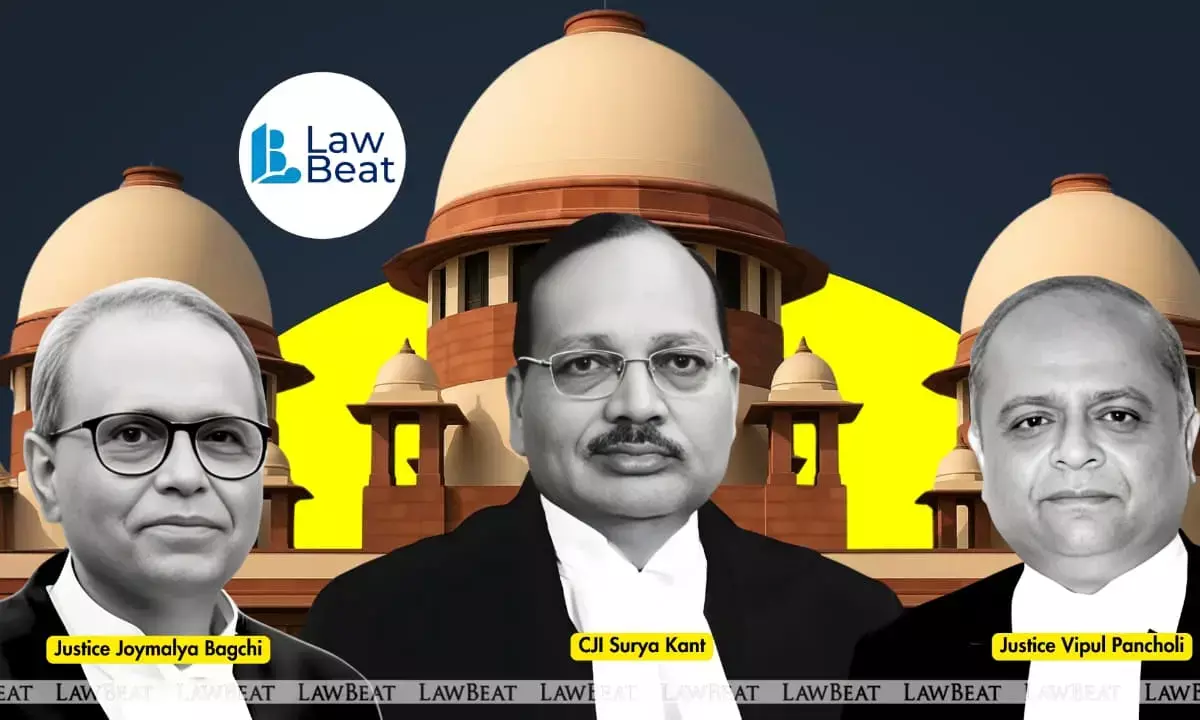
Supreme Court hears plea to expand the list of occupations where child employment is absolutely prohibited.
The Supreme Court today issued notice in a petition raising question of grave constitutional importance concerning the continuing, systematic, and organised trafficking, sexual exploitation, and forced labour of children below the age of eighteen years, particularly minor girls.
Senior Advocate HS Phoolka today appearing before a CJI Surya Kant led bench in a petition against children being coerced and compelled to work in exploitative situations and/or hazardous conditions in orchestras, dance bars, dance troupes, nautanki performances, massage parlours, spas, and salons operating across the territory of India, grossly violating their fundamental rights guaranteed under Articles 14, 15(3), 21, 23, and 24 of the Constitution of India.
A bench comprising Chief Justice of India Surya Kant, Justice Joymalya Bagchi and Justice Vipul Pancholi has issued notice in a PIL filed by Just Rights for Children Alliance.
The petition arises from a critical legislative omission under the Child and Adolescent Labour (Prohibition and Regulation) Act, 1986 (CALPRA). Court has been told, "Whereas the Act, as amended by the Amendment Act of 2016, prohibits the employment of children below the age of 18 years in hazardous occupations or processes listed in Part A of its Schedule, several sectors that have demonstrably evolved into organised sites of child trafficking, sexual exploitation, and abuse, namely, orchestras, dance bars, dance troupes, nautanki performances, massage parlours, spas, and salons, remain unlisted and excluded. The continuing exclusion of such establishments and activities from the category of hazardous occupations under CALPRA has created a serious enforcement vacuum, enabling organised trafficking networks and exploitative establishments to operate under the guise of entertainment and wellness services. In the absence of an express statutory prohibition, children rescued from such establishments remain vulnerable to re-trafficking and repeated exploitation."
It has accordingly sought appropriate directions directing the Central Government, to exercise its powers under Section 4 of the Child and Adolescent Labour (Prohibition and Regulation) Act, 1986, to include the employment or performance of children below 18 years in orchestras, dance bars, dance troupes, nautanki performances, massage parlours, spas, and salons, or any similar establishments that depict children in obscene or exploitative manner in Part A of the Schedule to CALPRA, thereby categorically prohibiting such employment.
Arguing that minors, especially girls, are routinely trafficked, criminally confined, subjected to coercion, criminal intimidation, debt bondage, and are compelled to perform sexually explicit, obscene, and exploitative acts for commercial gain, exposing them to grave physical, psychological, and sexual harm, the plea states, "Between March 2025 and May 2026, rescue operations were conducted at the Petitioner’s initiative, in coordination with its partner organisations and police authorities, across the States of Bihar, West Bengal, Rajasthan, and Delhi. These operations resulted in the rescue of 212 minors from orchestras and 12 minors from massage parlours and spas. The rescued children, aged between 10 and 18 years, were trafficked interstate from West Bengal, Jharkhand, Uttar Pradesh, Assam, Chhattisgarh, as well as cross-border from Nepal, and other regions, and were subjected to systematic and repeated commercial sexual exploitation".
The plea filed through AOR Sonal Jain further highlights that children, often between 10 and 16 years of age, are lured and recruited from impoverished, tribal, and marginalized communities through deception and promises of employment, glamour, dance training, marriage, or economic upliftment.
"Once entrapped, these minors are subjected to forced performances in sexually provocative attire, compelled to dance to obscene music before intoxicated audiences, and exposed to extreme violence, including molestation, rape, intimidation, and, at times, violence using weapons. Multiple reports document that such performances routinely serve as a direct precursor to forced prostitution, sale into brothels, or coerced marriage, revealing a continuum of exploitation rather than isolated incidents of abuse," top court has been told.
The plea thus seeks formulation of a Standard Operating Procedure for the rescue and rehabilitation of children that have been engaged and employed in orchestras, dance bars, dance troupes, nautanki performances and all allied establishments operating under the guise of entertainment, as well as massage parlours, spas, and salons, by whatever name called.
Case Title: Just Rights for Children Alliance vs. Union of India & Ors.
Bench: CJI Kant, Justice Bagchi and Justice Pancholi
Hearing Date: May 25, 2026