
Supreme Court To Judges: Do Not Impose Personal Morality While Deciding Bail, Criminal Trials
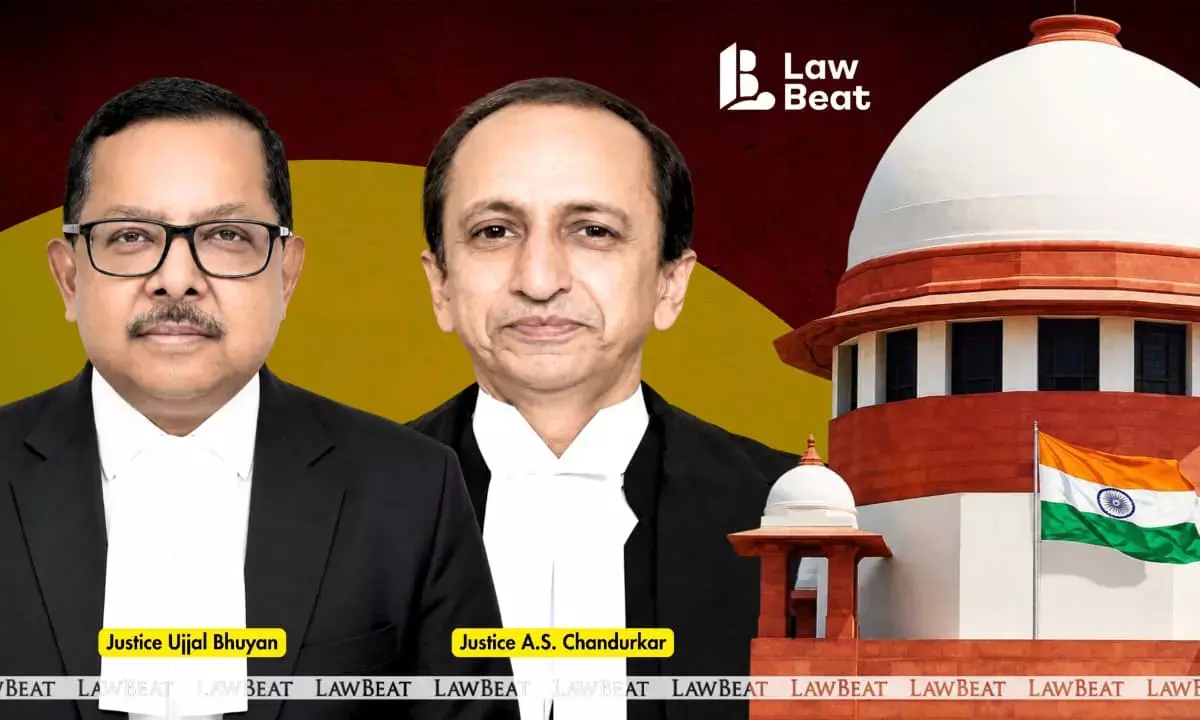
Supreme Court has said courts must refrain from imposing their personal views or value judgments in orders.
The Supreme Court has held that courts should refrain from imposing the personal views or value judgments of the presiding judge on morality while adjudicating bail applications or even criminal trials.
A Bench of Justices Ujjal Bhuyan and Atul S. Chandurkar made the observation while allowing an appeal filed by Kanha @ Kanhaiya Singh against an order of the Madhya Pradesh High Court at Indore, which had rejected his regular bail application.
The accused before court was charged with offences under provisions of the Bharatiya Nyaya Sanhita, 2023, the Protection of Children from Sexual Offences Act, 2012, and the Scheduled Castes and Scheduled Tribes (Prevention of Atrocities) Act, 1989.
According to the prosecution, the appellant was a tenant residing in the neighbourhood of the victim. The accusation was that, despite being married, he had attempted to abduct the victim’s elder sister, following which another crime was registered. The victim subsequently informed her mother that the appellant had sexually exploited her for about a month, resulting in registration of the present case.
The appellant-accused had been in custody since September 10, 2025. Before the Supreme Court, his counsel argued that the present case was a fallout of his relationship with the victim’s elder sister and that the case had been registered to harass him.
State opposed bail, pointing out that the prosecutrix was a minor and that the allegations were serious. It also submitted that the prosecution proposed to examine 15 witnesses, of whom five had already been examined.
The Supreme Court, however, took particular note of the reasoning adopted by the High Court in refusing bail.
“From a perusal of the impugned order, we find that the High Court declined to grant bail to the appellant, taking the view that granting of bail may have ramifications on the social order and the ‘morals’ of the victim’s family,” the Court noted.
The Bench then made a significant observation on the role of judicial discretion in criminal proceedings. “We are of the view that Courts should refrain from imposing the personal views or value judgment of the Presiding Judge on morality or otherwise while adjudicating a matter relating to bail, or even a criminal trial of an accused,” the Court held.
On the facts of the case, the Court noted that the appellant had already undergone more than one year of incarceration and that the trial would take some more time to conclude. It consequently found that a case for bail had been made out.
The Supreme Court accordingly set aside the Madhya Pradesh High Court’s March 20, 2026 order and directed that the appellant be produced before the jurisdictional Special Court within seven days. Thereafter, he was directed to be released on bail on appropriate terms and conditions.
Case Title: KANHA @ KANHAIYA SINGH VERSUS THE STATE OF MADHYA PRADESH & ANR.
Bench: Justices Bhuyan and Chandurkar
Order Date: September 23, 2026