
Supreme Court Upholds Delhi HC Injunction Against Journalist’s Post On Sexual Harassment Allegation
The Supreme Court upheld the Sikkim High Court's decision increasing a gang rape sentence from 12 years to the mandatory minimum of 20 years prescribed under law
The Supreme Court on Wednesday declined to interfere with an interim injunction passed by the Delhi High Court directing a journalist to take down a social media post in which she alleged sexual harassment by a male co-passenger during a flight.
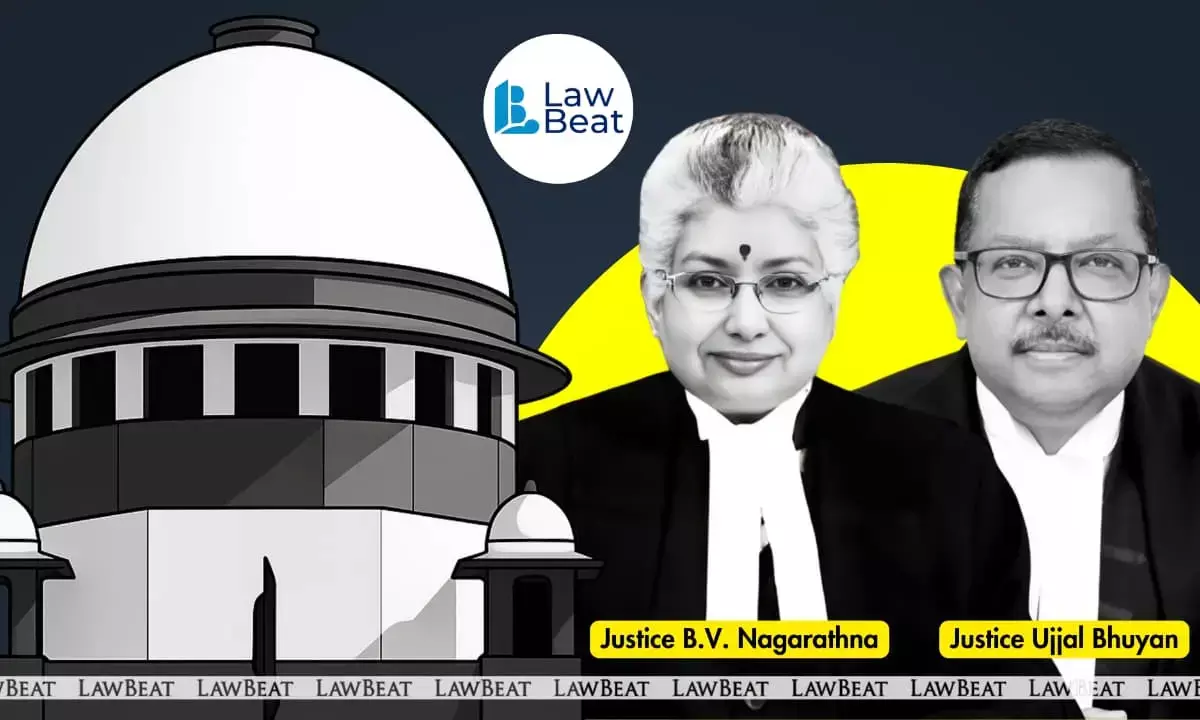
The Bench of Justices B.V. Nagarathna and Ujjal Bhuyan dismissed the special leave petition challenging the High Court order, which had restrained the continuation of the post on social media.
The case arose from a March 11 post on X in which the petitioner alleged that she was sexually harassed during a Mumbai–Delhi flight and identified the respondent with his photograph. The respondent subsequently filed a defamation suit before the Delhi High Court and sought interim relief for removal of the post.
Appearing for the petitioner, counsel submitted that she was a 24-year-old journalist and survivor of sexual violence, arguing that the High Court had wrongly granted interim protection at the behest of the plaintiff.
Justice Nagarathna questioned the decision to take the allegation to social media. “Why did you go to social media and expose yourself?” the Court asked, while also observing that the respondent had suffered professional consequences following the post.
“He has lost his job. Don’t go about spreading it everywhere… look at the consequences. Therefore, he says it is defamatory,” the Bench observed.
The petitioner’s counsel argued that the High Court had wrongly characterised the post as sensational and that the allegations were factual, not malicious, adding that an FIR had already been registered.
Justice Nagarathna, however, underscored the respondent’s right to reputation, noting that the petitioner could challenge the civil suit itself. “There is a right to reputation. You get the suit dismissed,” the Court observed.
After pronouncing the dismissal of the plea, Justice Nagarathna made additional oral remarks on the broader implications of such disputes, suggesting that continued public allegations of this nature could lead to extreme social segregation.
“In theatres also we will have all women seats, all men’s seats separated… in marriage halls all women on one side, all men on the other side… what is this? You want bifurcation, we will pass that order as a guideline so that there is no perpetrator,” she remarked.
The Supreme Court was hearing a challenge to a Division Bench order of the Delhi High Court comprising Justices Dinesh Kumar Sharma and Vinod Kumar, which had upheld an interim injunction granted by a Single Judge.
The High Court had earlier observed that while free speech under Article 19(1)(a) is protected, it is subject to reasonable restrictions, particularly when allegations are presented as established facts along with identification of the accused. It also noted that the post had already remained online for nearly three weeks and that the petitioner had already filed an FIR, thereby balancing competing rights of free speech, reputation, privacy, and professional standing at the interim stage.
Case Title: Khansa Juned v. Nidish Gopal Krishnan Nair
Bench: Justices BV Nagarathna and Ujjal Bhuyan
Hearing Date: May 27, 2026