
Supreme Court Upholds Delhi HC Order In Ilaiyaraaja vs Saregama Copyright Case
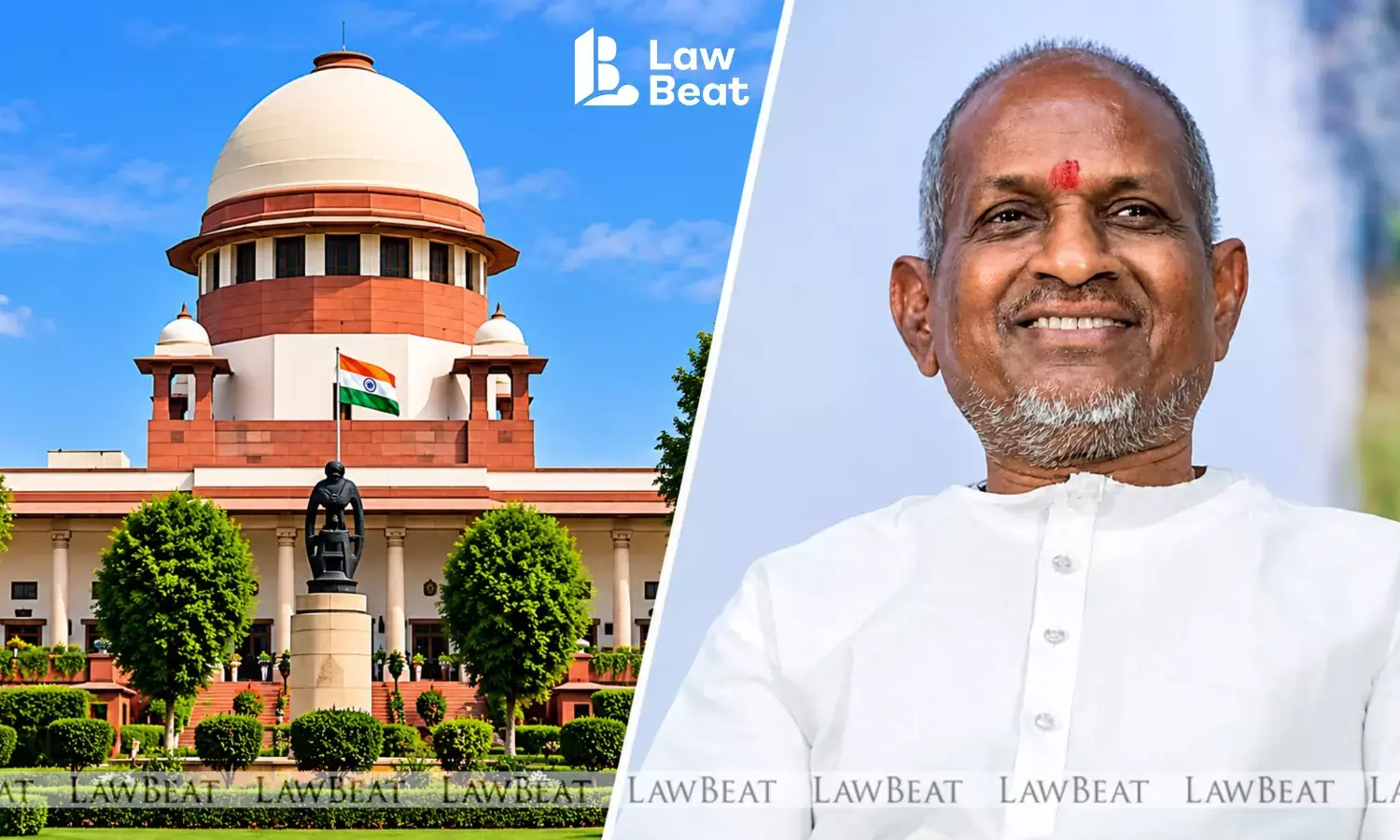
Supreme Court declined to interfere with the Delhi High Court's ruling in the "En Iniya Pon Nilave" copyright dispute between composer Ilaiyaraaja and Saregama
The Supreme Court on Thursday refused to interfere with a Delhi High Court ruling that music composer Ilaiyaraaja does not own the copyright in the lyrics and sound recording of the popular Tamil song "En Iniya Pon Nilave" from the film Moodu Pani, holding that the rights in the sound recording vest with music label Saregama.
A Bench of Justices J.B. Pardiwala and K. Vinod Chandran was hearing a Special Leave Petition (SLP) filed by Ilaiyaraaja against the Delhi High Court Division Bench's May order, which had dismissed his appeal against a single judge's injunction in Saregama's favour, and against the subsequent dismissal of his review petition on May 26.
The dispute arose after Vels Film International Limited (VFIL) recreated "En Iniya Pon Nilave" for its film Aghathiyaa, claiming to have obtained the necessary rights from Ilaiyaraaja under a licence agreement. Saregama objected to the use of the recreated version, asserting that it owned the copyright in the original sound recording by virtue of an assignment from the film's original producer; rights it said had first vested with RCA, the original rights holder, and were subsequently transferred to Saregama under a February 25, 1980 agreement.
A Single Judge of the Delhi High Court had granted Saregama an injunction restraining the use of the recreated version. Ilaiyaraaja appealed, but a Division Bench of Justice C. Hari Shankar and Justice Om Prakash Shukla had dismissed the appeal in May this year, holding that his copyright was limited to the musical work; the tune or composition and did not extend to the lyrics or the sound recording, and that he could not have assigned to VFIL rights that he himself did not own.
The High Court had stated: "Without a licence, or permission, from SIL, therefore, VFIL could not have exploited any of the sound recordings contained in the film Moodu Pani, including the sound recording relating to the song En Iniya Pon Nilave."
Before the Supreme Court today, Senior Advocate C. Aryama Sundaram, appearing for Ilaiyaraaja along with Senior Advocate Swathi Sukumar, argued that the High Court's order carried far-reaching consequences, telling the Bench that three other lawsuits had already been filed relying on it. Invoking Section 13(4) of the Copyright Act, 1957, which protects a creator's separate copyright in an underlying work even after its incorporation into a film or sound recording, he argued, "The whole purpose of 13(4) is gone."
Sundaram pointed to Saregama's own pleadings before the High Court, where it had stated that it was not alleging infringement of the sound recording but of its copyright in the musical and literary works. He also cited the High Court's own finding that Ilaiyaraaja "was, therefore, entitled to contract with any third party for use, or for adaptation, of the musical work contained in the disputed song, i.e., the musical component thereof."
On that basis, he submitted, "Sound recording is not their case. Their case is the musical works."
When Justice Chandran remarked that Sundaram appeared to be laying claim to the sound recording as well, Sundaram responded, "I am not giving any sound recording."
He went on to argue that the parties were being forced to litigate repeatedly over the same underlying issue, prompting the Bench to ask why they were fighting unnecessarily; to which he replied, "because they are injuncting me." He also clarified that the real grievance was with the Division Bench's findings rather than the Single Judge's injunction itself, noting that the Rs 30 lakh deposit the injunction required had already been paid by the producers and complied with.
Ilaiyaraaja had argued throughout the litigation that, as composer and author of the musical work, he remained its first owner and that Section 13(4) preserved his independent copyright even after the composition was used in a cinematograph film. The producers of Aghathiyaa, relying on the rights they said they had obtained from him, had separately contended that he was entitled to license adaptation of the musical work under Section 14(a)(vi) of the Copyright Act.
Senior Advocate Mukul Rohatgi appeared for Saregama.
After hearing the submissions, the Bench found no infirmity in the High Court's order and declined to interfere. "We are of the view that no error, not to speak of any error of law, could be said to have been committed by the High Court in passing the interlocutory order, granting injunction as prayed by the respondent," the Bench said.
On Sundaram's request that the Court clarify the High Court's findings were only prima facie observations and not to be treated as binding precedent, the Bench agreed, "It is needless to clarify that the observations in the impugned judgment are prima facie, for the purpose of deciding the issue in question."
Case Title: Ilaiyaraaja v. Saregama India Limited
Bench: Justices JB Pardiwala and K. Vinod Chandran
Hearing Date: October 1, 2026