
Supreme Court Upholds NCLAT Order Setting Aside ₹2,962-cr Videocon Resolution Plan
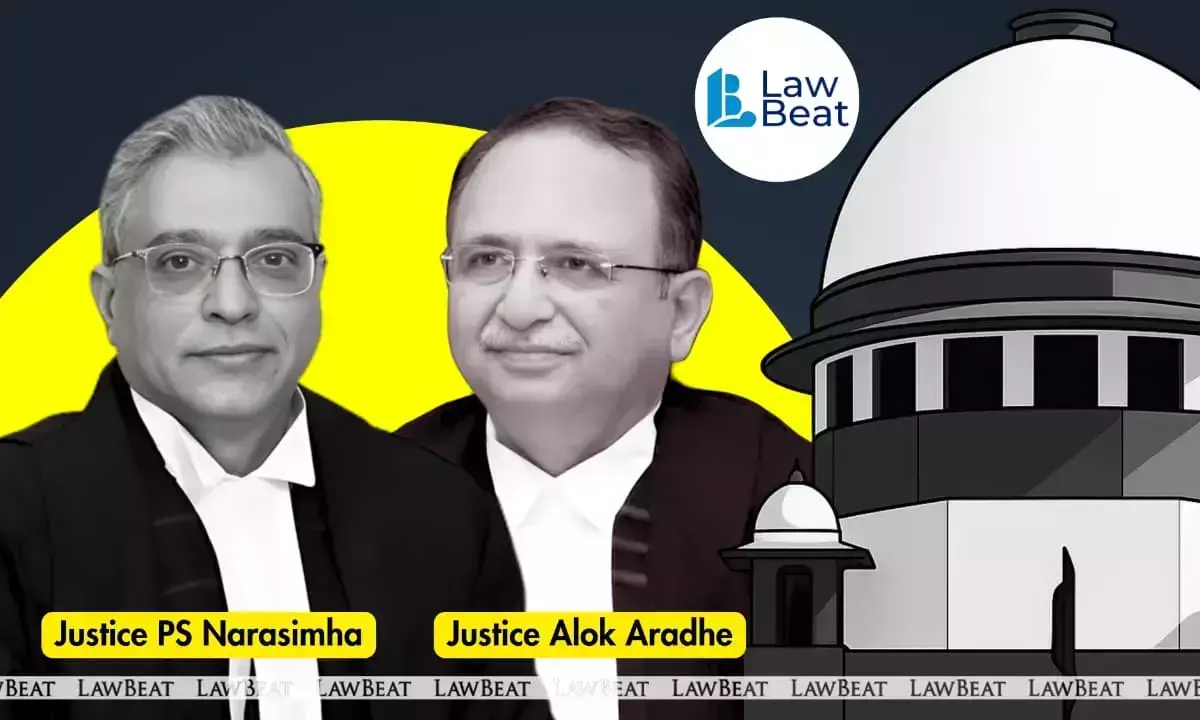
Supreme Court has upheld NCLAT decision to send Twinstar Technologies’ ₹2,962-crore resolution plan for 13 Videocon group companies back to lenders for reconsideration.
The Supreme Court has upheld the National Company Law Appellate Tribunal's 2022 decision to remit the ₹2,962-crore resolution plan for 13 Videocon Group companies to the Committee of Creditors for reconsideration. The plan involved a haircut of approximately 95.85% on admitted claims of over ₹64,600 crore.
The Bench of Justice P.S. Narasimha and Justice Alok Aradhe dismissed the appeals challenging the NCLAT's January 5, 2022 order and affirmed the NCLAT's power to remit an approved resolution plan to the Committee of Creditors (CoC), while laying down guidelines governing the exercise of such powers.
"We have upheld the power of the NCLAT to send the approved resolution plan to the CoC. And for the reasons assigned by us, we have dismissed all the appeals," the Court said while pronouncing its verdict.
Background
The dispute arose from the insolvency proceedings concerning 13 companies of the Videocon Group. Twin Star Technologies Limited, promoted by the Vedanta Group, had submitted a consolidated resolution plan offering approximately ₹2,962 crore against admitted claims of around ₹64,637 crore.
The plan, which entailed a haircut of nearly 95.85% for creditors, was approved by the CoC with a 95.09% voting share. The Mumbai Bench of the National Company Law Tribunal (NCLT) subsequently approved the resolution plan on June 8, 2021.
However, three financial creditors — Bank of Maharashtra, IFCI and SIDBI — challenged the approval before the NCLAT. The dissenting lenders primarily questioned the treatment of their statutory entitlements under the Insolvency and Bankruptcy Code (IBC). They objected to the proposed payment mechanism, which included non-convertible debentures (NCDs) redeemable after approximately five years, instead of payment in cash.
Lenders contended that the proposed distribution did not adequately protect their entitlement under the IBC and that the resolution plan failed to ensure payment in accordance with the statutory requirements.
NCLAT set aside the NCLT's approval of Twin Star's resolution plan and remitted the matter to the CoC for reconsideration as it found tribunal found deficiencies in the treatment of dissenting financial creditors and noted discrepancies in the distribution calculations.
It also held that the required prior approval of the Competition Commission of India (CCI) had not been obtained before the resolution plan was approved, raising concerns regarding compliance with Section 31(4) of the IBC.
Twin Star subsequently approached the Supreme Court challenging the NCLAT's decision. Supreme Court has now dismissed the appeals, affirming the NCLAT's authority to send an approved resolution plan back to the CoC.
Case Title: Twin Star Technologies Limited v. Bank of Maharashtra
Bench: Justice P.S. Narasimha and Justice Alok Aradhe
Judgment Date: November 16, 2026