
Tamil Nadu Assembly Elections 2026: Plea In Supreme Court Says Governor Must Invite TVK Chief Vijay First
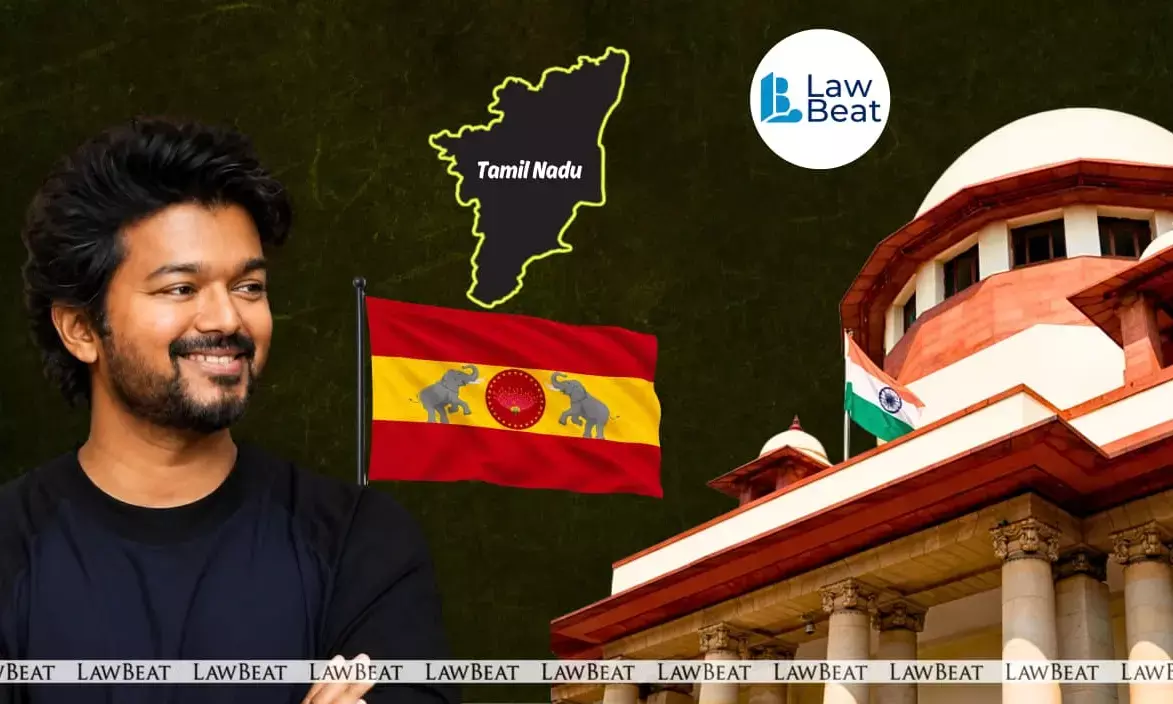
A plea has been filed in the Supreme Court seeking directions to the Tamil Nadu Governor to invite TVK chief Vijay to form the government after the 2026 hung assembly verdict
A writ petition has been moved before the Supreme Court seeking directions to the Governor of Tamil Nadu to invite Tamilaga Vettri Kazhagam (TVK) chief C. Joseph Vijay to form the government following the 2026 Tamil Nadu Assembly elections that resulted in a hung House.
Filed by a Chennai-based Advocate and active member of TVK Ezhilarasi P, the petition contends that despite TVK emerging as the single largest party with 108 seats in the 234-member Assembly, Governor has not yet invited Vijay to take oath as Chief Minister.
According to the plea filed through AoR A. Lakshminarayanan TVK secured 108 seats, while the Dravida Munnetra Kazhagam (DMK) won 47 seats. The All India Anna Dravida Munnetra Kazhagam (AIADMK) secured 47 seats, the Indian National Congress (INC) won 5 seats, and other regional parties shared the remaining seats. With Congress extending support, TVK’s tally allegedly reached 113, leaving it five short of the majority mark of 118.
The petitioner argued that constitutional conventions and binding Supreme Court precedents require the Governor to first invite the single largest party capable of demonstrating support, followed by an immediate floor test in the Assembly.
Relying heavily on landmark judgments including S.R. Bommai v. Union of India, Jagdambika Pal v. Union of India, Chandrakant Kavlekar v. Union of India, G. Parmeshwara v. Union of India and Shivraj Singh Chouhan v. Speaker, Madhya Pradesh Legislative Assembly, the petition asserted that the “floor of the House is the only legitimate test of majority.”
The plea stated that the Governor cannot insist upon prior proof of support from 118 MLAs before extending an invitation to form the government. Instead, it argued, the constitutional sequence established by the Supreme Court is “invite → swear in → immediate floor test.”
“The Governor’s role is to invite and not to demand a full proof of majority before issuing the invitation,” the petition stated, adding that denying TVK the opportunity to form the government would amount to a violation of constitutional principles governing democratic governance.
The petition also referred to the recommendations of the Sarkaria Commission, which prescribe an order of preference in government formation during a hung assembly scenario. It argued that where no pre-poll alliance commands a majority, the single largest party with demonstrable support should ordinarily receive the first invitation.
Citing the Supreme Court’s rulings in the Goa and Karnataka government formation disputes, the petitioner contended that courts have repeatedly intervened to ensure that majority claims are tested expeditiously through floor tests, often within 24 to 48 hours, in order to prevent horse-trading and political uncertainty.
The plea further highlighted that in previous constitutional crises, the Supreme Court had directed live telecast of floor test proceedings, barred secret ballots, and restricted governments from taking major policy decisions until confidence votes were concluded.
Claiming that the Governor’s inaction was unconstitutional, the petitioner urged the apex court to intervene under Article 32 of the Constitution and direct immediate steps for government formation in the State.
The matter is yet to be listed for hearing before the Supreme Court.
Case Title: Ezhilarasi P v. Principal Secretary, Governor of Tamil Nadu
Bench: Supreme Court of India (hearing expected)