
'Threat to Society’: Supreme Court Orders Fast-Tracking of All J&K Acid Attack Trials
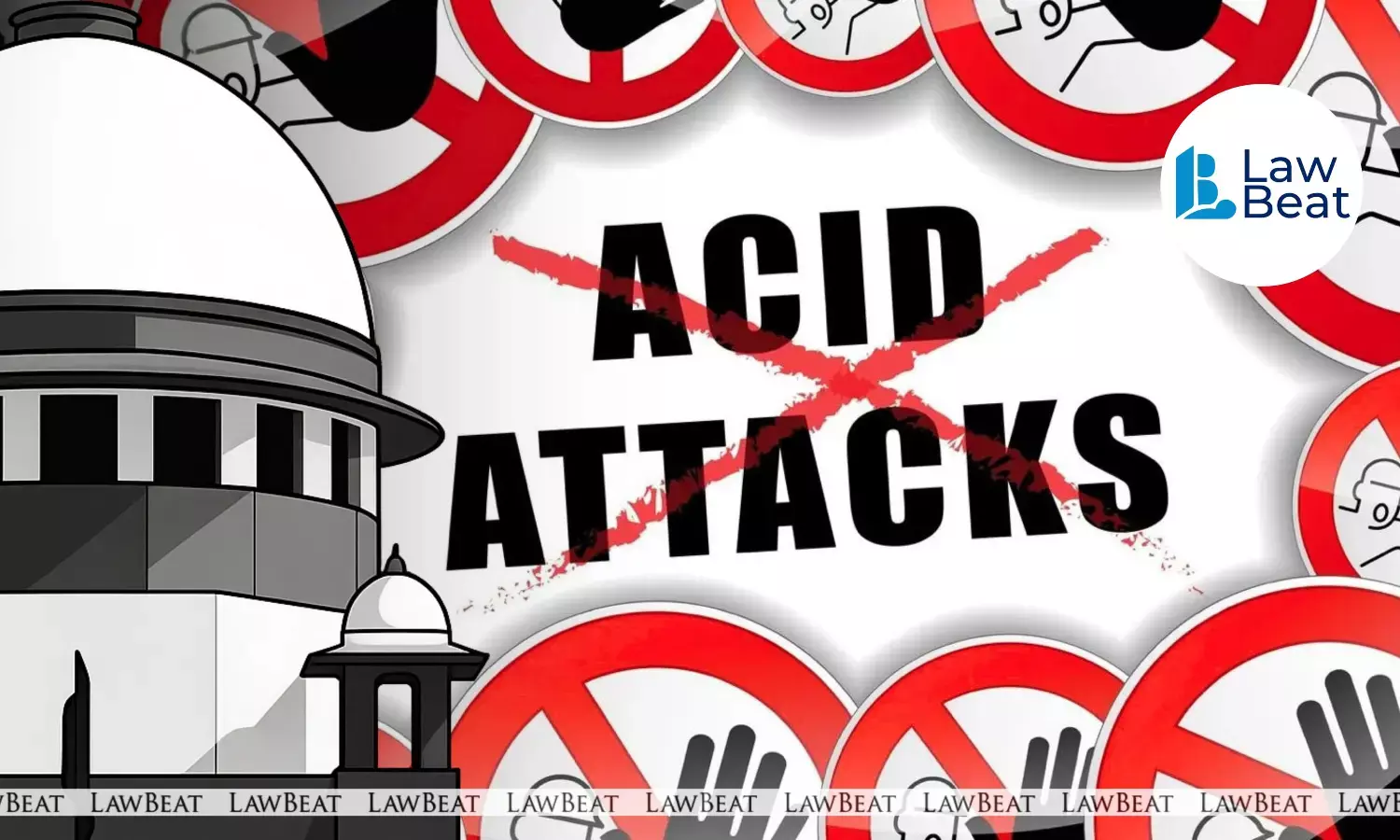
SC had earlier directed the Jammu and Kashmir High Court to fast-track pending acid attack cases while calling for stronger legal measures against perpetrators.
The Supreme Court on Thursday took a stern view of rising acid crimes, especially cases involving the forceful ingestion of acid, and directed the Jammu and Kashmir High Court to expedite all five pending trials.
The Bench led by Chief Justice Surya Kant issued the direction while hearing a plea filed by acid attack survivor Shaheen Malik.
During the hearing, Malik highlighted an especially brutal case involving a 28-year-old woman who was allegedly forced to drink acid. She now weighs barely 20 kilograms, with a haemoglobin level of 3.
Calling for harsher measures, the CJI remarked that stringent conditions should be imposed on offenders.
Solicitor General Tushar Mehta described such acts as “animal instinct,” adding that people who commit these crimes “have no right to roam in society.” The CJI agreed, calling them a threat not just to civilians but to the rule of law itself.
The Bench also noted that NALSA schemes were functioning effectively and that coordination with state governments had improved. SG Mehta reminded the Court that the Criminal Procedure Code allows courts to direct the accused to pay compensation to victims.
Justice Joymalya Bagchi observed that the current statutory definition of acid attacks focuses only on external disfigurement. SG Mehta said he personally believed the definition should be amended. The CJI agreed, stating that an added clarification could resolve the interpretational gap.
The Court listed the matter for further hearing after six weeks.
On the last hearing the Court had come down heavily on the prolonged pendency of acid attack trials in the country, calling the 15-year delay in the prosecution of survivor Shaheen Malik’s case “a mockery of the legal system.” The Court had issued notice on Mallik’s Public Interest Litigation seeking systemic reforms, stronger safeguards, and faster trials for acid attack cases.
The Bench had heard the matter, with Mallik; who survived a brutal acid attack in 2009, appearing in person. She told the Court that despite the attack taking place 15 years ago, the case had not progressed meaningfully for a decade.
“In 2009, the attack took place and till 2019 nothing happened. I had lost all hope in law and justice,” Malik said. She added that she regained the courage to continue her legal fight only after a Judicial Officer, Parvinder Kaur (currently a District Judge), who helped revive her case. Mallik informed the Court that the matter is currently at the stage of final arguments before a Rohini District Court and no conviction has been secured so far.
Reacting sharply, CJI Kant questioned how a case involving such brutality could be allowed to drift without conclusion for over a decade. “What a mockery of the legal system! This is such a shame. What is happening in the national capital? If the national capital cannot handle this, then who will?” he remarked.
The Chief Justice said the Court would direct day-to-day hearings to ensure completion of the trial. He further advised Mallik to file an application in the pending PIL so that her individual case could be taken up under judicial supervision.
The PIL filed through AoR Anuj Kapoor, highlights a legislative gap that excludes victims of forceful acid ingestion from the protections and benefits available to “acid attack victims” under the Rights of Persons with Disabilities Act, 2016.
It seeks directions to the Union Government to amend the Schedule to the RPwD Act to ensure that persons who have been forcibly administered acid are recognised as “acid attack victims” under the category of locomotor disability. The plea submits that these survivors suffer severe internal injuries affecting basic functions such as eating, swallowing, and speaking, but remain ineligible for disability certification because the current definition covers only those “disfigured by violent assaults involving the throwing of acid.”
The petition stresses that a disability certificate under the RPwD Act is a mandatory prerequisite for accessing financial assistance, rehabilitation, and welfare schemes notified by states. Due to the narrow definition, victims of acid ingestion cannot obtain these certificates and are effectively denied critical state support for recovery.
Case Title: Shaheen Malik v. Union of India
Hearing Date: December 11, 2025
Bench: CJI Surya Kant and Justice Joymalya Bagchi