
'Tolerance in young couples has gone down, ego has risen up': SC dissolves couple's marriage who stayed together for 65 days only
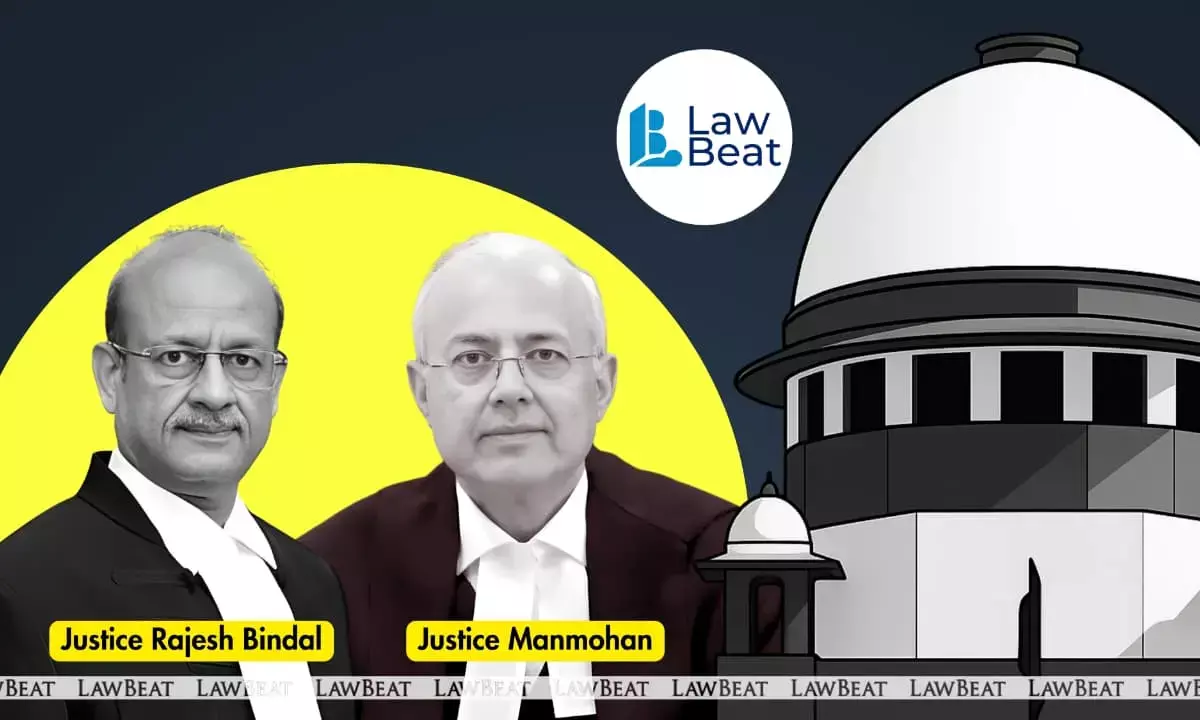
Family members of the parties must make their earnest effort to resolve the disputes before any civil or criminal proceedings are launched, Supreme Court has said.
The Supreme Court on Tuesday citing irretrievable breakdown of marriage, where the parties stayed together only for 65 days, were separated for the last decade and had been indulging into litigation one after another, exercised its discretion under Article 142 of the Constitution of India to dissolve the marriage between the parties.
In view of the fact that the parties stayed together only for a period of 65 days and had indulged in numerous litigations for the last more than a decade apparently with a view to settle scores, the bench observed that both of them deserve to be penalised with costs, quantified at ₹10,000/- each, as a token amount, which has been directed to be deposited with the Supreme Court Advocates on Record Association.
In the case before court, marriage between the parties was solemnized on 28th January 2012.
A bench of Justices Rajesh Bindal and Manmohan found that the parties were in no position to reconcile seeing the level of bitterness generated with the passage of time. "They may not have been made for each other. Some time is taken by the young couples to understand each other and adjust accordingly. No one can be said to be perfect. Level of tolerance has gone down while level of ego has risen up. May be the differences were so much that the couple could stay together only for 65 days and immediately thereafter litigation started. It may be impossible now to put the clock back and live together after forgetting the bitterness, which has been created in last more than a decade", the bench noted.
Further noting that the couple had indulged into filing more than 40 cases against each other, the bench said, "Warring couples cannot be allowed to settle their scores by treating Courts as their battlefield and choke the system. If there is no compatibility, there are modes available for early resolution of disputes. Process of mediation is the mode which can be explored at the stage of pre-litigation and even after litigation starts. When the parties start litigating against each other, especially on criminal side, the chances of reunion are remote but should not be ruled out....Whenever the parties in matrimonial dispute have differences, the preparation starts as to how to teach lesson to the other side. Evidence is collected and, in some cases, even created, which is more often in the era of artificial intelligence. False allegations are rampant...".
Court further observed that as any matrimonial dispute has immediate effect on the fabric of the society, it is the duty of all concerned to make earnest effort to resolve the same at the earliest before the parties take strong and rigid stand.
"First and the foremost, earnest effort should be made by the parties and to be guided by the advocates, whensoever consulted in the process, is to convince them for a pre-litigation mediation. Rather in some cases, their counselling may be required. Even if a case is filed in a Court on a trivial issue such as maintenance under Section 144 of BNSS, 2023 (earlier Section 125 of CrPC, 1973) or Section 12 of the Protection of Women from Domestic Violence Act, 2005, the first effort required to be made by the Court is to explore mediation instead of calling upon the parties for filing replies as allegations and counter allegations sometimes aggravate the dispute. Even when a complaint is sought to be registered with the police of simple matrimonial dispute, first and the foremost effort has to be for re-conciliation, that too, if possible, through the mediation centers in the Courts, instead of calling the parties to the police stations. This sometimes becomes a point of no return specially when any of the parties is arrested, may it be even for a day", the bench has said.
Supreme Court further highlighted with the changing times, matrimonial litigation has increased manifolds as even it is flooded with transfer petitions, mainly filed by the wives, seeking transfer of the proceedings initiated by their husbands, may be at the first instance or as a counter blast. In such situations, it is the duty of all concerned including the family members of the parties to make their earnest effort to resolve the disputes before any civil or criminal proceedings are launched, it has said.
Case Title: NEHA LAL vs. ABHISHEK KUMAR
Bench: Justices Bindal and Manmohan
Judgment Date: January 20, 2026