
‘Trade Unionism Has Stalled Industrial Growth’: CJI Surya Kant Rejects PIL Seeking Minimum Wages for Domestic Workers
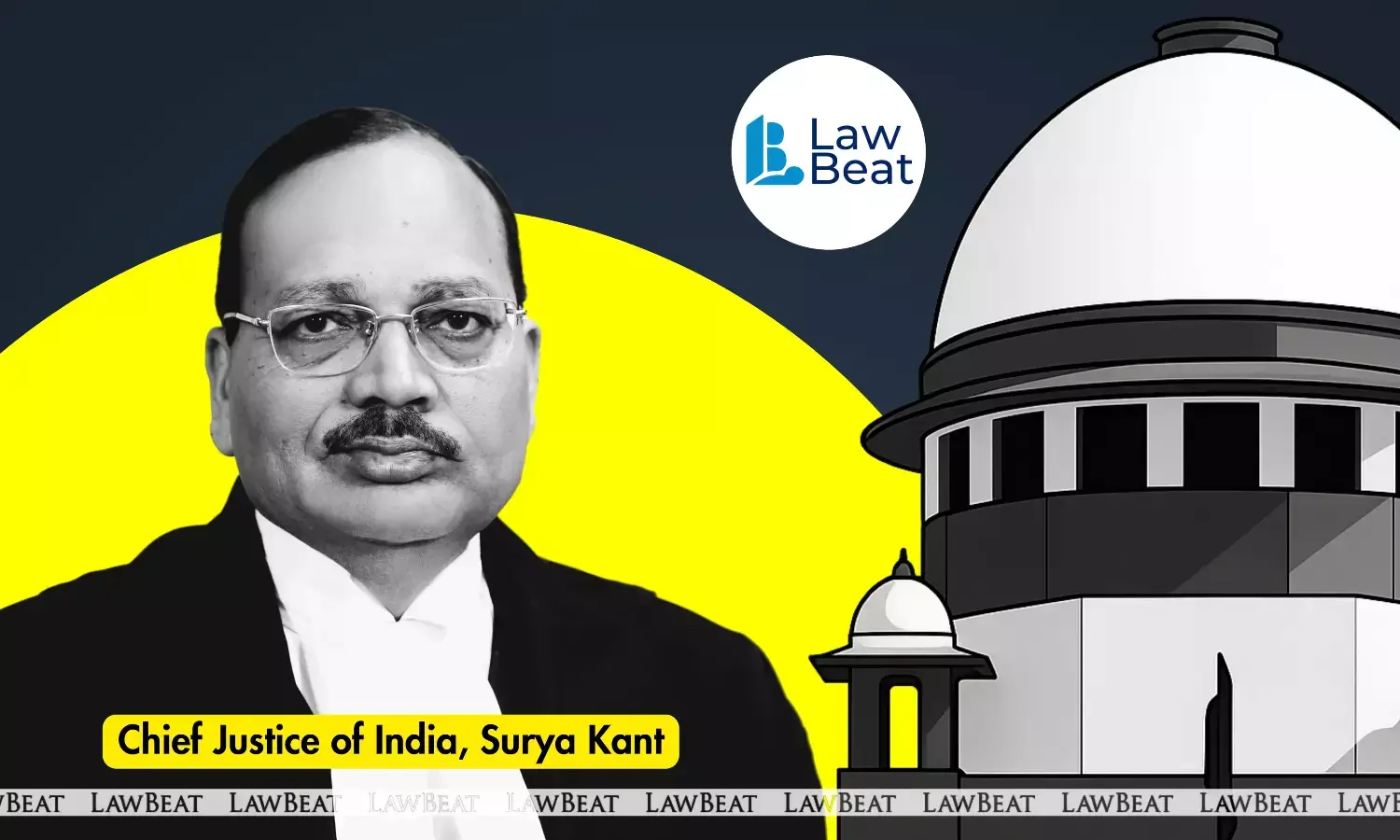
CJI Surya Kant directs filing of a written complaint after allegations that the Supreme Court Registry misplaced an urgent case file, delaying its registration and listing
The Supreme Court on has on January 29, refused to entertain a public interest litigation seeking welfare measures for domestic workers, including their inclusion under minimum wages notifications, with Chief Justice of India Surya Kant making sharp observations on trade unionism, labour regulation, and the unintended consequences of judicially enforced reforms.
The Bench Chief Justice Surya Kant and Justice Joymalya Bagchi was hearing a petition filed by Penn Thozhilargal Sangam and other trade unions, which sought directions to the Union and States to frame welfare schemes for domestic workers and extend statutory minimum wages to them.
At the very outset, the Chief Justice expressed strong disinclination to examine the plea, remarking that granting such reliefs would potentially drag “every household into litigation”.
During the hearing, CJI Kant made sweeping remarks on the role of trade unions in India’s industrial decline. “How many industrial units in the country have been closed thanks to trade unions? Let us know the realities. All traditional industries in the country, all because of these jhanda unions have been closed,” he said. While acknowledging that labour exploitation exists, the Chief Justice stressed that there were alternative means to address it without choking growth.
“These trade union leaders are largely responsible for stopping industrial growth in the country. Of course, exploitation is there, but there are means to address exploitation,” he observed, adding that greater awareness of individual rights, skill development, and structural reforms were needed.
Senior Advocate Raju Ramachandran, appearing for the petitioners, countered the court’s skepticism by citing international practices. He pointed out that countries like Singapore mandate registration of domestic workers, weekly offs, and minimum wages, arguing that collective bargaining was a legitimate and effective tool for protecting vulnerable workers.
Ramachandran submitted that domestic workers had been deliberately excluded from statutory protection due to executive inaction, resulting in violations of Articles 21 and 23 of the Constitution. Relying on the Supreme Court’s landmark judgment in Bandhua Mukti Morcha, he argued that inadequate wages amounted to begar or bonded labour.
The Chief Justice, however, remained unconvinced. He warned that well-intentioned legislative or judicial interventions could backfire. “In our anxiety for reforms, to bring something non-discriminatory through legislative means, we sometimes unwittingly cause further exploitation,” he said. Emphasising the realities of employment demand and supply, CJI Kant cautioned that fixing minimum wages could discourage households from hiring domestic help, thereby worsening hardship for workers.
When Ramachandran objected to what he termed “generalisations” and pointed out that the petitioners were registered trade unions, the Chief Justice shifted focus to the growing role of employment agencies. According to him, the real exploitation was being carried out by service provider agencies that had taken over domestic labour markets in major cities.
“These big entities are exploiting these people. They are the real exploiters,” CJI Kant said, adding that trade union leaders often “leave these people in the lurch”.
The Chief Justice cited his own experience to underline the problem. He recalled that when the Supreme Court engaged workers through an agency at a cost of around Rs 40,000 per worker, the workers themselves received only about Rs 19,000. “I have personally and officially seen this,” he noted.
CJI Kant also warned that excessive regulation could erode trust between domestic workers and employers. “The moment you break the trust between the domestic help and the employer, millions of families who treat domestic workers as part of the extended family are affected,” he said, cautioning that loss of this “human connection” could even lead to serious offences.
The petitioners relied on a 2025 judgment authored by Justice Kant in Ajay Mallik v State of Uttarakhand, which had urged the Union to explore enacting a law for domestic workers’ welfare. However, the Centre had maintained that the issue fell within the domain of states. With no effective state-level schemes in place, the unions had approached the Supreme Court.
Ultimately, the Bench refused to entertain the plea, holding that the reliefs sought amounted to a mandamus directing the legislature to enact a law, which the court could not issue. The petition was disposed of with an observation urging states to examine the grievances raised by domestic workers’ unions.
Case Title: Penn Thozhilargal Sangam v. Union of India & Ors.
Bench: CJI Surya Kant and Justice Joymalya Bagchi
Hearing Date: January 29, 2026