
‘Tribunals Have Become A Liability’: CJI Surya Kant Flags Accountability Crisis, Warns Of Action
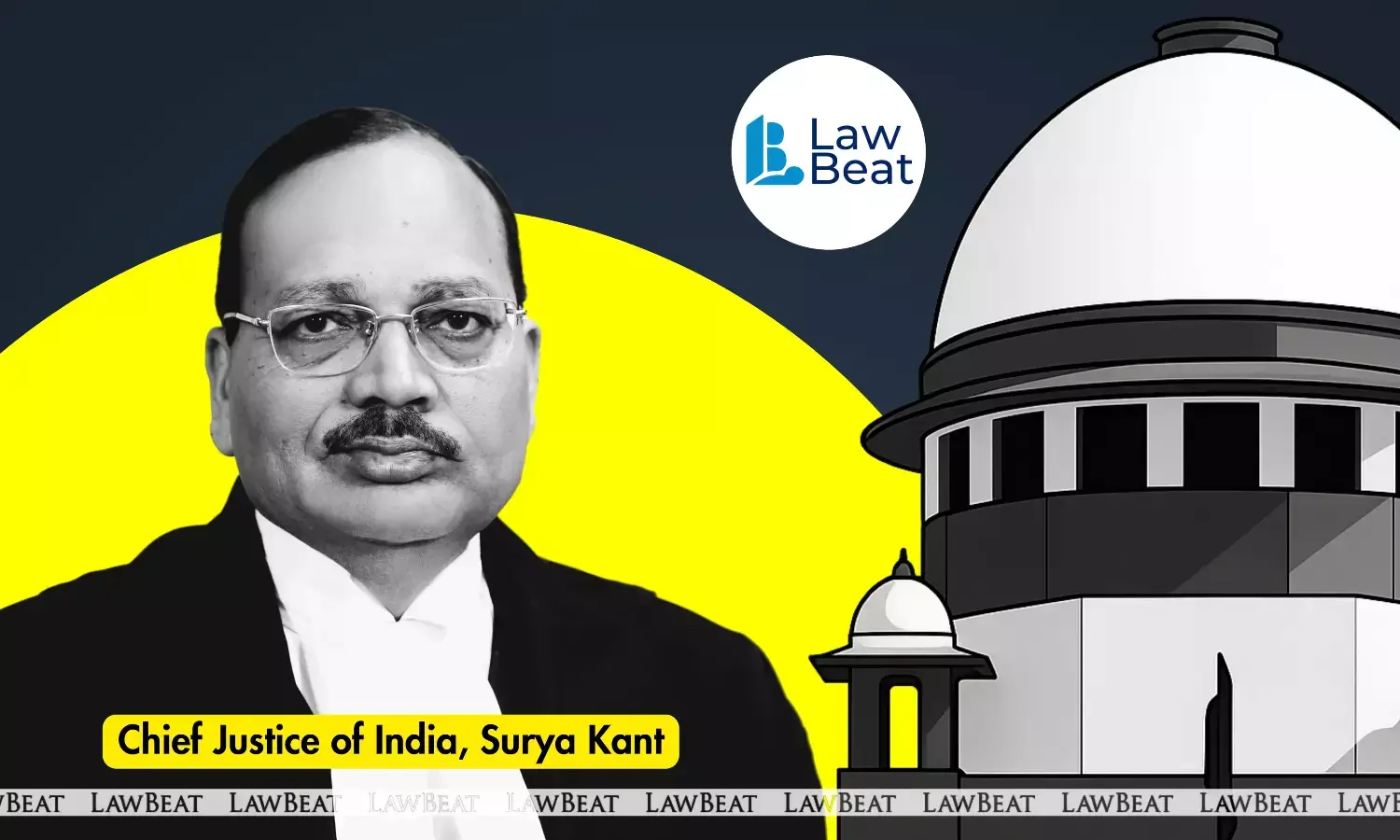
CJI Surya Kant directs filing of a written complaint after allegations that the Supreme Court Registry misplaced an urgent case file, delaying its registration and listing
The Supreme Court on Thursday expressed serious concern over the functioning of tribunals across the country, with Chief Justice of India Surya Kant observing that these bodies have become “a liability for the judiciary” and “a headache” for the Union government.
The bench of CJI Surya Kant, Justice Joymalya Bagchi and Justice Vipul M Pancholi made the remarks while hearing a matter concerning the functioning of tribunals.
Addressing Attorney General R Venkataramani, the Chief Justice said, “Tribunals were created by you (Central government). So it is your headache and a liability for us. Because now the kind of orders we are seeing, barring a few tribunals, these tribunals have become a no man’s land. They are not accountable to anyone.”
The Bench observed that while tribunals were set up to reduce the burden on constitutional courts, their current functioning was instead adding to judicial scrutiny. It said the lack of accountability and structural issues required immediate attention and fresh measures.
“It is not in the national interest that they are completely unaccountable at present,” the Court remarked.
The Court recalled that it had earlier directed the Union government to frame a uniform proposal within four weeks on the functioning of tribunals across the country. It reiterated that these bodies cannot be permitted to become defunct due to administrative or appointment-related gaps.
Referring to the Telecom Disputes Settlement and Appellate Tribunal, the CJI noted that if the Chairperson does not continue, a technical member may step in temporarily, but cautioned against any disruption. “Please ensure there is no functional crisis,” he said. Justice Bagchi added that a technical member alone cannot pass orders.
The Chief Justice stated that a technical member of a tribunal dealing with matters of “grave importance” had not been writing judgments and was instead getting them drafted by judicial members or outsourcing the task. “I am waiting. I will sack that member. What audacity. What mess have we created,” the CJI said in open court.
The Bench also raised concerns about the expertise and eligibility framework for tribunal members. The Chief Justice noted that members are often expected to develop subject-matter expertise, such as in environmental or commercial law, within a limited tenure of four years. He indicated that a new mechanism may be required to address systemic deficiencies and protect national interests.
Separately, the Court flagged concerns regarding listing practices within the Supreme Court Registry. CJI Surya Kant said he was concerned about similar matters being placed before different Benches despite earlier hearings by coordinate Benches. He flagged serious irregularities in the Supreme Court Registry, saying he was “stunned” to learn that a plea declined by a three-judge Bench was later listed before another Bench.
The CJI made it clear that accountability will follow and promised corrective reforms before he demits office. The CJI said some employees appear to believe judges serve only briefly while they remain permanent fixtures.
“There are employees who think judges are here only for a maximum of eight years… that they are in transit, so they can do whatever they want. This is what is bothering me,” he said.
In the meantime, Supreme Court had allowed Justice Rajesh Khare to continue as Chairperson of the Debt Recovery Appellate Tribunal (DRAT), stating that these arrangements would continue to ensure that the tribunals do not come to a grinding halt.
Notably last year, Supreme Court had struck down certain provision of the Tribunal Reforms Act 2021 for violating its earlier judgments on the issue. "The provisions of the impugned Act cannot be sustained as they violate separation of powers and judicial independence principles. It amounts to legislative overwrite without curing any defects and the binding judgment. It falls foul. Thus it is struck down as unconstitutional," a former CJI Gavai led bench ruled.
"The provisions of the impugned Act cannot be sustained as they violate separation of powers and judicial independence principles. It amounts to legislative overwrite without curing any defects and the binding judgment. It falls foul. Thus it is struck down as unconstitutional," a CJI Gavai led bench ruled.
Court called the law to be "legislative overwrite without curing any defects and the binding judgment". CJI had said the 2021 Act falls foul. "We make it clear that members of ITAT shall continue till 62 years and the chairperson shall continue till 65 years of age. We also state member of CESTAT shall continue till 62 and president shall continue till 65. The repeated enactment of same provisions struck down shows the violation of the constitution. We must express our displeasure at how Union of India has chosen not to follow directions issued and instead of following the principle on independence and functioning of tribunals...it has re enacted the same provisions. There is already a pendency of cases and such cases consume valuable judicial time and government must exercise their power with due regards to judicial precedents so that judicial time is used in dispensing justice", the judgment added.
Case Title: Madras Bar Association v. Union of India
Bench: CJI Kant and Justice Bagchi and Pancholi
Hearing Date: February 26, 2026