
U.S. Supreme Court Strikes Down Trump Tariffs, Implications for India–U.S. Trade
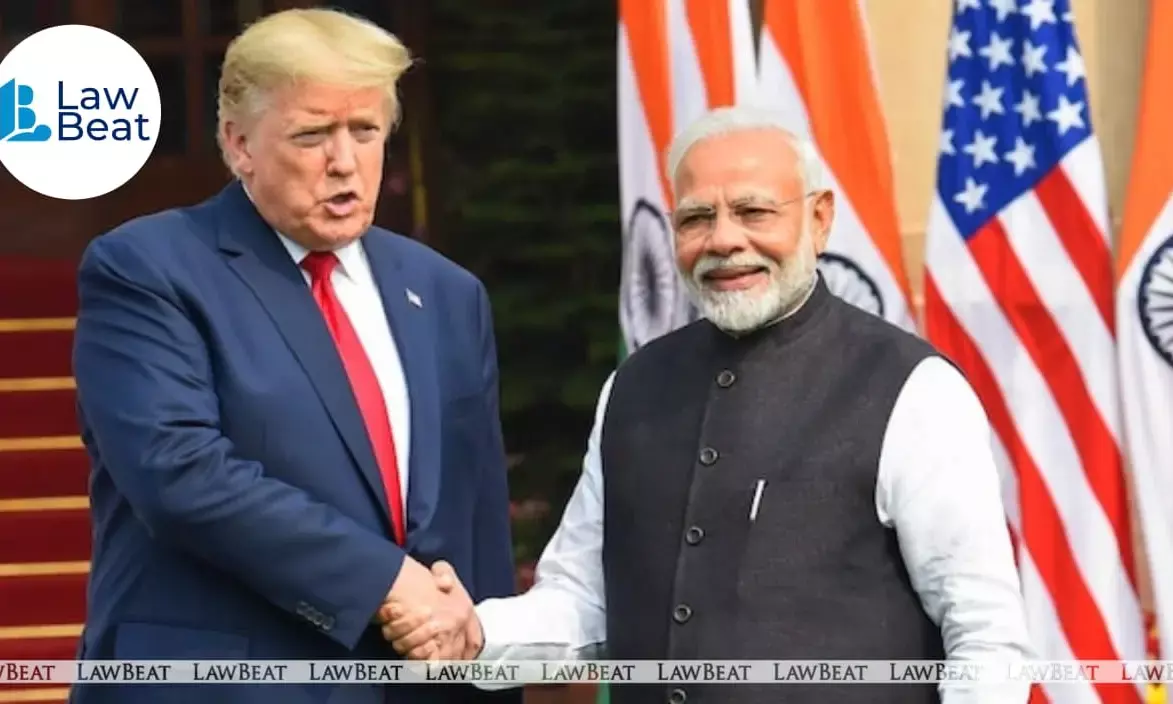
The U.S. Supreme Court ruled 6-3 that President Donald Trump could not unilaterally impose sweeping reciprocal tariffs under emergency powers
A U.S. Supreme Court ruling has reshaped the tariff landscape that Indian exporters have been navigating since last year. The decision creates immediate relief for a large slice of India’s shipments to the United States, while keeping the door open for fresh, legally redesigned duties from Washington.
On February 20, 2026, the U.S. Supreme Court, by a 6–3 majority, invalidated President Donald Trump’s sweeping global “reciprocal tariffs” that were rolled out after his “Liberation Day” tariff push in April 2025. The Court held that the President lacked legal authority under the International Emergency Economic Powers Act (IEEPA) to impose economy-wide tariffs of this breadth. It reiterated that under the U.S. Constitution, the power to levy import duties primarily rests with Congress.a
What the Court actually did (and why it matters for India)
The case (Learning Resources, Inc. v. Trump) turned on a technical but decisive point: IEEPA is an emergency statute, and the administration had argued that it permitted tariffs as part of regulating “importation” to respond to declared emergencies, ranging from drug-trafficking/fentanyl concerns to trade-deficit arguments. The Court disagreed and held, at syllabus level, that “IEEPA does not authorise the President to impose tariffs.”
For India, the immediate implication is straightforward, that tariffs that were specifically anchored to this IEEPA, such as the broad “reciprocal” duties, lose their legal foundation. In other words, a substantial portion of Indian exports that had been pulled into the “reciprocal tariff” net now stand to revert to the pre-IEEPA tariff baseline, unless covered by some other valid tariff instrument.
Trade analysts in India have indicated that about 55% of India’s exports to the U.S. may no longer face the recently applied 18% “reciprocal” duty, and could instead fall back to standard tariff treatment.
Trump’s tariff powers are limited, not eliminated
Importantly, the judgment does not prohibit tariffs altogether. It limits the use of one particular statutory route, IEEPA, for imposing wide-ranging import duties. Other U.S. trade laws continue to provide mechanisms for tariffs, subject to specific conditions and procedures.
This distinction explains the administration’s swift response. On the same day as the ruling, President Trump signed an executive order invoking Section 122 of the Trade Act of 1974. This provision allows the President to impose a temporary import surcharge, generally for up to 150 days, to address balance-of-payments concerns. Using this route, Trump announced a temporary global tariff of 10 percent, which he later indicated could be raised to 15 percent within the limits of the statute.
Where the India–U.S. trade deal stands
The Supreme Court ruling comes at a sensitive moment in India–U.S. trade relations. Earlier this month, President Trump and Prime Minister Narendra Modi announced an interim trade agreement. Under this arrangement, Indian exports to the U.S. were to face an 18 percent tariff, while India committed to reducing duties on American exports, reportedly to zero in covered categories.
The United States also revoked an earlier 25 percent tariff imposed on India in connection with its purchases of Russian crude oil. Indian officials described the revised tariff framework as providing India with a competitive edge over several regional economies, particularly in labour-intensive sectors. The reduction was also presented as a significant cut from the much higher rates that had been introduced in August 2025.
From a legal and economic perspective for India, this translates into short-term relief and improved negotiating leverage, especially for export-oriented and labour-intensive industries that were hit by elevated reciprocal duties. At the same time, uncertainty remains. The Trump administration has already demonstrated its willingness to explore alternative statutory routes to maintain tariff pressure, and longer-term measures could still emerge through other trade laws or congressional action.