
What Law Exempts Payment of Court Fees In Waqf Suits? Supreme Court Asks
Waqf Trusts have challenged orders of the Gujarat High Court requiring payment of court fees.
The Supreme Court today questioned the exemption for Waqf institutions from paying court fees to State Waqf Tribunals. A petition has been filed before the Court challenging the decision of Gujarat High Court from January this year.
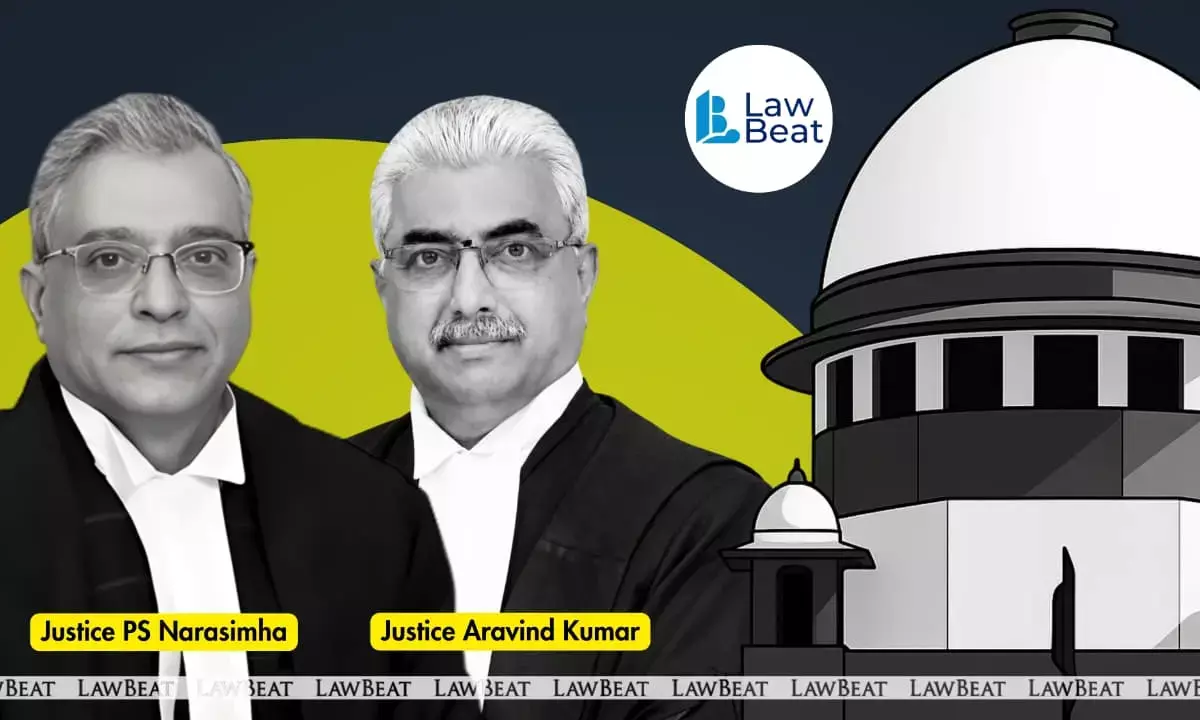
A bench of Justices PS Narasimha and Aravind Kumar asked Advocate Ejaz Maqbool appearing before it, "How can there be an exemption? What is the law which allows you to take an exemption from court fees?"
Maqbool requested court to keep the matter after some time. The bench agreed to list the matter in August.
Before the Gujarat High Court, a batch of petitions were filed u/s 83(9) of the Waqf Act, 1995 challenging impugned judgment and order passed by the Waqf Tribunal in Waqf suits, whereby the Tribunal, in exercise of jurisdiction under Order 7 Rule 11 of the Code of Civil Procedure, 1908 had rejected the plaint on the ground of paying insufficient Court fees for the purpose of jurisdiction and Court fee, after giving sufficient opportunity to make good.
Revision petitions were filed mainly on the ground that provisions of the Code of Civil Procedure, 1908 would not apply to the Waqf suit filed under the Waqf Act and subsequently, since there is no provision made in the Waqf Act to pay Court fee in Waqf suit, the Tribunal had committed serious and manifest error to reject the plaint under Order 7 Rule 11 of the Code. High Court noted that in the Waqf suit, the original plaintiff had asked the relief to recover vacant and peaceful possession of the demised premises along with mesne profit. The suits were filed without paying sufficient Court fees and the suits were not properly valued for the purpose of jurisdiction and Court fee, the high court found. A bench of Justice JC Doshi has accordingly dismissed the pleas for being devoid of merits.
Earlier in December 2025, the Gujarat High Court had rejected nearly 150 petitions from Muslim Waqf institutions seeking exemption from payment of fees to the State Waqf Tribunal to access a court of law.
Justice JC Doshi had dismissed the petitions, involving contested rent claims, possession disputes, and rights of occupancy over key properties across the state. Waqf trusts such as Sunni Muslim Idgah Masjid Trust, the Vadodara Saher Masjid Sabha Trust, and the Sarkhej Roza Committee in Ahmedabad, had challenged orders of the Gujarat State Waqf Tribunal requiring payment of court fees before their disputes could be heard. The court observed that they had sought reliefs before the tribunal which were adversarial in character wherein rights and obligations of contesting parties are required to be judicially determined. "An application instituted under section 83 of the Waqf Act, forming part of the judicial proceedings contemplated under Chapter VIII thereof, therefore, partakes the character of a plaint or suit and necessarily attracts the provisions of the Gujarat Court Fees Act, 2004," it said.
Case Title: AHMEDABAD SUNNI MUSLIM WAQF COMMITTEE Vs GUJARAT STATE WAQF TRIBUNAL
Bench: Justices Narasimha and Aravind Kumar
Hearing Date: June 1, 2026