
Winning Cases Isn’t Enough: CJI Surya Kant Urges Lawyers to Become ‘Nation Builders’
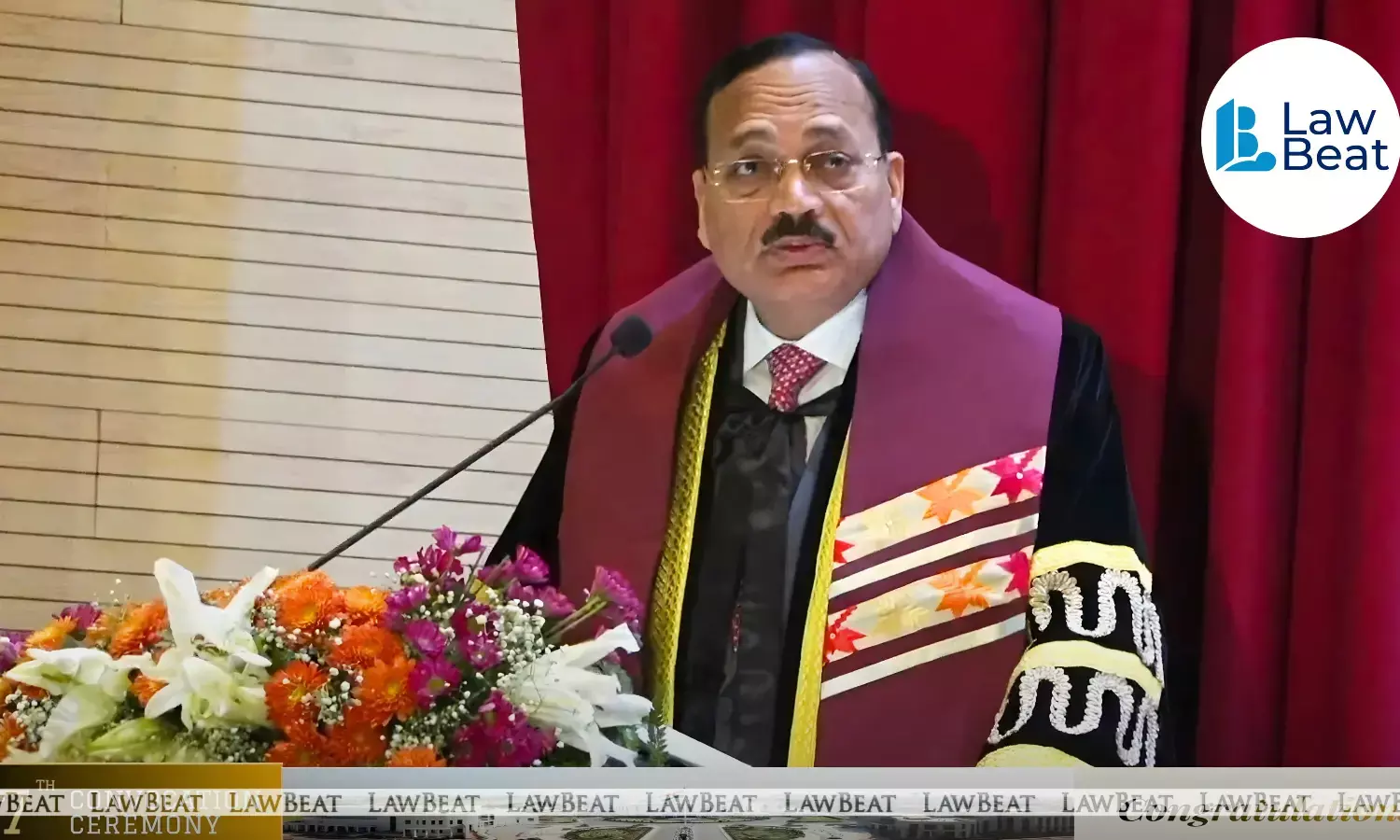
Chief Justice of India (CJI) Surya Kant on Tuesday urged young lawyers to look beyond winning cases and billing hours, reminding them that the legal profession carries a far deeper responsibility towards the nation and its constitutional future.
Addressing the 7th Convocation Ceremony of the Rajiv Gandhi National University of Law (RGNUL), Patiala, the CJI cautioned against reducing law to a narrow, transactional pursuit focused only on procedure and outcomes. “This certainly produces competent practitioners, but it does not necessarily produce nation builders,” he said, drawing a sharp distinction between lawyers who merely build cases and those who shape society.
Speaking to a graduating cohort of law students, Justice Kant said that while ambitions of arguing landmark cases, drafting complex contracts, or appearing before constitutional benches were legitimate, young advocates must ask a more enduring question. “What is the role of the lawyer in a nation like India, at this moment in its history?” he asked.
Explaining the difference, the CJI said a case-builder focuses on resolving the dispute of the day, whereas a nation-builder reflects on how today’s legal battles shape tomorrow’s society. “The former is transactional; the latter is transformational,” he observed.
Justice Kant described the Constitution not as a rigid document, but as a living framework requiring constant nurturing. “Our Constitution is not a monument cast in stone. It is an ingenious blueprint. The courts give it interpretation, institutions give it structure, but you must give it life. You must decide what India becomes next,” he told the graduates, adding that every generation inherits the Republic in an unfinished form.
Highlighting the role of legal education, the CJI said institutions like RGNUL distinguish themselves not merely by location or infrastructure, but by the culture they cultivate. Referring to the university’s green campus, sustainability initiatives, and co-curricular ecosystem, he said such environments do more than train lawyers. “They shape citizens who are thoughtful, grounded, and socially engaged,” he noted.
Justice Kant also reflected on the changing nature of legal practice in a rapidly transforming India. He pointed out that contemporary disputes increasingly intersect with technology, digital assets, environmental challenges, and cross-border complexities. In this evolving landscape, lawyers are expected not only to argue and advise, but also to innovate, interpret, and humanise the law.
Judicial reforms and modernisation, he added, would remain incomplete unless young lawyers translate ideas into action at the grassroots. Emphasising the ethical dimension of the profession, the CJI identified integrity, compassion, and curiosity as the three essential pillars of a meaningful legal career. Integrity, he said, forms the backbone of public trust in the justice system. Compassion prevents law from becoming mechanical and disconnected from human realities, while curiosity keeps the law responsive to social and technological change.
He encouraged students to be lifelong learners and to engage responsibly with technology, ensuring that digital tools serve justice rather than replace human judgment.
RGNUL’s 7th Convocation Ceremony, held on December 23, 2025, saw a total of 725 students from the 2023, 2024, and 2025 batches being conferred degrees, both in person and in absentia. Degrees were also awarded to two Doctor of Laws (LL.D.) candidates and nine Ph.D. scholars.
The University conferred the honorary degree of Doctor of Laws (Honoris Causa) on Justice Pankaj Mithal and Justice Rajesh Bindal, both Judges of the Supreme Court of India, recognising their significant contributions to the judiciary and the justice delivery system.
The ceremony was attended by several sitting and former judges, senior law officers, members of the Bar, and the university’s academic community.
Convocation Date: December 23, 2025