
"Women Will Not be Hired," Supreme Court Rejects Plea Seeking Mandatory Menstrual Leave
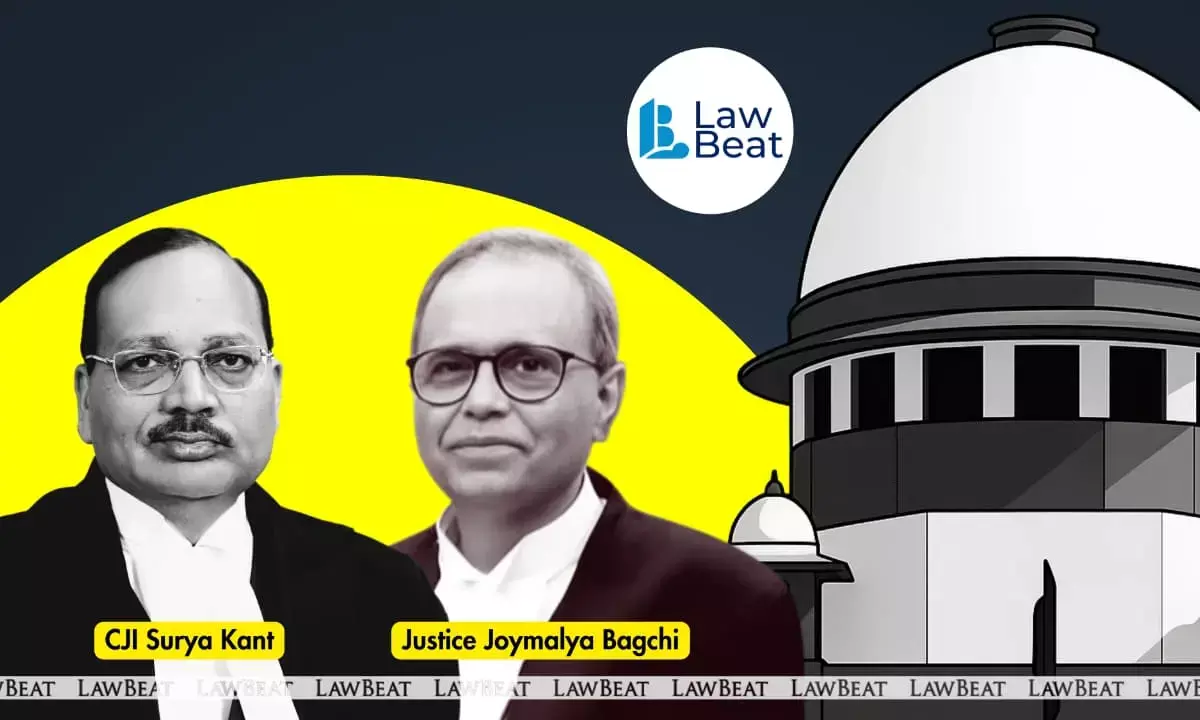
Supreme Court of India heard a PIL seeking directions to include the Denotified Nomadic Tribes (DNTs) as a distinct category in the upcoming national Census.
The Supreme Court has rejected a petition seeking monthly leave for female students and working women at their respective workplaces during their menstrual period.
Mandatory menstrual leave could adversely impact their employment as employers will not hire women if we make such a law, Chief Justice Surya Kant said today.
"Creating awareness and sensitisation is different... but the moment you bring in a law mandating menstrual leave, nobody will hire them," CJI Kant said. He further told the petitioner, "You don't know the mindset of employers. They will not hire women if we make such a law."
The petition filed by an Advocate Shailendra Mani Tripathi alleged that despite making all the provisions in the law to take care of women in difficult stages of their maternity, the very first stage of the maternity, the menstrual period has been knowingly or unknowingly ignored by the society.
The plea submits, "Only women are empowered to propagate the human race on earth with their special ability of creation of human life, which we commonly call maternity. During different parts or stages of maternity, women undergo a number of physical and mental hardships, be it undergoing menstrual period, pregnancy, miscarriage or any medical complications related to these stages of maternity."
It further states that in these stages menstrual period is the genus, and pregnancy, miscarriage, etc. are the species, which definitely need the first attention of society and the legislature. The petition argues that Bihar is the only state in India which has been providing two days of special menstrual pain leave to women since 1992 through its Human Resources. "In 1912, the Government Girls School in Tripunithura, located in the erstwhile princely state of Cochin (present Ernakulam district), had allowed students to take 'period leave' during the time of their annual examination and permitted them to write it later," the plea reads.
Additionally, the Indian food delivery service Zomato’s decision to give female employees up to 10 days of period leave per year triggered a massive discussion about menstrual health and gender equality, the plea adds. The plea also relied on the estimates released by the Endometriosis Society India suggesting that over 25 million women suffer from endometriosis, a condition that makes period pain so bad that women may pass out from it.
Accordingly, a direction was sought for all the states to frame rules for menstrual pain leaves for female students and working-class women at their respective workplaces.
Case Title: Shailendra Mani Tripathi vs. Union of India
Bench: CJI Kant and Justice Bagchi
Hearing Date: March 13, 2026