
Women’s Reservation Push: Centre Introduces Delimitation, Seat Expansion Bills In Lok Sabha
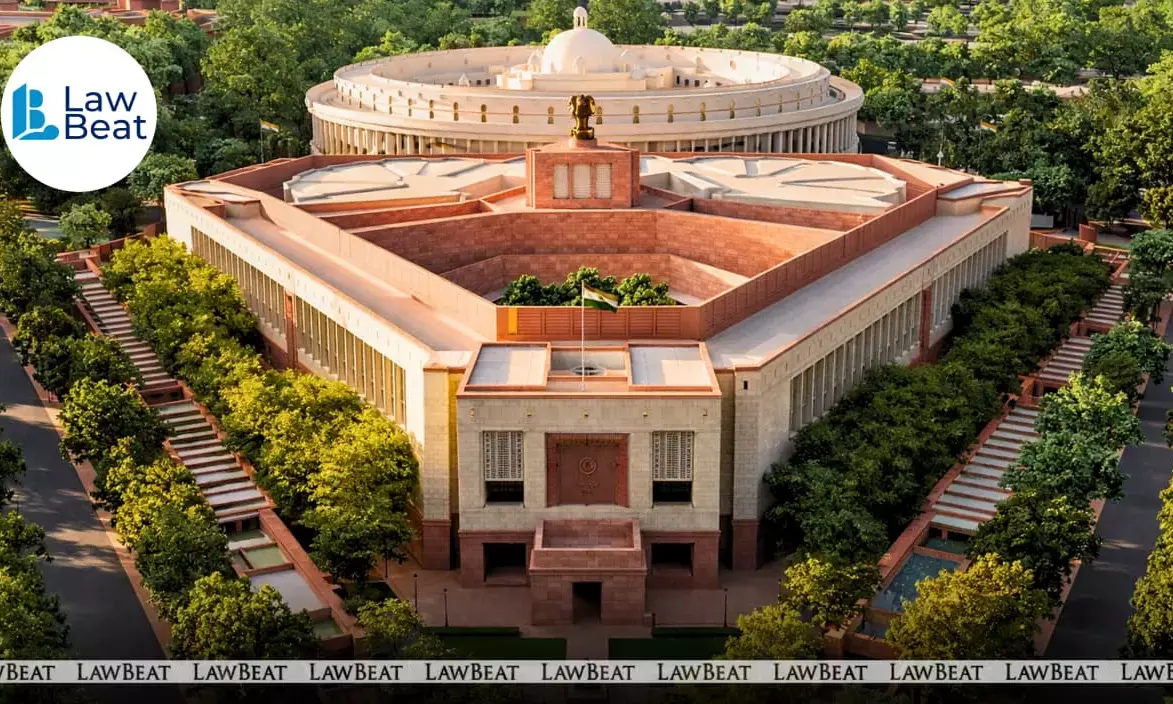
Union ministers introduce key Bills in Lok Sabha to enable women’s reservation through seat expansion and delimitation exercise.
Three Bills, including a Constitution Amendment aimed at operationalising the women’s reservation law enacted in 2023, were introduced in the Lok Sabha on Thursday as part of the Centre’s legislative push to implement the quota from the 2029 general elections.
Union Law Minister Arjun Ram Meghwal introduced the Constitution (One Hundred and Thirty First Amendment) Bill, 2026, which seeks to expand the strength of the Lok Sabha to enable reservation without disturbing existing seats. He also tabled the Delimitation Bill, 2026, providing the framework for redrawing constituencies based on updated population data. Separately, Union Home Minister Amit Shah introduced the Union Territories Laws (Amendment) Bill, 2026.
Link to 2023 Women’s Reservation Law
The Bills are linked to the Constitution (One Hundred and Sixth Amendment) Act, 2023, known as the Nari Shakti Vandan Adhiniyam, which mandates 33 per cent reservation for women in the Lok Sabha and state Assemblies. However, the 2023 law made its implementation contingent upon a fresh census and delimitation exercise.
The current legislative package seeks to operationalise that framework. The expansion of Lok Sabha seats is intended to accommodate reserved seats for women, while delimitation will redraw constituencies and reallocate seats among states based on population changes. The reservation is expected to be implemented from the 2029 Lok Sabha elections after completion of these exercises.
Why Delimitation Matters
Delimitation essentially decides how many MPs each state gets and where constituency boundaries are drawn. This process has been frozen since the 1970s, meaning seat distribution has not kept pace with population changes.
The new proposal lifts that freeze and allows a fresh redraw of seats, potentially using 2011 population data instead of waiting for a new Census. A Delimitation Commission will be set up to carry out this exercise, and its decisions on seat allocation, boundaries, and reservation of constituencies will be final and legally binding.
Opposition Objects at Introduction Stage
During the stage of introducing the three Bills, Opposition members raised objections under Section 72 of the Rules of Procedure and Conduct of Business in Lok Sabha, which allows members to oppose the introduction of a Bill.
Samajwadi Party members opposed the move, stating that the proposal does not provide reservation for Muslim and backward class women and said they would not support it in its present form.
AIMIM chief Asaduddin Owaisi opposed the Bill, stating that it violates the basic structure of the Constitution, particularly federalism and parliamentary democracy. He argued that removing the delimitation freeze would increase representation of states with higher population growth while reducing the share of southern states. He also alleged that the exercise would dilute representation of OBCs and Muslims and questioned procedural compliance.
Congress MP K. C. Venugopal objected to the introduction, calling it a "fundamental attack on the federal structure" and questioning the intent behind the legislation.
Government’s Response
Responding to the objections, Amit Shah reiterated that reservation cannot be granted on religious grounds and said such a provision would be unconstitutional. He stated that the Bills are aimed at implementing women’s reservation within the constitutional framework.
Despite the objections, the Bills were introduced in the House and will be discussed at length for two days.
Voting on the passage of the Bills is scheduled to take place at 4 PM on April 17.
Also Read | SC Seeks Centre’s Reply On Plea Seeking Implementation Of Women’s Reservation Law
Also Read | SC Declines To Entertain Challenge To Women’s Reservation Act, 2023
Also Read | PM Modi Calls Women’s Reservation Law A ‘Civilisational Commitment’