
"You exploited people during Kumbh Mela", SC seeks response to plea highlighting unchecked airfare hike
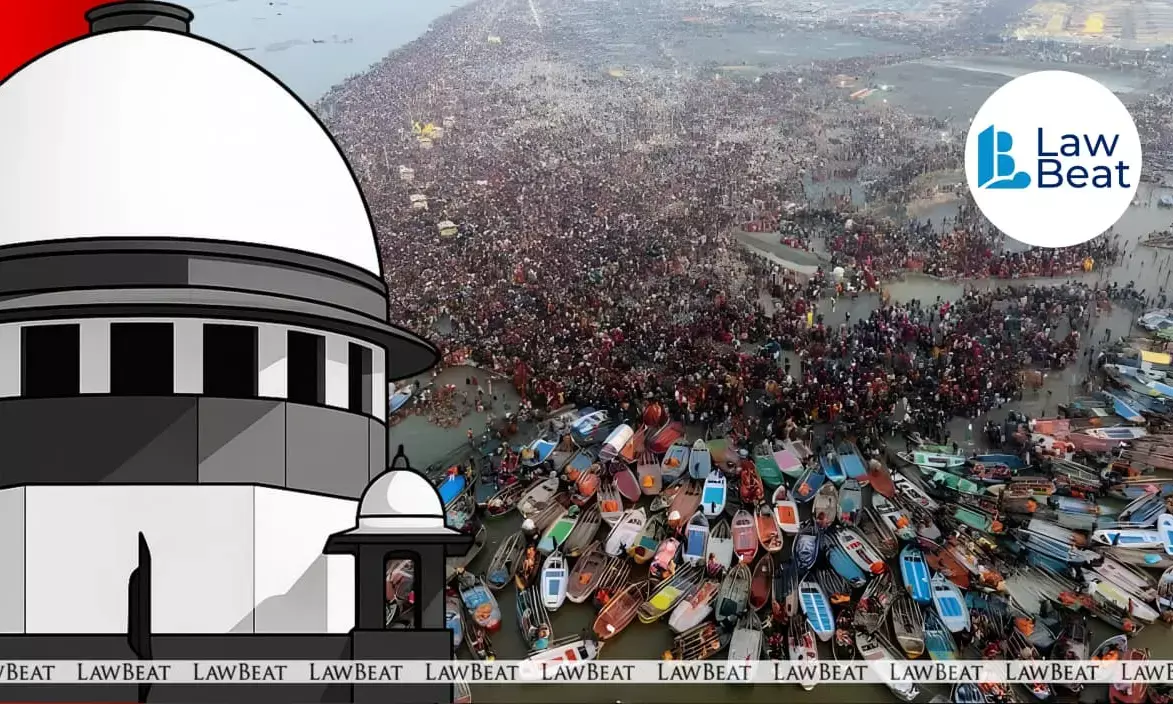
Supreme Court has sought a response on plea seeking binding guidelines to regulate sudden fare fluctuations, unchecked dynamic pricing, and rising ancillary charges such as baggage fees.
The Supreme Court on Monday granted four weeks to the Union of India, Directorate General of Civil Aviation and Airports Economic Regulatory Authority of India to file its counter affidavit in the petition filed by social activist and frequent air traveller, S. Laxminarayanan seeking urgent judicial intervention to curb what he described as “unchecked, opaque and exploitative” airfare practices by private airlines in India.
A bench of Justices Vikram Nath and Sandeep Mehta will now hear the matter on February 23, 2026.
When the case was taken up on Monday, Justice Mehta told ASG Anil Kaushik, who was before court, that the Supreme Court was going to interfere in the issue. "You exploited a lot of people during Kumbh Mela..just look at the airfare between Jodhpur and Prayagraj for that time period and you will know..", Justice Mehta said.
Justice Nath went on to add that the problem of hike was not just associated to Kumbh Mela but festival season in general.
The petitioner has moved a writ petition under Article 32 of the Constitution seeking binding guidelines to regulate sudden fare fluctuations, unchecked dynamic pricing, and rising ancillary charges such as baggage fees.
It is argued that air travel, once considered a luxury, has become an essential service for millions, particularly during emergencies, medical exigencies, and in geographies where road and rail access is limited. Despite its criticality, the petitioner contended, passengers remain vulnerable to airline discretion, with no effective oversight from existing regulators.
According to the plea, arbitrary fare hikes, unilateral reduction of services, shrinking baggage allowances, opaque pricing algorithms, and inadequate grievance redressal mechanisms violate Articles 14, 19 and 21 of the Constitution. The petitioner stressed that the right to life under Article 21 includes mobility with dignity, access to essential public services, and protection against exploitation.
The plea relies on landmark judgments including Municipal Council, Ratlam v. Vardichan and M.C. Mehta v. Union of India to argue that the State has an affirmative obligation to ensure accessible, safe and affordable public transport. Air transport, the petition noted, has been classified as an essential service under Section 2(a) of the Essential Services Maintenance Act, 1981, placing it on par with railways and postal services. Yet unlike those sectors, airfares remain outside any statutory price-control framework.
It highlights that airlines are permitted to alter fares several times within minutes, enabling them to extract maximum revenue during high demand. Dynamic pricing algorithms, it was submitted, allow fares to double or triple within hours, disproportionately affecting last-minute and emergency travellers. Recent incidents, including steep surges during festivals, natural disasters, or terror-related disruptions, were cited as examples of citizens being forced to pay “predatory” prices during moments of vulnerability.
The petition also criticised private airlines for reducing the free check-in baggage allowance for economy passengers from 25 kg to 15 kg, calling the 40 percent reduction an “unjustified monetisation” of a previously included service. At the current rate of Rs 660 per kg for excess baggage, passengers stand to pay up to Rs 6,000 in additional charges, the plea argued.
It was noted by the petitioner that while DGCA regulates safety and AERA oversees airport tariffs, neither body has the statutory authority to regulate airfares or ancillary fees. The DGCA’s Passenger Charter is non-binding and cannot penalise airlines. This regulatory vacuum, the petitioner contended, facilitates exploitation and violates the State’s constitutional obligations.
The plea draws parallels with other essential sectors: electricity, postal services, toll roads and even private healthcare; all of which have clear price regulations or capped tariffs. Both Parliament and constitutional courts have stepped in during crises to ensure equitable access and prevent profiteering, including during the COVID-19 pandemic, the petition noted. The petitioner relied on the March 2025 report of the Rajya Sabha Standing Committee on Transport, Tourism and Culture, which recommended the creation of an independent aviation regulator with quasi-judicial powers to oversee airfares, ancillary charges and passenger rights.
Seeking a writ of mandamus, the petitioner urged the Supreme Court to direct the Union government and DGCA to frame binding regulations within a fixed timeline. The proposed framework includes caps on dynamic pricing, mandatory passenger insurance, uniform baggage norms, standardised refund timelines, compulsory airport grievance cells and minimum assistance for delays and cancellations. The plea also seeks the creation of an autonomous Aviation Tariff and Consumer Protection Commission with powers to enforce compliance, adjudicate disputes and levy penalties, arguing that such intervention is “constitutionally necessary to restore affordability, dignity and predictability to air travel in India.”
Case Title: S. Laxminarayanan v. Union of India & Ors.
Hearing Date: January 19, 2026
Bench: Justices Vikram Nath and Sandeep Mehta