
When The Evidence Becomes The Crime: What The Bhagwant Mann Case Tells Us About Forensic Fraud In India
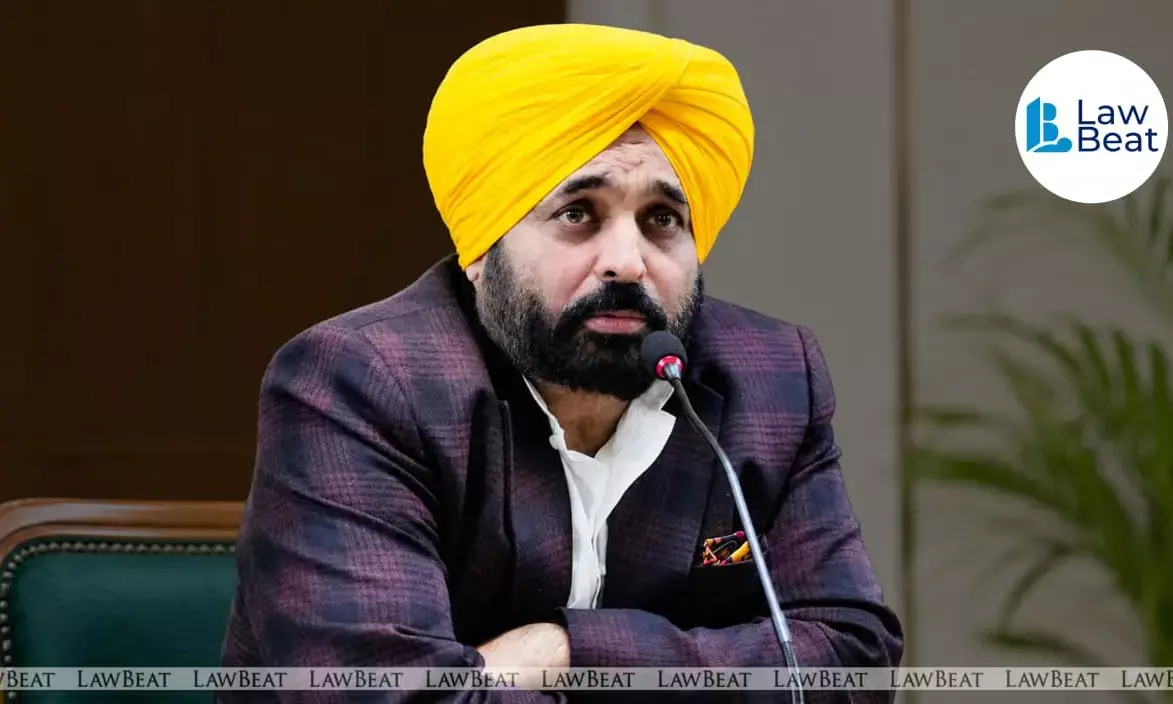
Beyond the Video: Why the Bhagwant Mann Case Is Now a Test for India's Deepfake Laws
A viral video. Competing forensic reports. Two arrests. And a sitting Chief Minister at the centre of it all. The Bhagwant Mann controversy, which began as a political storm over an allegedly objectionable video involving the Punjab Chief Minister, has now taken on a far more serious legal dimension, one that has less to do with what is in the video and far more to do with whether the science used to verify it was itself bought and forged.
On June 23, 2026, the Gurugram Police arrested two individuals, a cyber expert reportedly working on contract with the National Investigation Agency, and another man on allegations that they conspired to fabricate a digital forensic and cyber analysis report declaring the controversial video to be fake and AI-generated.
The FIR, registered by the Haryana Police, further alleges that Punjab Police officers paid Rs 10 lakh in cash to secure the report. According to investigators, a forensic expert from Sirsa alleged he was pressured, threatened, and coerced into obtaining the reports, and was handed the cash by security personnel in a hotel. The investigation is ongoing.
The Punjab government and Chief Minister Mann have contested these claims. Mann accused opposition parties, BJP, Congress, and the Akali Dal of colluding to weaponise religion against him, alleging that "the lab owners are being threatened by fear of FIR and torture" into making false statements. The Aam Aadmi Party separately maintained that forensic analysis of over 1,191 frames of the footage had shown that the person in the video is not Mann.
At the same time, the Akal Takht, the supreme temporal seat of Sikh authority had declared Mann "Guru Dokhi" and "Khalsa Panth Virodhi" on June 15, relying on forensic reports obtained by it that reportedly found the video to be authentic and not manipulated. After the Gurugram FIR, Akal Takht accused sections of the Punjabi media of blacking out the development, saying "the registration of an FIR in such an important matter has virtually been blacked out."
What makes this legally significant is what the FIR exposes about the fragility of forensic evidence in deepfake disputes. Under the Bharatiya Nyaya Sanhita, 2023, fabricating a forensic report to influence public institutions could attract charges of forgery under Sections 336 and 340 (Sections 463 and 470 of IPC), and cheating under Section 318 (Section 415). If senior police officers are ultimately found to have directed the preparation of false expert reports to mislead constitutional and religious institutions, the criminal exposure is substantial. In extreme cases, offences related to criminal conspiracy under Section 61 of the BNS (corresponding to Section 120A and 120B of IPC) may also be attracted.
The broader legal problem this case throws up is one India is only beginning to reckon with. Under the IT (Intermediary Guidelines and Digital Media Ethics Code) Amendment Rules, 2026, deepfake content is now formally classified as "Synthetically Generated Information," and intermediaries are bound by strict takedown timelines. However, the rules do not directly address what happens when the forensic process itself, the very mechanism meant to authenticate or debunk a video is manipulated. The law on deepfakes is evolving, but the law on forged forensic reports produced in service of a deepfake dispute remains largely untested in Indian courts.
This controversy has effectively placed two battlegrounds side by side: the authenticity of the video itself, and the integrity of the expert process used to examine it. Both remain unresolved. And until independent, court-supervised forensic examination settles the question of what the video actually shows and who paid whom to say otherwise, the controversy is unlikely to cool.