
What Are You Wearing? Still the Question
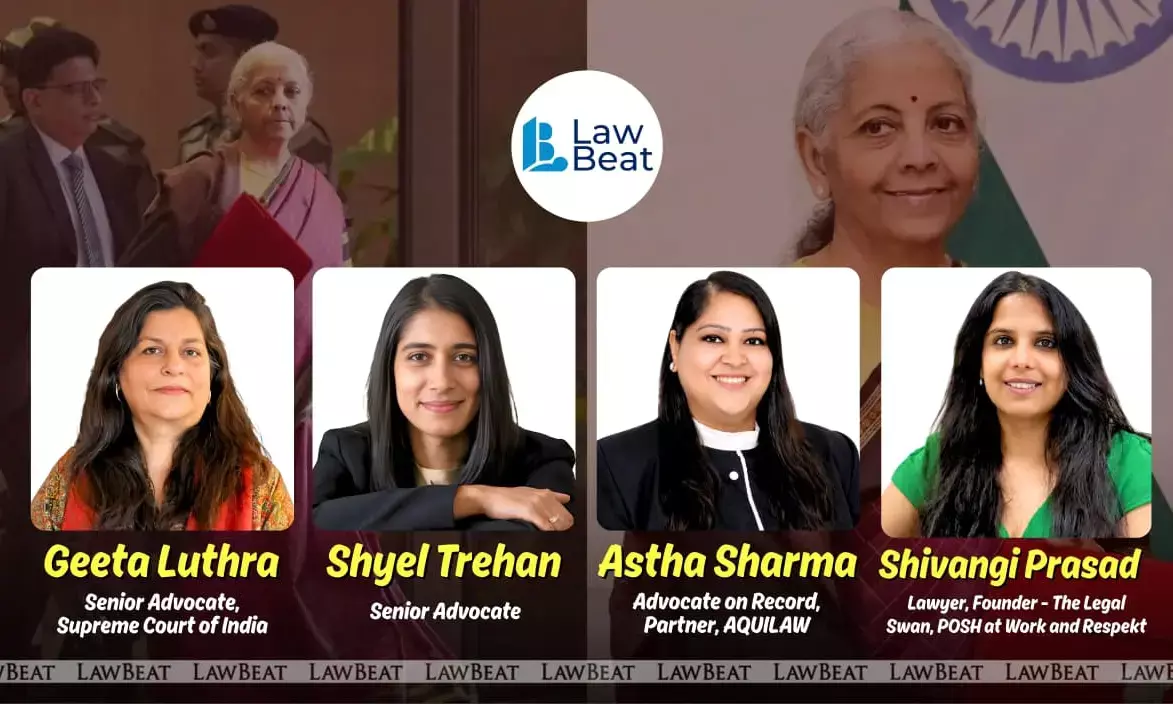
Finance Minister Nirmala Sitharaman flagged in Parliament on Sunday that, year after year, on the eve of the Union Budget, she is asked what she will wear, a question she noted is never asked of male finance ministers
When Parliament passed the Women’s Reservation Act, 2023, it marked a significant legislative intervention aimed at increasing women’s representation. Yet, beyond statutory guarantees, there exists another kind of reservation that remains unquestioned. One that is informally, but consistently, imposed on women alone: scrutiny of their appearance, personal choices, and perceived ability to balance professional and domestic roles.
Across professions, women continue to face questions that rarely, if ever, confront their male counterparts. Queries about attire, family responsibilities, or work-life balance persist in courtrooms, boardrooms, newsrooms, and even the highest offices of the State.
Finance Minister Nirmala Sitharaman drew attention to this reality on the floor of Parliament on Sunday, while presenting the Union Budget 2026-27. She pointed out that every year, on the eve of the Union Budget, public attention shifts from fiscal policy and governance to a question unrelated to her role as finance minister. Instead, she is asked what she plans to wear on Budget day.
“I dare say,” Sitharaman remarked, “would they ever ask this question to a male finance minister?”
While the Finance Minister clarified that such questions no longer unsettle her personally, she underlined that they operate as a form of appearance policing. They divert attention from a woman’s work to matters that are entirely irrelevant, subtly undermining professional authority and reinforcing the notion that a woman’s presence in public life remains open to casual judgment.
Sitharaman’s remarks reflect a larger, structural problem that cuts across sectors.
To understand how deeply this bias is embedded within the legal profession, Lawbeat spoke to women lawyers who are thriving in their careers, arguing complex cases, leading litigation, and shaping the law. They reflected on how often, and in what forms, they have encountered such gendered scrutiny, and how it has shaped their professional journeys.
Geeta Luthra, Senior Advocate, Supreme Court of India, recalls that when she began her career, the professional environment was far less inclusive. She notes that judges and advocates are products of the same society in which such biases are entrenched. While some male colleagues were supportive, others were dismissive, and stray remarks rooted in gender bias were not uncommon.
According to Luthra, resilience was essential.
“If you let it affect you, it will affect you,” she says, emphasising that she chose to brush such remarks aside.
She also points out that the profession has always had men who acknowledged and supported women lawyers, though their numbers were limited. Luthra recalls being entrusted with difficult cases early on, which allowed her to establish her competence and credibility.
Referring to a recent development, she highlights that in December last year, a Supreme Court Bench comprising Chief Justice of India Surya Kant and Justice Joymalya Bagchi mandated 30% women’s representation in State Bar Councils, despite resistance from sections of the Bar, including the Bar Council of Delhi. She describes this as a meaningful step forward, noting that large numbers of women are now participating in Bar elections, something that seemed unimaginable earlier.
“We had to work twice as hard,” Luthra says. “Today, women are present in significant numbers in the legal space, and that allows them to demand enforcement of their rights.”
Senior Advocate Shyel Trehan agrees with the Finance Minister and says that she did well to call it out. Trehan says that while commenting or even admiring attire in a workplace may appear to be seemingly harmless, it does demonstrate deep-rooted gender biases and structures.
“Do these biases and double standards exist in legal practice, they certainly do. A women speaking in a booming voice will often be called shrill, yet a man will be applauded for being loud" Trehan highlights.
She stresses that grabbing a seat at the table and keeping your seat at that table is still a work in progress for women in legal practice.
Astha Sharma, Advocate on Record, Partner, AQUILAW, echoes the Finance Minister’s remarks, stating that they resonate deeply with her experience in the legal profession. She speaks of an unspoken scrutiny that often has little to do with competence.
Recalling an early incident in her career, Sharma notes that an adjournment sought on behalf of her ailing senior was denied, while multiple cases listed before her were adjourned without hesitation at the request of male advocates. She highlights that not only this, but the judge also proceeded to make a callous comment on her open hair.
She also points to everyday instances of bias in court, such as clerks questioning instructions given by women advocates while readily accepting directions from male colleagues, even when the latter are junior in experience.
Sharma further notes that some senior advocates hesitate to engage women juniors, based on assumptions that they may not stay late, may not be serious about work, or may eventually leave the profession due to marriage or children.
According to Sharma, a woman lawyer’s attire, time spent in court, marital status, domestic responsibilities, and even assertiveness are closely scrutinised. Assertiveness, she adds, is often negatively labelled once it crosses an unwritten threshold, a standard rarely applied to men. “For a female advocate, credibility must often be built through repeated appearances rather than assumed,” she says.
At the same time, Sharma acknowledges signs of gradual change. She points to the growing visibility of women in courtrooms, an increase in substantive briefs being entrusted to women lawyers, and a younger generation that is more conscious of these biases. However, she stresses that the shift remains largely cultural rather than structural, and true change will come only when a woman lawyer’s authority in court is seen as routine, not remarkable.
Shivangi Prasad, lawyer and founder of The Legal Swan, POSH at Work and Respekt, observes that despite strong credentials and years of experience, women continue to be assessed through a different lens. Questions about temperament, family responsibilities, appearance, and manageability surface far more frequently than any equivalent scrutiny faced by men.
Drawing from her experience in legal and compliance spaces, Prasad notes that women’s authority is often undermined through tone-policing and assumptions that assertiveness equates to aggression, or that women are inherently less capable of handling conflict because they are perceived as “soft” or “emotional.”
While she acknowledges signs of change, including greater representation in leadership roles and increased institutional awareness, Prasad points out that bias has not disappeared. Instead, it has become quieter and more sophisticated, sometimes manifesting through remarks such as being labelled a “diversity hire.”
According to Prasad, real change will not come from representation alone, but from dismantling the everyday, normalised standards that continue to judge women on everything except the quality of their work.
Sitharaman’s remark in Parliament may have centred on a question of attire, but the issue it exposes runs far deeper. Until professional authority is detached from gendered scrutiny, and women are evaluated solely on their work, such questions will continue to surface, not as anomalies, but as symptoms of a bias that remains firmly entrenched.