
When Courts Intervene in Cinema: Free Speech, Reputation and the Kerala Story Debate
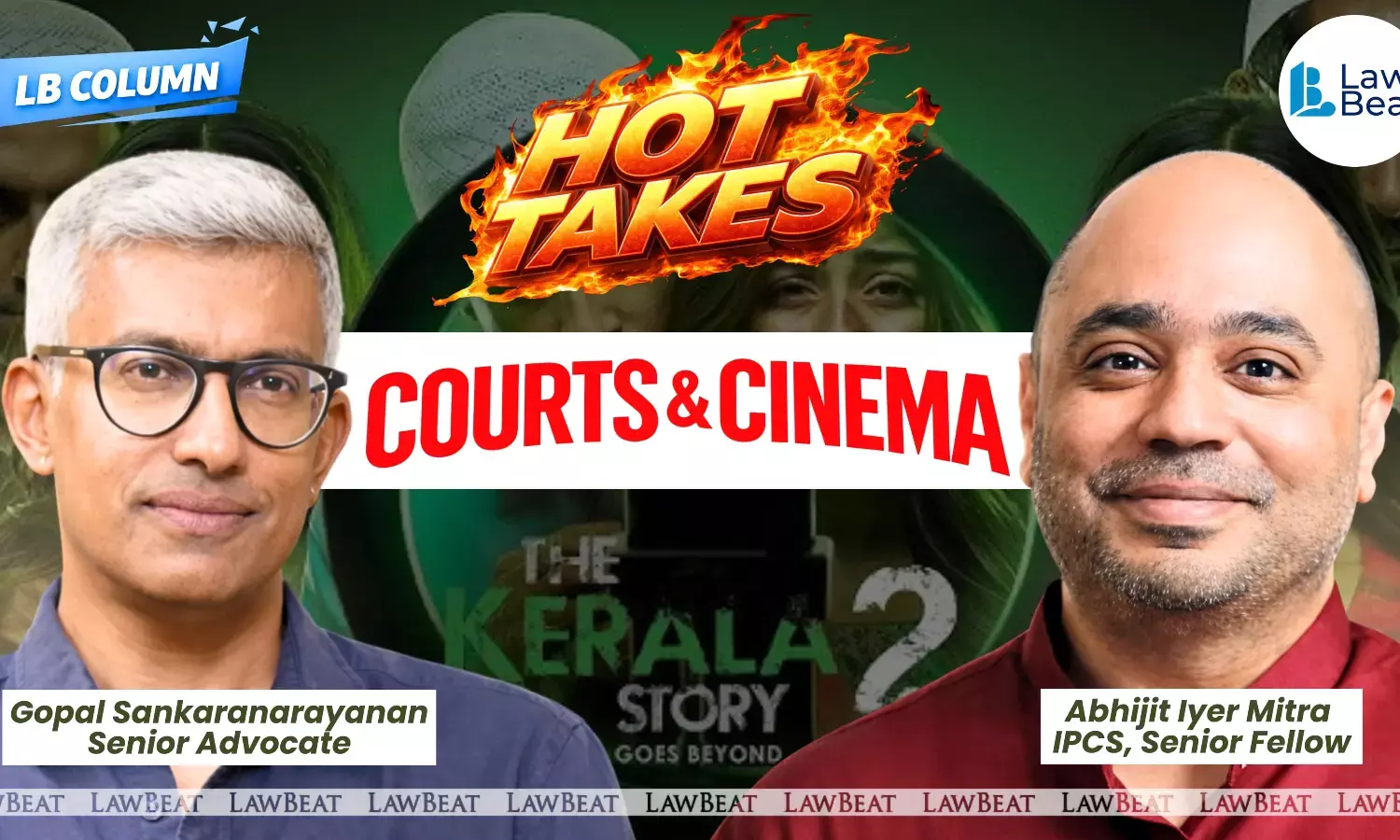
The brief judicial halt on The Kerala Story 2 illustrates the uneasy space where constitutional free speech, reputational claims and fears of social unrest collide in India’s courtrooms
The recent legal battle over the film, The Kerala Story 2 briefly placed the Kerala High Court at the centre of a constitutional dilemma. How far should courts go in intervening against artistic expression, specifically centres around a film, which has already been certified by the Central Board of Film Certification (CBFC)?
The controversy around Kerala Story 2 erupted days before the film’s scheduled release on February 27, when a single-judge bench of the Kerala High Court stayed the film for fifteen days. The petitioners argued that the film’s title and promotional material created the impression that Kerala was a hub of radicalisation and terror-linked activity, thereby harming the collective reputation of Keralites and threatening communal harmony.
The film had already received a UA-16+ certificate from the CBFC after several modifications, including 16 cuts and replacement of nearly two minutes of footage. The producers argued that once a statutory expert body had applied its mind and granted certification, courts should exercise restraint in interfering with the decision. Ultimately, the single bench order was stayed & the film reached theatres on February 28.
This litigation, like many others, concerning stalling release of films hinges on a recurring constitutional question: should courts stall the release of a certified film merely because sections of society claim reputational injury or fear social repercussions?
The tension between artistic freedom and public order is not new in Indian constitutional law. Films fall squarely within the protection of Article 19(1)(a) of the Constitution, but the Cinematograph Act permits pre-certification scrutiny. Once certification has been granted, courts traditionally intervene only in exceptional circumstances.
Yet controversies around films often reach courts at the last minute, placing judges in the position of balancing artistic freedom against apprehensions of social unrest. The Kerala Story 2 litigation illustrates how fragile that balance can be.
The Question of Reputation
In challenging the film, the petitioners invoked Article 21 and argued that the reputation of an entire state and its people could be harmed by the narrative suggested by the film’s title and promotional material including teaser of the film.
Their argument drew support from the Supreme Court’s observations in the Ghooskhor Pandat case, where the Court held that freedom of speech cannot be exercised to denigrate a section of society.
Though courts have repeatedly cautioned against treating subjective offence as a sufficient ground to suppress expression, Supreme Court recently dismissed a challenge to the title of the Hindi film Yadav Ji Ki Love Story, noting that mere reference to a community name without a negative qualifier cannot automatically be treated as defamatory.
The debate therefore becomes one of constitutional boundaries and how courts navigate through them, or when does narrative or representation cross the line from expression into actual reputational harm?
Limits of Judicial Intervention
Senior Advocate Gopal Sankaranarayanan believes courts should adopt an approach that maximises protection for speech unless there is a demonstrable threat to public order.
“I have always been a firm believer in free speech and that it should be granted the widest amplitude possible unless it is in some way providing a real threat to public order or inciting violence in a dangerous manner,” he says.
His concern extends beyond individual cases to what he sees as a broader pattern of courts increasingly becoming arenas where artistic expression is being contested.
“While the banning of books and films that are unpalatable to particular quarters of society or those in power is not a new event, I find these instances on the increase with the court playing an active part in engaging with it,” Sankaranarayan points out.
Drawing from historical examples of controversial cinema, he states that even deeply offensive narratives should remain within the domain of public debate rather than judicial prohibition.
He points out,
“More than a hundred years ago, D.W.Griffith’s ‘A birth of a nation’ was received as extremely controversial and racist and has remained so. Yet we need images and stories to be told however extreme they are so that the views can draw their own conclusions and make judgements.”
He concludes with a warning against courts being drawn into disputes over taste and morality,
“If people find it unpalatable or repulsive or unpleasant they should just not read or watch it. And neither should the courts allow themselves to become battlegrounds for the limits of free speech”.
The Ground Reality Problem
Strategic affairs analyst and IPCS Senior Fellow Abhijit Iyer-Mitra approaches the issue from a different angle. While acknowledging the importance of provocative expression in democratic societies, he emphasises the realities of India’s social fabric.
“Social commentary is a key aspect of every democratic society,” Mitra says.
However, he cautions that theoretical commitment to free speech often collides with ground realities, adding,
“India lives parallelly in two centuries - the cities live in the 21st, the villages (some even inside cities) in the 11th.”
According to him, weak law enforcement and the threat of violence frequently compel courts to step in.
“Given abysmal policing - riots can and do breakout & are used as a tool of political negotiation. Given this reality of law & order - the courts have to intervene every time there is a controversy (which implicitly is the threat of violence),” Mitra points out.
Between Absolutism and Restraint
The debate surrounding The Kerala Story 2 ultimately exposes a deeper constitutional tension. Should free speech be treated as an absolute principle, limited only by clear incitement to violence? Or should courts intervene more readily when speech risks aggravating social tensions in a unique democracy?
Neither approach offers an easy answer.
While free speech absolutism risks ignoring India’s complex social realities, where narratives can quickly become political flashpoints, frequent judicial intervention risks turning courts into arbiters of what is acceptable storytelling. This directly risks infantilising the people, the will & rights of whom supersedes every rulebook.
As controversies around cinema increasingly migrate to courtrooms, the challenge for the judiciary will remain. This will ultimately be like walking on eggshells — protecting constitutional freedoms and at the same time, resisting the temptation to regulate narratives that are meant for society, not judges, to debate.