
Bhojshala-Kamal Maula Mosque | Jain Petitioner Tells Madhya Pradesh High Court Site Also Linked To Jain Traditions
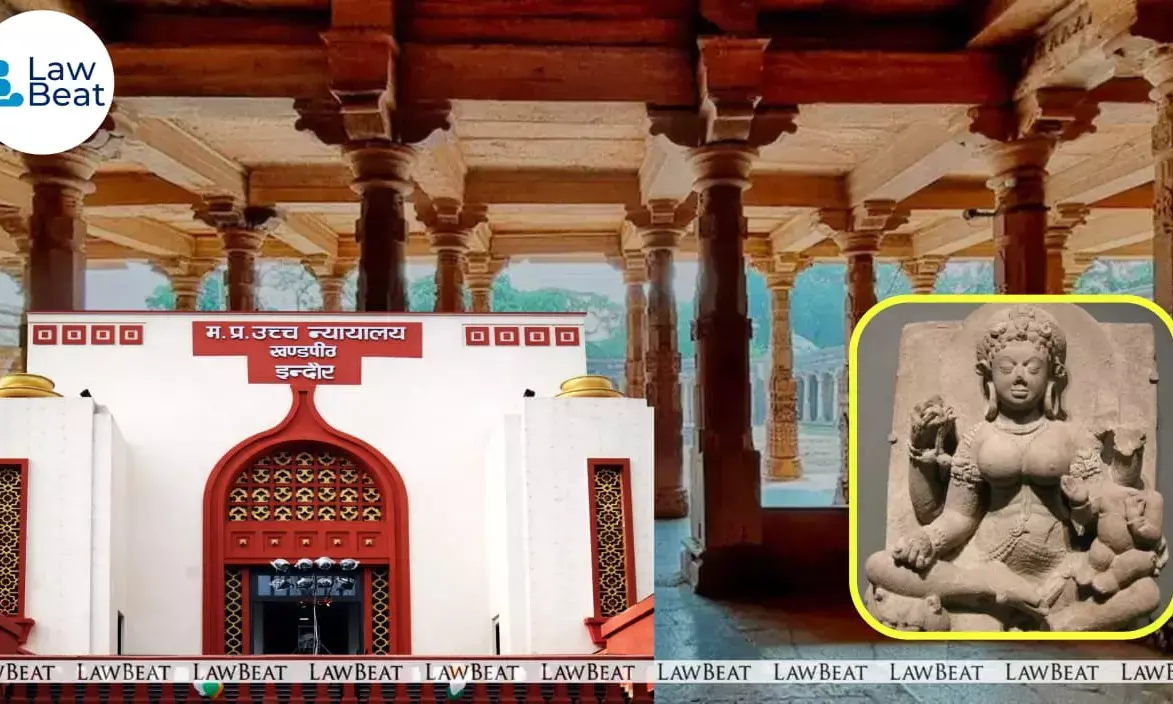
Jain Petitioner Says Ambika Idol Mistakenly Identified as Saraswati
The Indore Bench of the Madhya Pradesh High Court on Tuesday heard submissions by advocate Dinesh Rajbhar, appearing for petitioner in Shri Salek Chand Jain v. Union of India Through its Secretary Culture Government of India, who claimed that the disputed Bhojshala complex is also associated with Jain traditions and sought limited prayer rights for the Jain community at the site.
Appearing before a Division Bench of Justice Vijay Kumar Shukla and Justice Alok Awasthi, Rajbhar challenged the 2003 order of the Archaeological Survey of India regulating access to the Bhojshala-Kamal Maula Mosque complex at Dhar.
Reading from the impugned order, Rajbhar submitted that the ASI had permitted only two communities; Muslims for Friday namaz and Hindus for Basant Panchami rituals and Tuesday worship, while completely ignoring Jain claims associated with the site.
He argued that Raja Bhoj, after whom Bhojshala is named, was not only a patron of Hindu learning but also supported Jain scholars and traditions. According to him, the site historically functioned as a centre of learning where Jain scholars were also present.
Addressing objections regarding maintainability, Rajbhar submitted that his client had earlier approached the High Court in 2024 and later refiled the petition in accordance with procedural requirements. He further relied on observations made by the Supreme Court of India in earlier proceedings, arguing that connected matters relating to the dispute could be heard together by the Division Bench.
Rajbhar repeatedly stressed the secular character of the Indian Constitution and argued that equal treatment should be extended to Jain devotees as well. He submitted that India’s constitutional commitment to secularism and fraternity required recognition of all communities historically associated with the site.
In support of his case, Rajbhar referred to historical writings and archaeological material to argue that portions of the structure reflected Jain architectural influence. He cited a report published by the Government Central Press, Shimla in 1882, which described parts of the structure as having been erected from “Jaina remains” and compared certain domes and columns to the famous Jain temples of Dilwara Temples at Mount Abu.
He also relied on portions of the ASI’s reply acknowledging the existence of Sanskrit and Prakrit inscriptions and findings from the recent scientific survey. Rajbhar argued that the ASI had selectively referred to remains linked to Hindu traditions while overlooking Jain associations.
A substantial portion of the submissions focused on an idol claimed by Hindu parties to be that of Goddess Saraswati. Rajbhar contended that the idol was in fact associated with Jain traditions and represented Ambika, a Jain Yakshini. Referring to images and museum descriptions placed on record, he argued that the iconography, including miniature Tirthankara figures carved on the statue, distinguished it from Hindu depictions of Saraswati.
He submitted that the idol, presently stated to be in the British Museum, had been wrongly identified in public discourse. According to Rajbhar, Jain iconography could be distinguished by the presence of Tirthankara symbols and cross-legged meditative depictions typically absent in Hindu deity sculptures.
The Bench noted that the petitioner’s reliefs primarily sought permission for Jain worship, restoration of Jain idols allegedly removed to London, establishment of a Jain trust for management of the site, and restoration of a Jain Gurukul within the premises. The main concern appeared recognition of Jain religious associations at the site and limited prayer rights rather than an exclusive ownership claim over the disputed structure.
The Bench will continue hearing the matter Tomorrow (May 7, 2026).
Case Title: Hindu Front for Justice (Regd. Trust No. 976) Through its President Ms. Ranjana Agnihotri v. Union of India Ministry of Culture and other connected matters
Date of Hearing: May 6, 2026
Bench: Justice Vijay Kumar Shukla and Justice Alok Awasthi