
Bhojshala-Kamal Maula Mosque | State Is Defending Constitutional Values, Not Any Faith: Madhya Pradesh Advocate General
MP Government Relies on ASI Report, Historical Records and Ayodhya Principles
The Madhya Pradesh High Court at Indore on Wednesday continued hearing the long-running Bhojshala-Kamal Maula complex dispute, with Advocate General Prashant Singh mounting an extensive defence of the State’s position by invoking constitutional principles, public order concerns, the Ayodhya verdict and archaeological findings linked to the disputed site in Dhar.
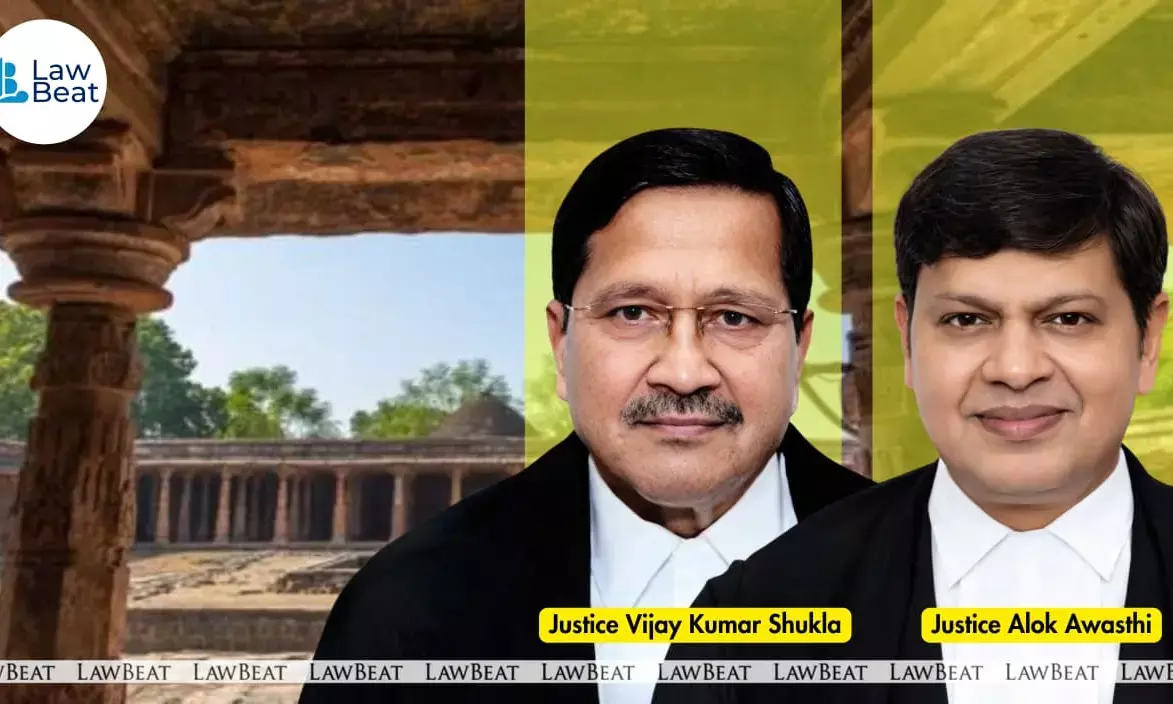
Appearing before the Division Bench of Justice Vijay Kumar Shukla and Justice Alok Awasthi, Singh argued that the State of Madhya Pradesh was not defending any religion but was duty-bound to protect constitutional values and preserve communal harmony.
Calling the Bhojshala dispute a “flash point”, the Advocate General told the Court that repeated tensions surrounding the monument had compelled the administration to deploy massive security arrangements over the years.
He referred to incidents of communal violence in 2003, registration of multiple FIRs in later years and heavy police deployment during Basant Panchami observances. Singh informed the Court that around 8,000 security personnel, including senior police officers and central paramilitary forces, had been deployed during January 2026 proceedings to maintain order and ensure separate arrangements for namaz and Hindu prayers. He argued that continuation of the temporary arrangement operating since April 7, 2003 had left the administration in a state of uncertainty.
Also Read: Bhojshala-Kamal Maula Mosque | ASI Argues Protected Monument Status Overrides Worship Claims
The Advocate General also countered objections raised regarding the maintainability of the petitions under Article 226 of the Constitution. He submitted that the existence of disputed questions of fact could not act as a “jurisdictional veto” against the High Court’s writ powers, particularly where parties sought enforcement of fundamental rights under Article 25.
Relying on decisions including Gunwant Kaur v. Municipal Committee, Bathinda and ABL International Limited v. Export Credit Guarantee Corporation of India Limited, Singh argued that the High Court retained wide powers to examine both factual and legal issues in appropriate cases.
A substantial portion of the State’s submissions centred around principles emerging from the Supreme Court’s Ayodhya judgment. Singh told the Court that the ruling provided the framework through which disputes involving faith, continuity of worship, religious character and archaeological evidence ought to be assessed.
He outlined what he described as ten principles flowing from the Ayodhya verdict, including the standard of preponderance of probabilities in civil disputes, the relevance of continuity of belief and the evidentiary value of official gazetteers and ASI reports.
Referring extensively to the Archaeological Survey of India’s reports, Singh highlighted findings suggesting the existence of a pre-existing structure beneath the present monument. He pointed to references concerning Sanskrit and Prakrit inscriptions, temple architecture, mutilated deity sculptures and inscriptions allegedly indicating conversion of a temple into a mosque structure during the medieval period.
Singh further relied on the 1935 Dhar Darbar proceedings and the subsequent “Elan” issued by the erstwhile administration. According to him, the historical proceedings demonstrated that the site had long been referred to as Bhojshala in official records and that objections had arisen only after disputes over signboards installed at the complex.
Questioning the legal sanctity of the 1935 Elan, the Advocate General argued that the announcement could not automatically attain the status of law after the Constitution came into force. Citing constitutional provisions and Supreme Court precedent, he contended that only measures possessing legislative character and surviving the tests under Articles 372 and 366 could continue as enforceable law. Singh maintained that executive proclamations issued by princely rulers could not, by themselves, extinguish competing religious claims or override constitutional guarantees.
He also stressed that courts dealing with religious disputes must examine historical records, conduct of worshippers and surrounding circumstances together rather than in isolation. Singh submitted that archaeology could not be dismissed as weak evidence merely because rival parties disputed its conclusions.
According to him, the ASI’s findings deserved due weight since courts lacked the technical expertise possessed by specialised bodies. Closing his submissions, the Advocate General said the State was assisting the Court only to secure a permanent legal framework capable of preventing recurring conflict and ensuring certainty for the administration and stability.
The Bench will continue to hear the matter Tomorrow (May 8, 2026).
Case Title: Hindu Front for Justice (Regd. Trust No. 976) Through its President Ms. Ranjana Agnihotri v. Union of India Ministry of Culture and other connected matters
Date of Hearing: May 7, 2026
Bench: Justice Vijay Kumar Shukla and Justice Alok Awasthi