
Delhi Court Awards Life Sentence To Asiya Andrabi in UAPA Case, Two Associates Get 30 Years
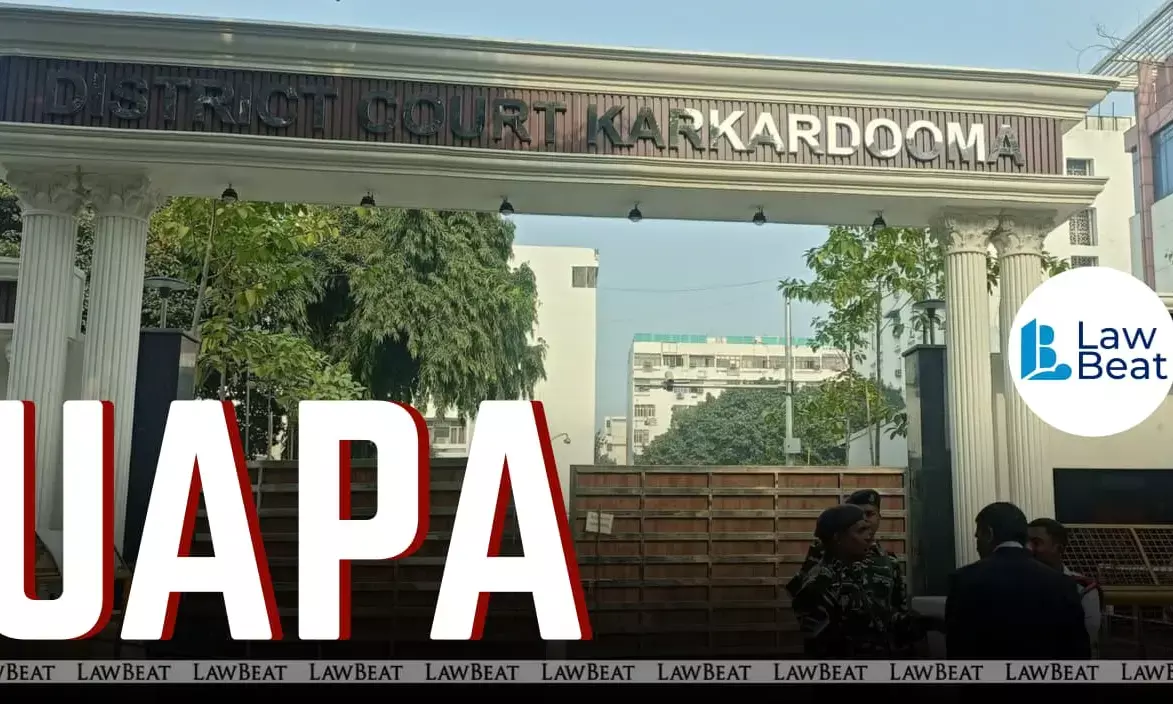
Delhi court sentences Dukhtaran-e-Millat chief Asiya Andrabi to life imprisonment in UAPA case
A Delhi court on Tuesday sentenced Dukhtaran-e-Millat chief Asiya Andrabi to life imprisonment following her conviction under the Unlawful Activities (Prevention) Act (UAPA).
Additional Sessions Judge (ASJ) Chander Jit Singh of Karkardooma Court pronounced the sentence after hearing arguments on the quantum of punishment in the case.
The court also sentenced Andrabi’s associates, Sofi Fehmeeda and Nahida Nasreen, to 30 years of rigorous imprisonment each. Both had been convicted alongside Andrabi in the same case.
The case stemmed from an NIA probe initiated on the directions of the Union Ministry of Home Affairs after intelligence inputs suggested that DeM members were using online platforms and public events to incite hatred, glorify armed militancy and advocate Kashmir’s merger with Pakistan. The agency described Dukhtaran-e-Millat as an all-women separatist outfit with the declared objective of secession from India.
Notably, on January 14, the Court had convicted Dukhtaran-e-Millat (DeM) chief Asiya Andrabi and her associates Sofi Fehmeeda and Nahida Nasreen for their involvement in a terror conspiracy and seditious activities aimed at waging war against the Government of India and promoting the secession of Jammu and Kashmir.
Special NIA Judge Chander Jit Singh had held that the National Investigation Agency had successfully proved that all three accused were active members of the proscribed terrorist organisation Dukhtaran-e-Millat and had worked in tandem to propagate anti-India, secessionist ideology through speeches, public gatherings and social media platforms.
In a detailed judgment, the Court had convicted the three women under Sections 18, 20, 38 and 39 of the Unlawful Activities (Prevention) Act. They were also found guilty of offences under Sections 120B (criminal conspiracy) and 121A (waging war against the Government of India) of the IPC, along with Sections 153A and 153B for promoting enmity and Section 505 for statements conducing to public mischief.
The Court had held that the material on record clearly demonstrated endorsement, encouragement and active support for armed struggle as a means to seek secession of Kashmir from India. It observed that there was a clear agreement among the accused regarding their activities, which were aimed at promoting secession in the name of religion and advocating Kashmir’s accession to Pakistan, coupled with support for violence.
Relying on witness testimonies and digital evidence relating to videos, posts and reposts, the Court had noted that the accused were “working in tandem towards the common goal of secession of Kashmir from India in the name of religion.” The judge had said this aspect of coordinated action was not even seriously disputed.
The Court had also examined the scope of the expression “integrity of India,” holding that it signified the nation being united and undivided, including its physical unity. It ruled that any attempt to seek secession of an integral part of the country on religious grounds would attract Section 153B of the IPC.
Significantly, the ASJ had pointed out that while the accused repeatedly claimed that Kashmir should merge with Pakistan due to its Muslim-majority population, they were conspicuously silent on the status of other Muslim-majority regions in India. “The entire focus of the narrative of the accused is Kashmir and nothing else,” the court had observed.
Rejecting the accused’s reliance on UN resolutions and claims of self-determination, the Court noted the inherent contradiction in simultaneously asserting that Kashmir was already part of Pakistan and that India was illegally occupying it. “It is clear that the accused do not bear allegiance to the Constitution of India and are not ready to uphold its sovereignty,” the Court had concluded.
Case Title: National Investigation Agency v. Aasiya Andrabi @ Aasiyeh Andrabi & Ors.
Bench: ASJ Chander Jit Singh
Order Date: March 24, 2026