
‘Grounds Not Reasonable’: Delhi Court Rejects Umar Khalid’s Interim Bail Plea For Uncle’s Chehlum, Mother’s Surgery
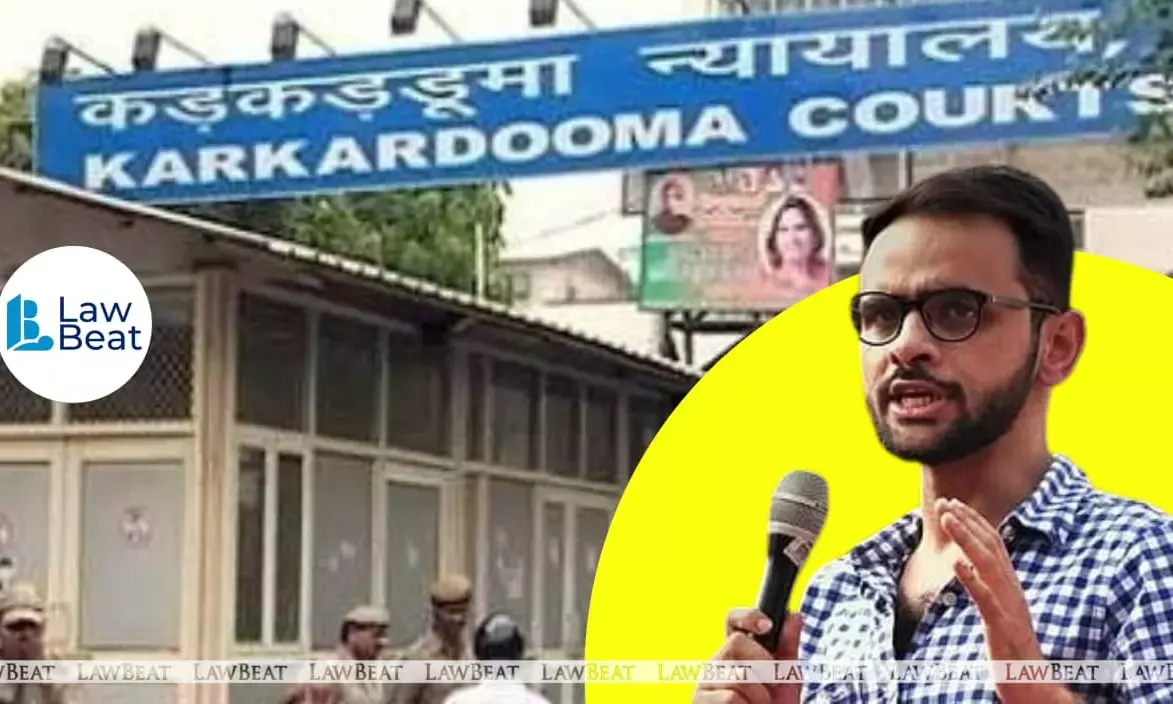
A Delhi court restored Umar Khalid's second weekly e-mulakat, allowing him two video calls every week with his family in the Delhi riots conspiracy case
A Delhi court on Tuesday rejected activist Umar Khalid’s plea seeking 15 days’ interim bail to attend the Chehlum ceremony of his late uncle and to care for his mother, who is scheduled to undergo surgery next month.
Additional Sessions Judge Sameer Bajpai at Karkardooma court passed the order.
Khalid had moved the application under Section 483 of the Bharatiya Nagarik Suraksha Sanhita (BNSS), read with Section 439 of the Code of Criminal Procedure.
Appearing for Khalid, Advocate Sahil Ghai told the court that Khalid’s uncle, Khursheed Ahmad Khan, passed away on April 10, 2026, and the 40th day ritual, or Chehlum, is scheduled to be held in Delhi on May 24.
The defence also informed the court that Khalid’s mother has been unwell for a long time and was recently examined at Alshifa Multispeciality Hospital, where doctors advised her to undergo lump excision surgery on June 2.
Khalid argued that he was the eldest and only son in the family and needed to take care of his mother before and after the surgery. The plea stated that although he has five sisters, four of them are married and live away from the family home. It was also submitted that his 71-year-old father is not in a position to look after his wife during the medical procedure.
The defence further pointed out that Khalid had previously been granted interim bail on multiple occasions and had always complied with the conditions imposed by the court, surrendering on time each time. Reliance was also placed on interim bail granted to co-accused persons, including Tasleem Ahmad, Shifa Ur Rehman and Athar Khan, on similar medical and family-related grounds.
However, the prosecution strongly opposed the plea.
Special Public Prosecutor (SPP) Anirudh Mishra argued that Khalid was attempting to misuse the court’s leniency. The prosecution submitted that while earlier interim bail requests were based on reasonable grounds, the present plea did not justify temporary release.
On the issue of attending the Chehlum ceremony, the prosecution argued that Khalid’s uncle did not fall within the category of “immediate relations” and that other family members could attend the ritual.
As for his mother’s surgery, the prosecution contended that Khalid’s sisters and father were available to assist her. It also described the procedure as a “minor surgery” involving local anaesthesia and argued that Khalid’s presence was not necessary.
After hearing both sides, the court refused to grant relief.
The court observed that merely because Khalid and some co-accused persons had earlier been granted interim bail did not mean such relief had to be granted “on every occasion.” “The Court has to consider every fresh application on its own merits and should allow the same only when the grounds are reasonable,” the judge noted.
Rejecting the first ground, the court said attending the Chehlum ceremony of his uncle was “not that necessary.” It observed that if the relationship had been so immediate, Khalid would have sought release at the time of his uncle’s death itself and not several weeks later.
On the second ground, the court said Khalid’s family members were expected to support his mother during her surgery and recovery. It also took note of the prosecution’s submission that the surgery was a simple procedure for removal of lumps.
Finding the reasons cited by Khalid “unreasonable,” the court dismissed the interim bail application.
In a related news, last month, the Supreme Court had dismissed Umar Khalid's petition seeking a review of its January 5 order that denied him bail in the larger conspiracy case linked to the 2020 Delhi riots. It is to be noted that, on December 10, 2025, the Apex Court had reserved its verdict on the bail pleas. ASG Raju had strongly opposed the bail requests, asserting that the violence that rocked Northeast Delhi was not a peaceful protest against the Citizenship Amendment Act but part of a “well-planned conspiracy” to spark unrest and destabilise the government.
Khalid and the others had filed a Special Leave petition (SLP) before the Apex Court challenging the Delhi High Court's September 2, 2025 order denying bail to them. The High Court had held “violence in the name of protest is not free speech” as it dismissed the bail pleas of Umar Khalid, Sharjeel Imam, and seven others.
The case stems from the violence that erupted in Northeast Delhi in 2020 during protests against the Citizenship Amendment Act (CAA). The clashes between supporters and opponents of the Act led to large-scale incidents of stone-pelting, arson, and violence, leaving 53 people dead and injuring thousands.
Case Title: State v. Tahir Hussain
Bench: ASJ Sameer Bajpai
Order Date: May 19