
NEET Paper Leak Case: Delhi Court Takes Cognizance Of 20,000-Page CBI Chargesheet
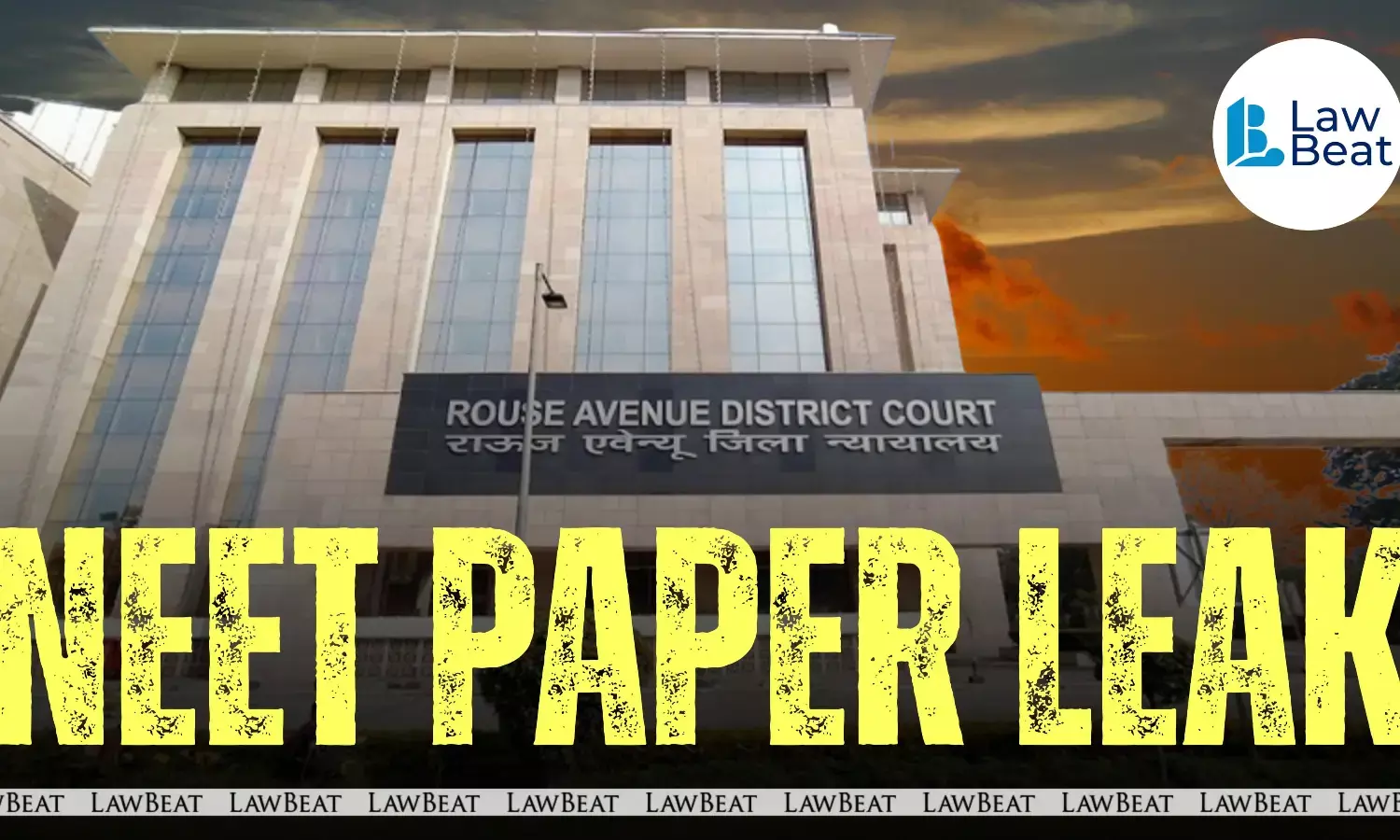
Delhi fast-track court took cognizance of the CBI chargesheet against 13 accused in the NEET-UG 2026 paper leak case
A Delhi court on Wednesday took cognizance of the Central Bureau of Investigation’s (CBI) chargesheet against 13 accused in the alleged NEET-UG 2026 paper leak case, paving the way for the commencement of proceedings on the charges.
Special Judge Ajay Gupta, presiding over the designated fast-track court for criminal cases arising from paper leaks and use of unfair means in public examinations, took cognzance of the CBI’s final report. The court is expected to hear arguments on framing of charges from August 13.
During the hearing, the CBI informed the court that names of some witnesses, which had appeared in media reports, could belong to minors. The agency also pointed out that portions of the chargesheet, which had not yet been placed in open court, were being published by newspapers.
The court expressed strong displeasure over the publication of witness names and contents of the chargesheet.
“This is very shocking… Whatever has not yet been stated in court and is currently part of the chargesheet… all of that being made public in the media is extremely shocking,” the court observed.
The court said responsible media organisations should refrain from publishing such material, particularly where it could reveal the identities of witnesses.
CBI Chargesheet names three NTA Subject Experts as alleged sources
According to the CBI chargesheet, three National Testing Agency (NTA) subject experts allegedly acted as the primary sources of the leaked NEET-UG question paper. They have been identified as P V Kulkarni, a Chemistry expert; Manisha Sanjay Havaldar, a Physics expert; and Manisha Gurunath Mandhare, who was associated with Botany and Zoology.
The CBI has alleged that the paper leak involved a wider conspiracy involving candidates, intermediaries, coaching-centre operators and subject experts.
The agency's investigation reportedly began with a series of arrests on May 13. Mangilal Biwal, Dinesh Biwal and Vikas Biwal were arrested in Rajasthan after their mobile phones allegedly contained PDFs of the leaked question paper received through Telegram on April 29. Notably, on August 10, the Court had rejected their plea seeking permission to undergo polygraph and Brain Electrical Activation Profile (BEAP), commonly referred to as brain-mapping, tests.
On the same day, the CBI arrested Yash Yadav in Gurugram and Shubham Khairnar in Nashik. Dhananjay Lokhande was also arrested in Pune on May 13. According to the chargesheet, he allegedly attempted to destroy his mobile phone to eliminate evidence before being apprehended.
Manisha Sanjay Waghmare was arrested in Pune on May 14. The CBI has described her as one of the alleged prime conspirators involved in the leakage and dissemination of the NEET-UG 2026 question paper for monetary consideration. She allegedly acted as a link between candidates and the subject experts.
Alleged mastermind, subject experts arrested
Following interrogation of the initial accused, the CBI arrested P V Kulkarni from Latur on May 15. Manisha Mandhare was arrested from Pune on May 16.
Shivraj Motegaonkar, founder of a coaching centre in Latur, was arrested on May 17.
The agency subsequently arrested Manisha Sanjay Havaldar on May 22 from Latur, while Tejas Shah and Dr Manoj Shirure were arrested on May 26 from Pune and Latur respectively.
The CBI has relied substantially on forensic examination of electronic devices. According to the chargesheet, forensic imaging of mobile phones led to the recovery of deleted WhatsApp conversations and PDF documents allegedly containing the leaked questions.
CBI Relies on Digital Evidence and money trail
The chargesheet details the alleged use of digital communication channels to circulate the leaked questions and traces the alleged conspiracy through electronic evidence recovered from the accused.
The agency has also examined the financial trail arising from the alleged leakage and has taken steps including freezing bank accounts, bank lockers and a demat account during the investigation.
The accused have been booked for offences including criminal conspiracy, cheating, criminal breach of trust and destruction of evidence under the Bharatiya Nyaya Sanhita, besides provisions of the Prevention of Corruption Act and the Public Examinations (Prevention of Unfair Means) Act, 2024.
NEET-UG 2026 Paper leak case
The CBI case arises from alleged irregularities and leakage of the NEET-UG 2026 question paper. The examination was conducted by the NTA on May 3 for admissions to undergraduate medical courses.
Following allegations of a paper leak, the examination was cancelled on May 12 and a re-examination was subsequently conducted on June 21.
The CBI registered its case on May 12 following a complaint from the Department of Higher Education and constituted multiple teams to investigate the alleged leak. The investigation involved 72 officers and personnel, along with eight cyber-forensic experts.
The agency conducted searches at 92 locations across several States, including Maharashtra, Rajasthan, Haryana and Delhi, and seized digital devices, communication equipment and documents. The CBI has filed a chargesheet running into nearly 20,000 pages against the 13 accused, citing 360 witnesses, 422 documents and 43 material objects.
With the Delhi court now taking cognisance of the chargesheet, the case is set to move to the next stage, with arguments on framing of charges expected to commence from August 13.
[Inputs: PTI]