
‘Protects All Faiths Equally’: Allahabad High Court Reiterates Article 25 Guarantee After ‘20-Person Cap For Namaz' Row
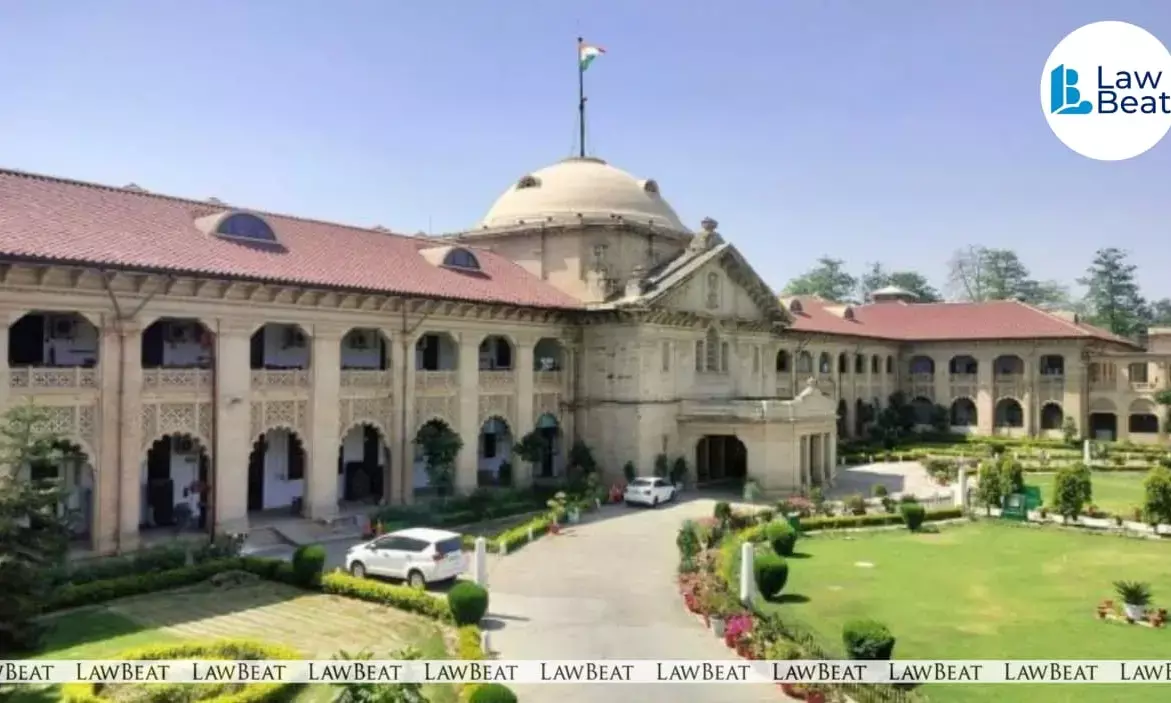
Allahabad High Court directs Uttar Pradesh authorities not to restrict the number of people offering namaz at a private premises in Sambhal used for prayers since 1995.
There shall be no restriction on the number of persons offering namaz at a private premises where prayers have been traditionally conducted, the Allahabad High Court has held, while directing the Uttar Pradesh authorities not to obstruct worship at the site.
Court, however, clarified:
"The elucidation of Article 25 of the Indian Constitution by this Court, is not to be construed as giving any special status to the adherents of the Islamic faith in India. This Court has only laid down that article 25 gives every religion and faith in India an equal and immutable right to profess (declare his/her faith) practice (rituals, prayers, ceremonies and festivals) and propagate (to teach tenets and practices of a faith to others) equally across the board without any 'ifs and buts', subject only to public order, morality and health, which also prohibits actions and speech having the propensity to vitiate public order by pitting one religious denomination against the other, which would take the proscribed act beyond the scope of the protection of article 25 and expose the person to the full rigours of the criminal law."
The division bench of Justice Atul Sreedharan and Justice Siddharth Nandan was dealing with a plea filed by Munazir Khan, who claimed that land in his possession had been dedicated to Waqf by his grandfather in 1995 for the purpose of constructing a mosque. The petitioner asserted that namaz had been offered at the site for several years and that restrictions imposed by authorities during Ramzan were unjustified.
This final order comes in continuation of earlier proceedings in the same matter, where the high court had taken a strong view against the Sambhal district administration for limiting the number of worshippers to twenty.
The bench had then made sharp observations that apprehensions of law and order cannot be used to curtail religious practice, and that if authorities were unable to maintain order, they should resign or seek transfer.
As recorded in the order dated February 27, 2026, the petitioner contested the permission granted for only twenty persons to offer prayers at the premises, stating that such a restriction was impractical during Ramzan when a larger number of worshippers gather for prayers.
In the present round, appearing for the State, the Additional Advocate General submitted that the reference to the twenty-person limit was incorrectly stated in the writ petition and that no such restriction had formally been imposed. The State also attempted to justify regulatory measures on grounds of maintaining law and order.
Court, however, declined to accept the State’s explanation. It noted that the earlier order had been passed in open court in the presence of both parties, and no objection had been raised at the time regarding any alleged factual discrepancy. The bench observed that if there had been any misrepresentation, the State could have clarified the position when the order was being dictated.
After examining the supplementary affidavit and photographs placed on record, court observed that the structure at the site did not presently qualify as a mosque. The images showed a two-storey structure along with washroom facilities. However, the court took note of the fact that the premises had previously been used for offering namaz.
In view of this, the bench held that there should be no obstruction to devotees continuing to offer prayers at the same place. It reiterated that the right to worship cannot be curtailed by imposing numerical restrictions on worshippers, particularly when such restrictions are sought to be justified on vague law and order concerns.
Court also relied on its earlier decision in Maranatha Full Gospel Ministries vs State of U.P., where it had held that religious functions conducted within private premises cannot be subjected to State interference, irrespective of the denomination involved.
Emphasising the constitutional guarantee under Article 25, the bench clarified that the right to freely profess, practice and propagate religion applies equally to all faiths. It underscored that this right includes the ability to congregate for prayer, subject only to considerations of public order, morality and health.
At the same time, court cautioned that Article 25 does not protect actions or speech that incite disharmony between religious groups under the guise of religious practice. It stressed that the constitutional protection extends only to genuine acts of worship and not to activities that disturb communal harmony.
The State, in its submissions, reiterated that it would not interfere with religious practices carried out within private properties. Taking note of this assurance, court directed authorities to ensure that no obstruction is caused to worshippers and that protection is provided in case of any opposition from individuals or groups.
The petitioner was also directed to ensure that the manner of worship continues in accordance with the traditions followed at the site since 1995.
The writ petition was accordingly disposed of with a direction to the State to circulate the order to the Director General of Police and the Additional Chief Secretary (Home) to ensure compliance at all levels of law enforcement.
"The glory of this republic of 1.4 billion of the earth's humanity lies in her resilience and strength, arising from her historical, religious, cultural and linguistic diversity, like no other nation state on this planet with every major religion, culture and varied languages having co-existed for centuries in peace, harmony and mutual respect, formalised by Article 25 of the Constitution of India after the same came into force," the division bench said, adding that "Article 25 is religion and faith neutral, and the freedom of conscience that it protects, enables equally an atheist to profess, practice and propagate that there is no God, on the anvil of logic, reason and science".
Case Title: Munazir Khan v. State of U.P. and 4 Others
Bench: Justice Atul Sreedharan and Justice Siddharth Nandan
Order Date: March 16, 2026