
Supreme Court Uproar Case: Delhi Court Grants Bail To Suspended Law Students Prabal Pratap, Chander Bhan
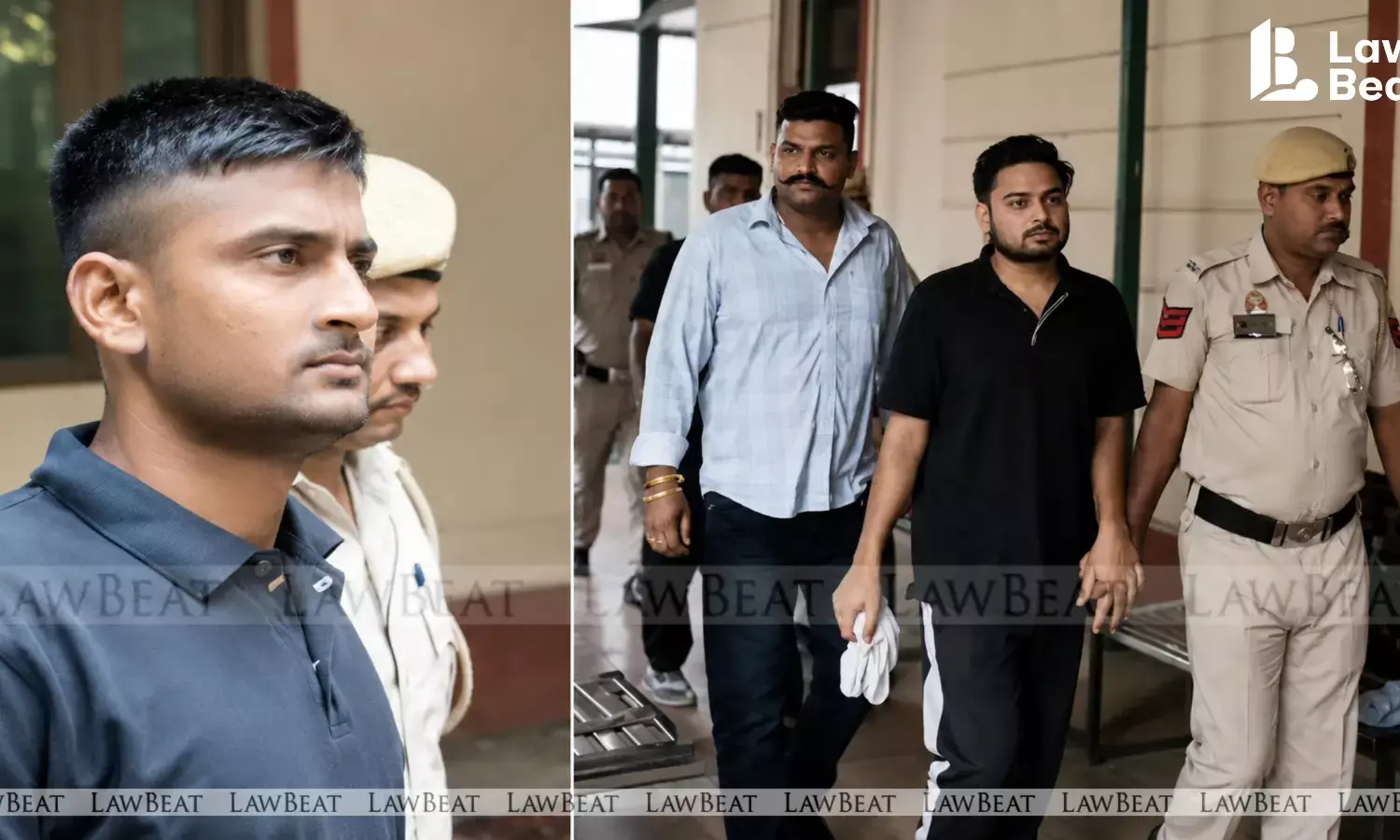
Delhi court granted bail to two law students accused of disrupting Supreme Court proceedings, observing that while their conduct was deplorable, continued custody was unwarranted
A Delhi court has granted bail to two suspended law students arrested for allegedly disrupting proceedings inside the Supreme Court, observing that while their conduct deserved unequivocal condemnation, continued pre trial detention was not warranted once the investigation had been completed.
Judicial Magistrate Ravi of Patiala House Court granted bail to Prabal Pratap Singh, a third year law student at Lucknow University, and Chander Bhan, a second year law student, in connection with an incident that allegedly took place during a hearing before the Supreme Court on July 10.
According to the Delhi Police, Prabal Pratap, who was appearing as a petitioner in person in Special Leave Petition (Civil), Prabal Pratap and Another v. State of Uttar Pradesh through Commissioner, disrupted proceedings in Court No. 13 by using abusive and unparliamentary language, throwing papers inside the courtroom, creating a commotion and using criminal force against security personnel. Chander Bhan was also arrested in connection with the incident.
In an order dated July 27, the magistrate observed that the allegations, if proved, reflected conduct affecting the dignity and decorum of the country's highest constitutional court.
"A litigant, howsoever aggrieved by the outcome of his cause or howsoever unrepresented, does not thereby acquire licence to hurl papers in open court or direct abusive language at the presiding authority, much less at the office of the Chief Justice of India (CJI), an institution that stands as the final guarantor of the very rights and liberties that every citizen."
The court made it clear that such behaviour was "not condoned and is unequivocally deprecated," adding that litigants are expected to maintain restraint and decorum in judicial proceedings.
At the same time, the magistrate noted that the Supreme Court itself had dealt with the incident with considerable restraint. Referring to the top court's order of July 10, the magistrate observed that although the bench had recorded that the petitioner made incoherent and unparliamentary utterances, it chose not to initiate any action against him.
Highlighting the need for subordinate courts to adopt the same institutional approach, the magistrate observed: "An institution of the stature and permanence of the Supreme Court is not diminished by the intemperate conduct of a single agitated, unrepresented litigant, and it is only appropriate that subordinate courts... be guided by the same institutional restraint and equanimity that the highest court itself has demonstrated."
The court emphasised that the bail applications had to be decided on settled principles of bail jurisprudence and not on the emotional nature of the allegations.
It noted that the offences alleged against the accused, including assaulting and obstructing a public servant, carry a maximum sentence of two years. The investigation had been completed, no further custodial interrogation was required, and the prosecution had failed to show any need for their continued detention.
Reiterating the settled legal principle that "bail is the rule and jail the exception," the magistrate observed that the gravity of the language allegedly used could not by itself justify indefinite pre trial incarceration where the offences were otherwise non heinous in nature.
The court further found that both accused had verified residential addresses, roots in society, and there was no material to suggest that they would flee from justice, tamper with evidence or influence witnesses.
Accordingly, the court granted bail to both accused on furnishing personal and surety bonds of ₹25,000 each, subject to conditions including joining the investigation or trial whenever required and maintaining strict decorum in all future judicial proceedings.
The court clarified that its observations were confined solely to the question of bail and would not influence the merits of the trial.
Notably, in July the Lucknow University had indefinitely suspended two law students who were arrested by the Delhi Police in connection with the alleged disruption of proceedings inside the Supreme Court earlier this month. Apart from suspending them, the University had expelled both students from the hostel and prohibited their entry into the university campus pending further disciplinary proceedings.
On July 25, a Delhi Court had remaded the two to 14 days of judicial custody in connection with the alleged uproar inside the Supreme Court premises.
About the FIR
An FIR has been registered at Tilak Marg Police Station based on the complaint of Supreme Court security personnel regarding the incident that occurred on July 10, 2026, inside Court No. 13 during the hearing of SLP (Crl.) No. 31367/2026, Prabal Pratap & Another v. State of Uttar Pradesh through Commissioner.
According to Delhi Police, Prabal Pratap Singh, who was appearing as a petitioner-in-person, deliberately disrupted the judicial proceedings by allegedly using abusive and unparliamentary language, throwing papers inside the courtroom and creating disorder during the hearing.
The FIR further states that when Supreme Court staff intervened to maintain decorum and restrain him, the accused allegedly used criminal force against the complainant, thereby obstructing a public servant in the discharge of official duties.
The incident had unfolded before a Bench led by Justice K.V. Viswanathan, where the petitioner, after addressing the Bench in an aggressive manner, threw documents towards the judges. Security personnel immediately restrained him, while the Bench declined to initiate contempt proceedings, observing that the petitioner appeared to be "very disturbed" and dismissing his special leave petition on merits.
Following the incident, the Supreme Court administration lodged a complaint, leading to the registration of the FIR and the subsequent arrest of both accused by Delhi Police. The investigation is underway.
Earlier, this week, Chief Justice of India Surya Kant has broken his silence on the courtroom uproar in which a petitioner allegedly hurled documents into the air and used derogatory language against him, choosing to downplay the episode even as he stressed the need to safeguard the dignity of constitutional institutions.
Reacting informally to the incident at an event organised by All India Senior Advocates Association, the CJI said young litigants sometimes behave this way, but reminded everyone that protecting the honour of the country's constitutional bodies remains a shared responsibility. "Arey rahne do... Bacchey aise kayi bar kar dete hein lekin mei yeh kehna chahta hu ki hamein constitutional institutions ki maryada maan sammaan banaye rakhna chahiye ye hum sabka daitwa hein sabko isko nibhana hein," CJI Surya Kant said, asking that the matter be let go while urging collective responsibility toward institutional dignity.
SCBA and SCACA strongly condemned the incident
The Supreme Court Bar Association (SCBA) on Friday strongly condemned the incident and urged the Union government to frame guidelines regulating the recording, editing and circulation of courtroom proceedings and videos.
In a statement issued on July 10, the SCBA described the litigant's conduct before the Bench of Justices K.V. Viswanathan and Alok Aradhe as abusive and disrespectful, asserting that any attempt to abuse, threaten or disrupt judicial proceedings strikes at the very foundation of the administration of justice. "The dignity and majesty of the Court must be respected at all times. Any attempt to abuse, threaten or disrupt judicial proceedings is wholly unacceptable and strikes at the very foundation of the administration of justice," the statement said.
Separately, the Supreme Court Arguing Counsel Association (SCACA) also addressed a representation to the Chief Justice of India, condemning the incident and seeking stringent action against all those directly or indirectly involved in what it described as a conspiracy to undermine the judiciary. The Association alleged that selective circulation of courtroom clips and defamatory commentary on social media had become a recurring trend that threatened public confidence in the judicial institution.
Background of the case
The Bench was hearing a petition filed by Prabal Pratap, who was challenging an Allahabad High Court order refusing to interfere with a trial court's decision to treat his application under Section 173(4) of the Bharatiya Nagarik Suraksha Sanhita (BNSS) as a private complaint.
At the outset, the petitioner had identified himself before the Bench and, instead of making legal submissions, declared, "Mr. Judicial Servant, I order you to order the registration of FIR against ACP Vikas Nagar, Lucknow, and Duplex Technology... because I am the sovereign."
The Bench had immediately questioned the petitioner, asking, "You are ordering?" and "You are ordering us?"
The petitioner continued his submissions before suddenly throwing a bundle of papers towards the Bench, scattering documents across the courtroom. Security personnel immediately intervened and restrained him as he shouted an abusive remark directed at the Chief Justice of India.
Despite the incident, the Bench had declined to initiate any coercive or contempt proceedings. Pronouncing the order, Justice K.V. Viswanathan observed: "We do not propose to take any action against him. As far as the merits of the case are concerned, we have perused the records. We find no good grounds to interfere with the impugned order. The Special Leave Petition is dismissed."
[Inputs: PTI]