
Fraternity Cannot Justify Violence or Denial of Legal Remedies: Supreme Court on Lawyers’ Boycott
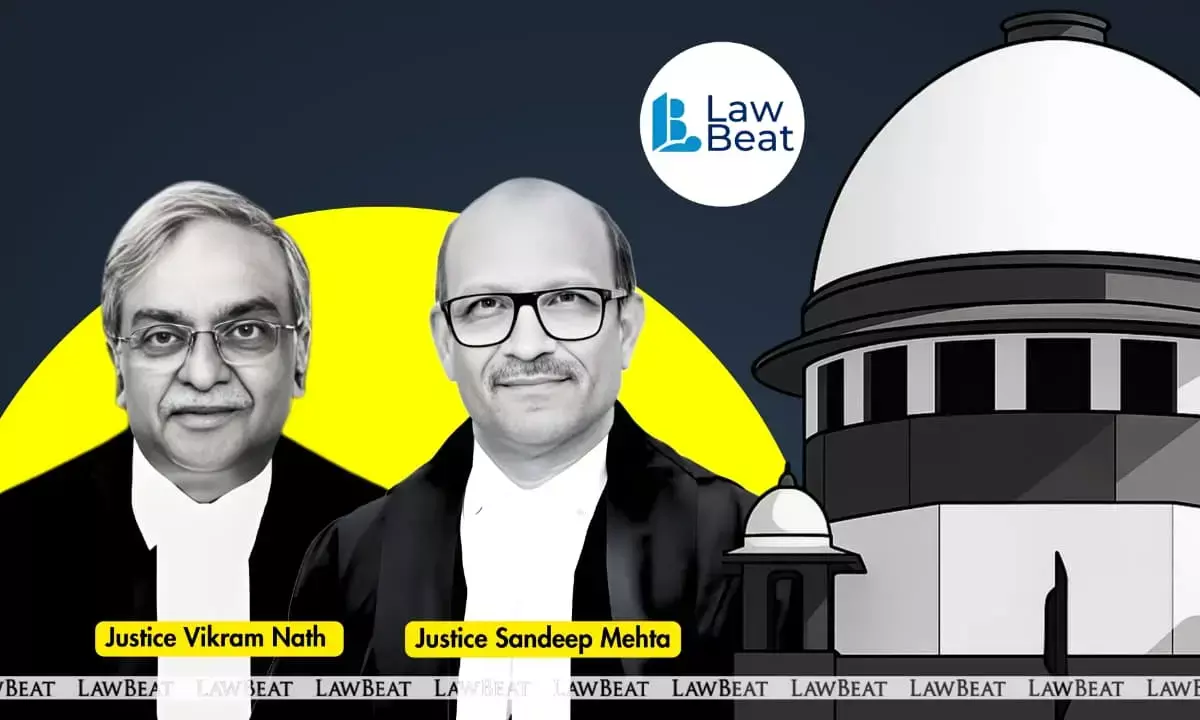
The Supreme Court condemned alleged violence by lawyers against an advocate representing accused in an assault case.
The Supreme Court has said that intimidation and violence within the legal fraternity cannot be allowed to deprive an accused person of constitutional guarantees, while condemning members of the Barabanki bar for allegedly targeting a lawyer who represented toll plaza employees accused of assaulting an advocate.
Calling the incidents a “sorry state of affairs,” Court observed that the legal profession had been “tainted and tarnished” by acts of hooliganism committed by those expected to uphold justice.
Holding that fear created by members of the bar had effectively denied the accused access to legal remedies in Uttar Pradesh, the Supreme Court granted bail to the toll workers and transferred the criminal proceedings from Barabanki to Tis Hazari Courts in Delhi. Court further held that continued incarceration of the accused for over two months violated their fundamental right to liberty under Article 21 of the Constitution.
Lawyers’ collective pressure to deny an accused a fair trial
Court underscored that no accused person could be denied legal representation because of threats, intimidation or pressure within the legal community.
A Bench of Justice Vikram Nath and Justice Sandeep Mehta was hearing a writ petition filed by Vishvjeet and other employees of M/s Skylark Infra Engineering Pvt. Ltd., who were posted at the Gotona Bara Toll Plaza on the Lucknow-Sultanpur Highway in Barabanki district.
The dispute originated on January 14, 2026, when advocate Ratnesh Shukla allegedly refused to pay toll charges while passing through the toll plaza. According to the petitioners, the disagreement escalated into a verbal altercation and subsequent scuffle, leading to registration of an FIR against the toll employees under several provisions of the Bharatiya Nyaya Sanhita, 2023.
The petitioners alleged before the Court that soon after registration of the FIR, members of the Bar Association launched protests and circulated a resolution declaring that no advocate would appear for the accused employees in the case. The plea also referred to a letter allegedly written by the Bar Council of Uttar Pradesh to the Chief Minister seeking invocation of the National Security Act against the petitioners despite the incident involving a scuffle at the toll plaza.
Violence by Barabanki lawyers
The Supreme Court strongly condemned the alleged attack on Advocate Manoj Shukla, who had filed a bail application on behalf of the accused toll workers.
According to the petitioners, lawyers vandalised the advocate’s office furniture and set it ablaze after learning that he had represented the accused employees despite the local bar’s resolution. Court also took note of newspaper reports and photographs annexed with the writ petition showing furniture being burnt outside the advocate’s office.
“The legal profession, which was once regarded as a noble profession, has clearly been tainted and tarnished by the acts of hooliganism,” the Bench observed, while noting that fraternity among lawyers could never justify violence or lawlessness.
Court further observed that the atmosphere created by members of the bar was so intimidating that no advocate in Barabanki or nearby areas was willing to represent the petitioners.
The Bench said such circumstances had effectively deprived the accused persons of access to justice and legal remedies, forcing them to directly invoke the Supreme Court’s jurisdiction under Article 32 of the Constitution.
"We can understand the sentiment of fraternity amongst the lawyers but that, by no means, can justify the acts of violence and lawlessness which ensued when a brave lawyer came forward to defend the accused. These deplorable acts of hooliganism deserve to be deprecated. The disciplinary body, i.e., the Bar Council of India is expected to take appropriate steps in this regard," the Bench said.
Transfer of the criminal case from Uttar Pradesh to Delhi
Court said transfer of the proceedings was necessary to ensure fair trial, proper legal representation and protection of the accused persons’ constitutional rights.
Examining the FIR, the Bench observed that the petitioners were employees performing their official duties at the toll plaza and that the altercation appeared to have arisen from resistance to payment of toll charges. Court held that the case was not one in which bail ought to have been denied.
Holding continued detention of the petitioners for over two months to be “absolutely unjustified,” the Court directed their immediate release on bail upon furnishing personal bonds before the concerned magistrate.
The Bench further ordered that all proceedings arising out of FIR No. 15/2026, including remand proceedings, filing of investigation papers and trial, would stand transferred to Tis Hazari Courts in New Delhi.
Before parting with the matter, Court directed the Director General of Police, Uttar Pradesh, to ensure the safety and security of the petitioners after their release and reiterated its condemnation of the conduct of members of the Barabanki bar who allegedly indulged in violence against the advocate representing the accused toll workers.
Case Title: Vishvjeet And Others Vs State of Uttar Pradesh And Another
Bench: Justices Vikram Nath and Sandeep Mehta
Date of Judgment: March 17, 2026