
NEET Paper Leak Protests | Supreme Court To Hear Pleas Over Alleged Police Excess On July 27
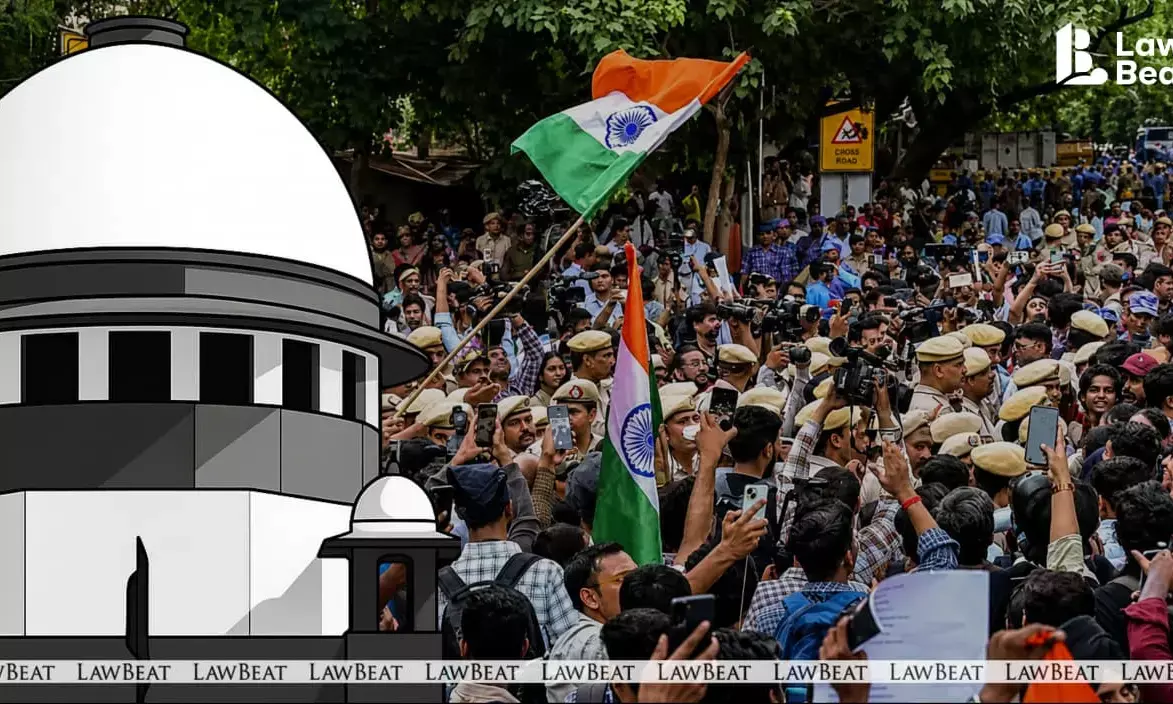
Supreme Court to hear petitions over alleged police excess during NEET paper leak protests.
The Supreme Court on Friday agreed to hear on Monday (July 27, 2026) two petitions alleging excessive use of force by police against students participating in protests across the country, including the Jantar Mantar protest over the NEET paper leak row, after senior advocate Gopal Sankaranarayanan sought an urgent listing before a Bench led by Chief Justice of India Surya Kant.
Appearing for the petitioners, Sankaranarayanan submitted that the petitions had already been filed and diary numbers had been generated.
Urging an early hearing, he submitted that "police excess is going against students". The Bench thereafter agreed to list the matter on Monday.
The petitions have been filed in the backdrop of recent nationwide student protests over the alleged NEET-UG 2026 paper leak and the subsequent police action during demonstrations, including the "Chalo Sansad" march in New Delhi on July 20.
The petitioners have raised concerns over the alleged use of tear gas, lathi charge and other coercive measures against protesters.
The Supreme Court's decision to hear the matter comes two days after an urgent mentioning on the issue did not result in immediate listing. Notably, today's development came hours after Chief Justice of India Surya Kant clarified in open court that no petition on the issue had earlier been filed before the Supreme Court. Calling media reports suggesting that the Court had refused to hear such a plea "reckless", the CJI stated that the earlier proceedings involved only an oral mentioning and not a formally instituted petition.
Meanwhile, before the Delhi High Court, Solicitor General Tushar Mehta defended the Delhi Police's videography of the ongoing NEET protest site at Jantar Mantar, contending that the exercise was undertaken solely to maintain law and order and not for surveillance. He submitted that videography is a routine policing measure necessary to identify individuals in case of untoward incidents, and argued that there was no element of "snooping" involved in recording the protests.
In May this year, the Chief Justice of India had told a petitioner not to take the 'Cockroach Janata Party' (CJP) trend so seriously. After a lawyer orally mentioned a petition concerning the issue for urgent listing, the CJI Surya Kant said he would take up the issue in due course.
The CJP began as a satirical online campaign after CJI Surya Kant, during proceedings relating to unemployment and competitive examinations, reportedly likened unemployed youth to "cockroaches".
The remark was appropriated by a group of young activists, led by political communications professional Abhijeet Dipke, who adopted the "cockroach" as a symbol of resilience and launched the fictional "Cockroach Janta Party" on social media.
What started as an online protest against alleged NEET-UG 2026 paper leaks and examination irregularities quickly evolved into a nationwide youth-led movement, with demonstrations across several cities.