
‘Opposition States Are Being Targeted’: Mamata Banerjee Tells Supreme Court in West Bengal SIR Challenge
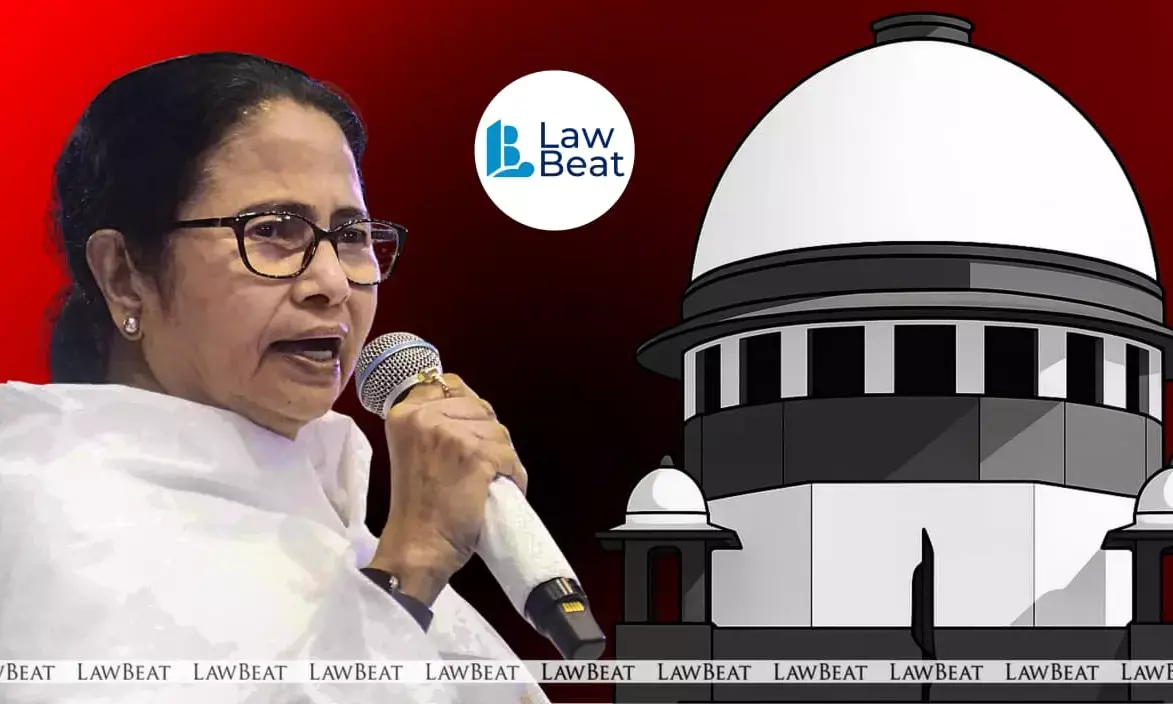
Mamata Banerjee, Supreme Court of India (Representative Image)
West Bengal Chief Minister Mamata Banerjee appeared in person before the Supreme Court of India on Wednesday in her petition challenging the Special Intensive Revision (SIR) of electoral rolls underway in the state ahead of the Assembly elections 2026.
A Bench led by Chief Justice of India Surya Kant, along with Justices Joymalya Bagchi and Vipul Pancholi, issued notice in her petition and the connected pleas challenging the SIR and listed the matter for further hearing on Monday, granting the Election Commission of India (ECI) time to file its reply.
Court was hearing the batch of petitions, including one filed by West Bengal Chief Minister Mamata Banerjee, who sought permission to appear and argue in person.
Notably, the Chief Minister holds a law degree from Jogesh Chandra Choudhury College of Law, Calcutta, and had last practised as a lawyer in 2003.
During the hearing, Senior Advocate Shyam Divan, appearing for another petitioner in a connected matter, submitted that more than 1.4 crore people had been issued notices to produce documents. He pointed out that despite the court’s earlier direction, the logical discrepancy list had not been properly displayed. Divan flagged the large number of pending applications and hearings, arguing that there was an acute shortage of time to complete the exercise. He further contended that voters were being flagged for discrepancies in name mapping without being individually notified or informed of the reasons.
Responding to this, the Chief Justice observed that individuals must be told why their names had been flagged, adding that the court agreed with this requirement. However, the bench noted that it had been informed that apart from the list, individual notices were also being issued. Counsel for the Election Commission of India confirmed this position. Divan then sought directions to the ECI to withdraw notices that pertained solely to name mismatches.
The Chief Justice remarked that many of the discrepancies appeared to arise from regional dialect differences rather than actual name mismatches, noting that similar issues had arisen in Haryana and other states.
Divan suggested that the appropriate solution would be withdrawal of such notices, given that only a few days remained to complete the exercise.
Senior advocate Kapil Sibal intervened to remind the court that the ECI had earlier assured that such discrepancies would not be acted upon.
Then Banerjee, beginning her submissions, alleged that the SIR was not an addition exercise but effectively a deletion exercise.
She submitted that people often change residences due to marriage or employment, and women frequently change their names after marriage, which can cause a mismatch in identity document details.
Moreover, the Chief Minister accused the ECI of targeting opposition-ruled states, including West Bengal, on the eve of elections.
She also contended that a process that should have taken two years was being compressed into three months, claiming that over 100 booth-level officers had died during the exercise.
Banerjee further alleged that documents such as domicile certificates were not being accepted and that micro observers, who are appointed by the ECI, were being given the authority to delete names without any hearing to the aggrieved person.
Interjecting, the Chief Justice said the court understood that Banerjee was aggrieved but assured her that counsel appearing in the connected petitions were placing the issues before the court exhaustively.
On the question of Aadhaar, the CJI said he could not comment as judgment on the validity of the SIR had already been reserved, noting that Aadhaar itself had limitations.
To find a logical solution to the voter deletion issue only because of name mismatch, CJI suggested that a team of State officers well-versed in the local language be constituted and deputed with the ECI to verify how names were being mismatched.
On behalf of the ECI, senior counsel Rakesh Dwivedi submitted that the Commission had repeatedly requested the state to nominate Class II officers as electoral registration officers, but only 80 officers had been provided, necessitating the appointment of micro observers.
The Solicitor General Tushra Mehta also informed the court that the ECI had filed an affidavit in one of the matters and sought its listing, adding that the Commission had expressed concerns about an atmosphere of hostility towards its officials.
Banerjee disputed this, stating that the State government was cooperating and it had provided everything that was asked for, including officers.
Taking note of the submission, court issued notice in the pleas by Dola Sen, Mamta Banerjee, and other connected petitions and posted the matter for further hearing on Monday, February 9, 2026.
In her petition, filed on January 28, CM Mamata Banerjee has challenged several directions issued by the Election Commission and sought that the 2026 West Bengal Assembly elections be conducted on the basis of the existing electoral rolls. She has also sought safeguards for voters facing name or spelling discrepancies during the ongoing SIR exercise.
Notably, the Supreme Court is already seized of multiple petitions questioning the legality and manner of the SIR process in West Bengal, amid allegations of arbitrariness and large-scale voter exclusion.
Earlier in January, the court had issued directions aimed at ensuring transparency and fairness in the SIR process after hearing a batch of petitions alleging inconvenience and arbitrariness in voter verification.
Case Title: Dola Sen vs Election Commission of India and Anr, Mamata Banerjee vs Election Commission of India and Another with connected matters
Hearing Date: February 4, 2026
Bench: Chief Justice of India Surya Kant, Justices Joymalya Bagchi and Vipul Pancholi