
BREAKING| 2020 Delhi Riots: Supreme Court Grants Bail to Gulfisha Fatima, Meeran Haider and 3 Others Under UAPA
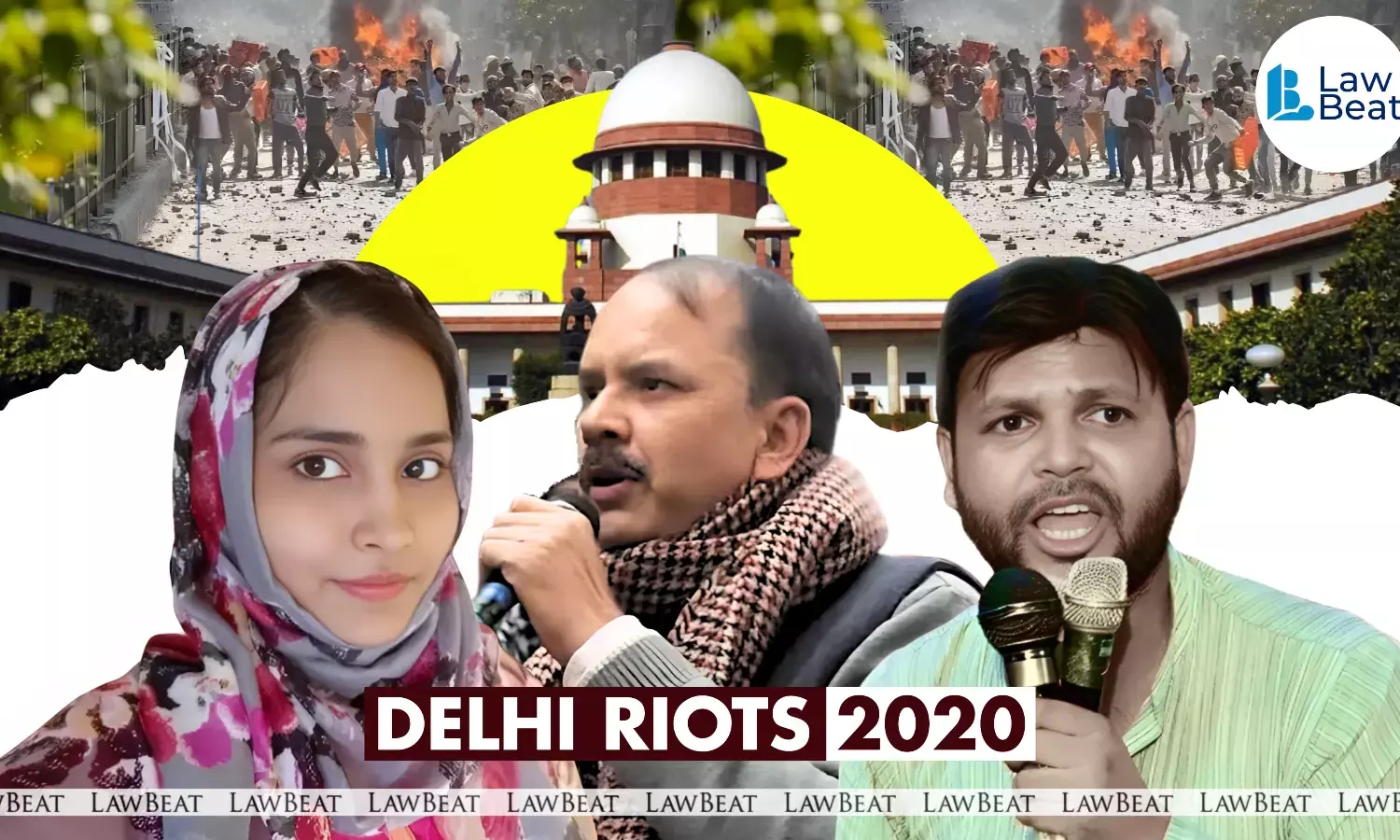
Supreme Court granted bail to Gulfisha Fatima, Meeran Haider and other accused in the 2020 Delhi riots UAPA case
The Supreme Court on Monday granted bail to Gulfisha Fatima, Meeran Haider, Shifa-ur-Rehman, Shadab Ahmed and Mohd Saleem Khan accused in the 2020 Delhi riots larger conspiracy case, offering major relief to those booked under the stringent provisions of the Unlawful Activities (Prevention) Act (UAPA).
The Court however, denied bail to Umar Khalid and Sharjeel Imam, holding that they stood on a different footing and that a prima facie case under the UAPA was made out against them. It stressed that parity cannot be applied mechanically and that differentiation between accused is a constitutional necessity.
The Bench of Justices Aravind Kumar and N.V. Anjaria held that continued pre-trial incarceration of the accused, despite the trial making little progress, raised serious concerns under Article 21 of the Constitution, which guarantees the right to life and personal liberty, including the right to a speedy trial.
While allowing the bail pleas, the Court emphasised that not all accused could be treated alike and that bail adjudication under special statutes like the UAPA requires a careful, individualised assessment. The Bench noted that prolonged detention without a foreseeable conclusion of trial warrants heightened judicial scrutiny, even within the restrictive framework of Section 43D(5) of the UAPA.
The Court observed that although Section 43D(5) departs from the ordinary principles governing bail and places limitations where a prima facie case is disclosed, it does not exclude judicial examination altogether. Courts are still required to assess whether the prosecution material reveals a real and substantive nexus between the accused and the alleged terrorist acts or conspiracy.
In granting bail to Gulfisha Fatima, Meeran Haider and others, the Bench found that the role attributed to them, the nature of the material placed on record, and the length of their incarceration justified the grant of liberty at the pre-trial stage. The Court underlined that indiscriminate pre-trial detention would undermine constitutional guarantees and risk converting bail denial into a form of punishment.
“The Constitution does not conceive liberty in isolation, but prolonged incarceration without timely adjudication strikes at the very core of Article 21,” the Bench observed, reiterating that the gravity of allegations cannot be the sole ground to deny bail indefinitely.
The accused had been in custody for several years in connection with the alleged larger conspiracy behind the February 2020 Delhi riots, which claimed over 50 lives and led to widespread violence in northeast Delhi. They were charged under multiple provisions of the IPC and UAPA for allegedly participating in protests and meetings said to have culminated in the violence.
The Court, however, clarified that the grant of bail does not amount to an expression on the merits of the case and that the trial court would proceed independently based on the evidence led by the prosecution.
On December 10, the Apex Court had reserved its verdict on the bail pleas. ASG Raju had strongly opposed the bail requests, asserting that the violence that rocked Northeast Delhi was not a peaceful protest against the Citizenship Amendment Act but part of a “well-planned conspiracy” to spark unrest and destabilise the government.
Opposing the bail pleas, Solicitor General Mehta had launched a sharp attack on what he described as “myths” surrounding the riots. “This was not a spontaneous riot. Senior Advocate Dr. Abhishek Manu Singhvi for Gulfisha Fatima questioned the Delhi Police’s assertion that the riots were part of a coordinated “regime change operation,” pointing out that “not a word of it appears in the chargesheet.”
All the five UAPA Accused have filed a Special Leave petition (SLP) before the Apex Court challenging the Delhi High Court's September 2, order denying bail to them.The High Court had held “violence in the name of protest is not free speech” as it dismissed the bail pleas of Umar Khalid, Sharjeel Imam, and seven others.
The case stems from the violence that erupted in Northeast Delhi in 2020 during protests against the Citizenship Amendment Act (CAA). The clashes between supporters and opponents of the Act led to large-scale incidents of stone-pelting, arson, and violence, leaving 53 people dead and injuring thousands.
Case Title: Gulfisha Fatima v. State of NCT of Delhi and connected matters
Bench: Justices Aravind Kumar and NV Anjaria
Pronouncement Date: January 5, 2026