
CJI Surya Kant Calls For Ending Court Uniforms In Family Courts To Reduce Child Trauma
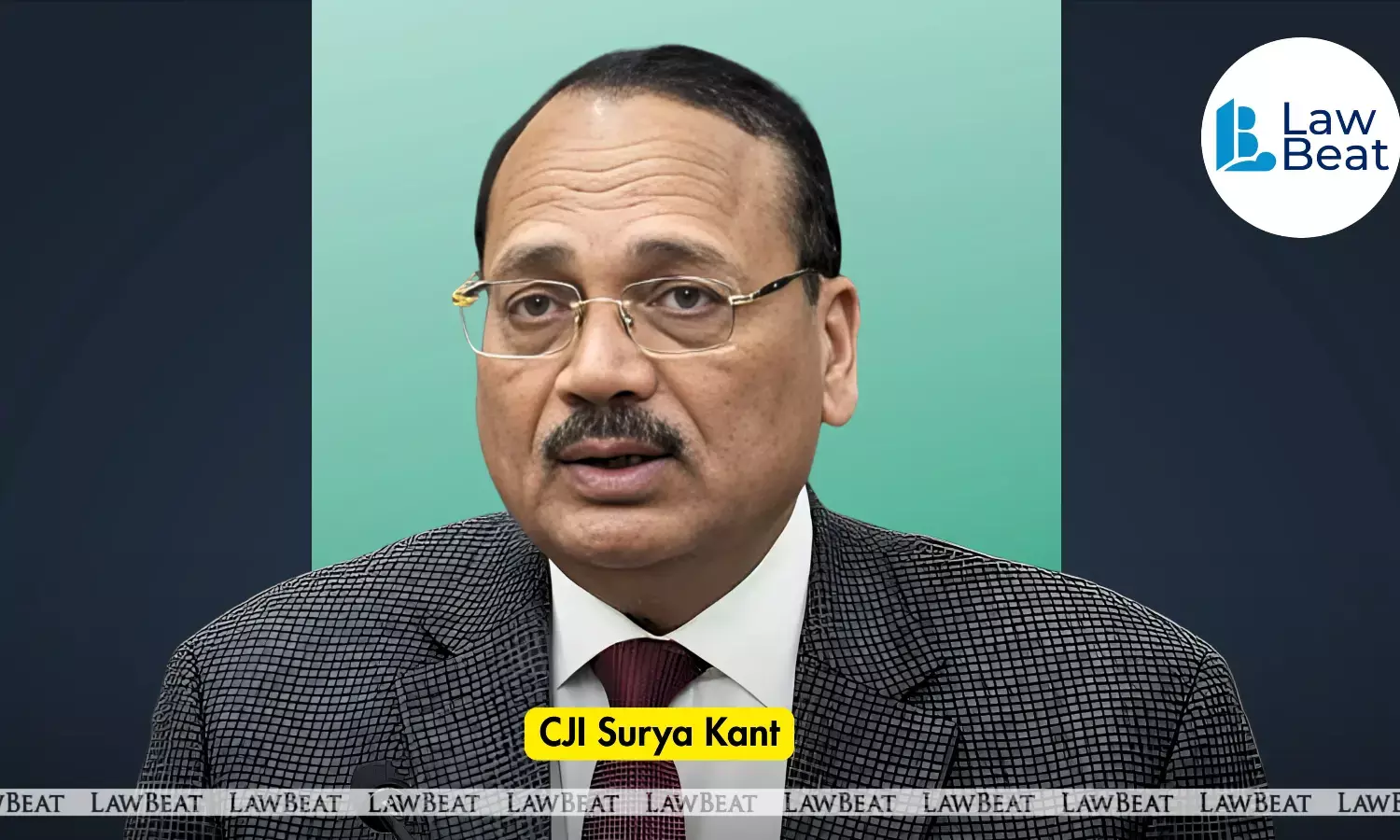
Chief Justice of India Surya Kant addressing an event on family court reforms and suggesting removal of black robes to create a child-friendly environment.
X

CJI Surya Kant speaks on making family courts child-friendly and reducing fear among children during court proceedings

CJI Surya Kant had proposed removing court uniforms and reimagining family courts as less intimidating, child-centric spaces focused on resolving sensitive disputes

Chief Justice of India Surya Kant on Monday suggested doing away with traditional court attire, including black robes worn by judges and advocates, to create a more child-friendly and less intimidating environment.

Speaking at the foundation stone laying ceremony for a new family court complex in Rohini, the CJI underscored the need to eliminate what he described as “psycho fear” in the minds of children who are often caught in emotionally charged family disputes.

“Should family courts have these black robes? Is it not going to create a psycho fear in the mind of a child?” the CJI asked, proposing a rethink of long-standing courtroom practices.

He suggested that both judges and members of the Bar in family courts consider abandoning formal dress codes. “Our presiding officers should not sit in court dresses. Members of the Bar should not come in black and white robes,” he said, describing the idea as a step toward creating a more approachable and less adversarial atmosphere.

Extending the proposal further, the CJI also indicated that police personnel appearing in such courts should avoid wearing uniforms, as their presence in official attire could add to the anxiety experienced by children and families. “This entire environment creates fear in the minds of children, particularly when they are the worst victims of any system,” he observed.

The remarks reflect a broader vision of transforming family courts into spaces focused not merely on adjudication but on healing and reconciliation. Emphasising the unique nature of disputes that come before such courts, the CJI noted that they are fundamentally different from conventional civil or commercial litigation.

“These disputes arise within families; between individuals who once shared a life and may continue to share responsibilities as parents or caregivers. The consequences are not just legal but deeply emotional, social, and financial,” he said.

Highlighting the need for a paradigm shift, the CJI suggested that family courts could even be reconceptualised as “family resolution centres.” He stressed that the goal should be to “refurbish, repair and reason” human relationships rather than merely decide legal rights.

“Not everyone wants to come to court,” he remarked, adding that reforms must take into account the sensitivities involved in family disputes and aim to make the process less intimidating and more accessible.

The CJI also spoke about the importance of developing judicial infrastructure in rapidly growing urban areas such as Rohini, which he described as one of Delhi’s major residential hubs deserving of modern court facilities.

Also present at the event, Justice Manmohan, a judge of the Supreme Court, pointed to systemic challenges faced by the district judiciary in Delhi. He identified three key issues, budget constraints, shortage of staff, and lack of space, including both courtrooms and residential accommodation for judicial officers.

The event was attended by several dignitaries, including Delhi CM Rekha Gupta and Delhi High Court, Chief Justice Devendra Kumar Upadhyaya, who also addressed the gathering.

In a related news, the CJI had said that the judicial complexes should function with the same spirit of service as hospitals, emphasising that people approach courts with hope while seeking relief and justice. The CJI made the remarks while addressing a legal literacy camp after laying the foundation stone for the Mandi Judicial Court Complex in Mandi, Himachal Pradesh.

Stressing the responsibility of the justice delivery system, the Chief Justice had said that as infrastructure and facilities expand, the obligation of the judiciary to serve citizens with efficiency and sensitivity also increases. He had further highlighted that while public discourse often centres on fundamental rights, equal importance must be given to fundamental duties enshrined in the Constitution. He called for greater awareness at the grassroots level and urged authorities to organise more legal literacy and outreach programmes to educate citizens about their constitutional duties.

Inputs: PTI

Tags

Next Story