
CJI Surya Kant Writes To High Court CJs: Fill judicial Vacancies Prioritizing Women Judges
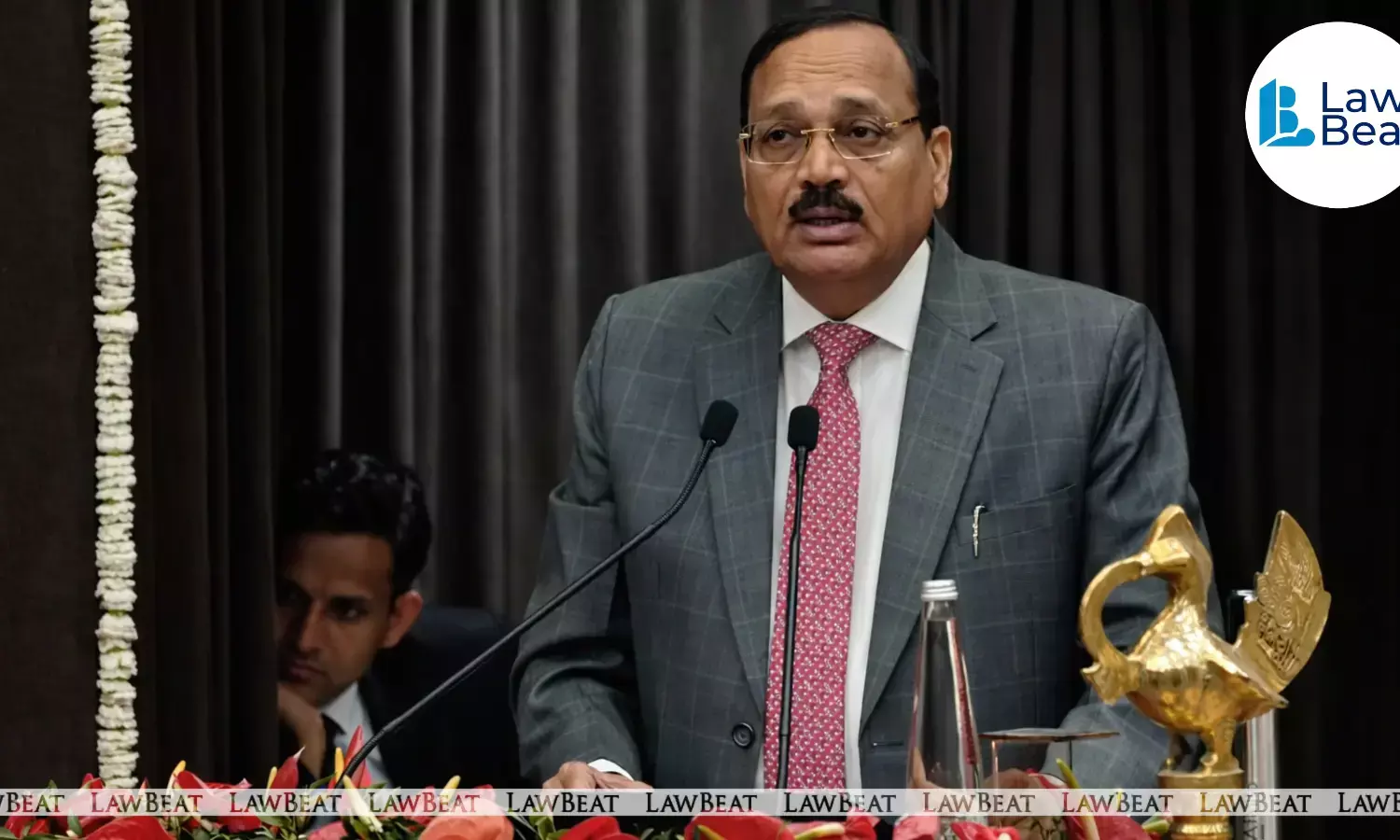
CJI Surya Kant has written to all High court Chief Justices calling for urgent action to fill up judicial vacancies.
The Chief Justice of India has written to the chief justices of all 25 high courts, calling them to fill mounting judicial vacancies while prioritizing the elevation of women judges.
In a letter sent last week, the CJI Surya Kant has highlighted the scale of vacancies across the higher judiciary and stressed the need for high court collegiums to expedite recommendations, not just for existing posts but also for those likely to arise in the near future.
CJI Kant has also urged chief justices to ensure that recommendations are not delayed, warning that any lag at the high court level has a cascading effect on the entire appointment pipeline.
Emphasis has been laid on improving gender representation in the higher judiciary. CJI has called on high court collegiums to give special attention to identifying and recommending suitable women candidates for elevation.
According to data placed before Parliament by Union law minister Arjun Ram Meghwal, 309 positions (27.5%) remain vacant in high courts against a sanctioned strength of 1,122 judges as of February 10. Official figures show that only 116 of the 813 working high court judges are women, accounting for just 14.27%. In the Supreme Court also there is currently only one woman judge, Justice BV Nagarathna.
The CJI has thus asked high courts to broaden their search for talent where local candidates are not readily available. If suitable women candidates cannot be identified within a high court’s territorial jurisdiction, collegiums should consider women advocates from that state who are currently practising in the Supreme Court.
Recently Chief Justice of India Surya Kant had called on High Court collegiums across the country to take proactive steps to increase women’s representation on the Bench, urging them to actively consider more women advocates for judicial appointments. Speaking on the occasion of International Women's Day, the CJI also cautioned collegiums against mechanically rejecting potential candidates solely because they do not strictly meet the prescribed age criteria.
“High Court collegiums must recognize that the moment for measured action is not in the future, it is now,” he said. When suitable women members are available at the Bar, their consideration “should not be an exception but a norm,” he added.
The CJI further urged collegiums to widen the zone of consideration while recommending candidates for elevation. “Where in certain High Courts, if suitable women candidates within a particular age limit are not immediately available, that should not become a barrier. I earnestly request the High Court collegiums to widen their zone of consideration and include women advocates practising in the Supreme Court of India who belong to that State,” he said.
Reflecting on the historical barriers faced by women in the legal profession, the Chief Justice noted that barely a century ago women were not even allowed to practise law under the colonial legal system. He emphasised that the progress made by women lawyers has not been the result of concessions but of competence demonstrated consistently despite scepticism.