
Conciliation Not A Western Concept; Lord Ram, Lord Krishna Biggest Conciliators: SG Tushar Mehta
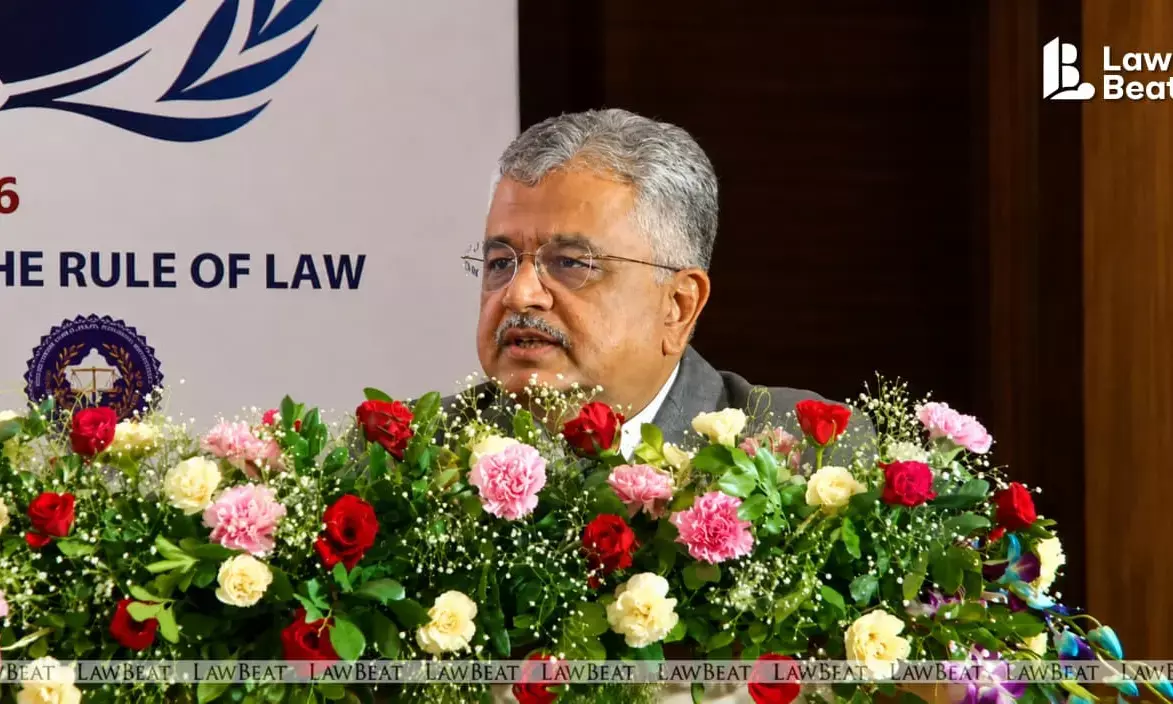
Solicitor General Tushar Mehta addresses the gathering at “Commonwealth Peace Mediation Conference 2026 — Peace Mediation And The Rule Of Law”.
Solicitor General Tushar Mehta, who also was in attendance at the Commonwealth Peace Mediation Conference 2026 organised by the Rajasthan State Legal Services Authority, has said that conciliation is not a western concept at all.
"There may be a general feeling that conciliation is something which has developed in western world and we have adopted in the Indian civilization. My answer is no. Conciliation is a part of our very basic inherent Indianness," the SG said during his brief address.
SG Mehta went on to say that we as a civilization have always been conciliating before contesting. He went on to cite two examples from our history and said, "The first history of conciliation was when Lord Rama was required to attack Sri Lanka. He could have easily won the war. He was a Lord incarnate. He was having a big army. But he sends Angad to conciliate with a message of conciliation that if Ravan is to conciliate, Ram will not attack Sri Lanka. Second, the biggest conciliator had been Lord Krishna. He had throughout the Mahabharat tried to conciliate one dispute after the other the last being before Kurukshetra was to begin. He goes on behalf of Pandawas and tells Duryodhan that give them only five villages. We don't want to enter into a war. Duryodhan could not do that."
The second message, SG Mehta said, is that if someone is determined for self-destruction even Lord cannot conciliate. Ravan and Duryodhan are the examples, he added.
The event was also attended by CJI Surya Kant, Justice Sandeep Mehta of the Supreme Court and Attorney General R Venkataramani.
Notably, the Chief Justice of India, while giving his inaugural address at the same event has backed the resolution of disputes through Mediation and said that Mediation must no longer be treated as a lesser cousin of litigation, waiting outside the courtroom for its turn.
The CJI also cautioned against leaving Online Mediation entirely to AI-based software. "They may carry a human voice but won’t be able to display human empathy and apology. I recommend that online Mediation should be conducted predominantly by trained Mediators only," CJI said.
Justice Kant also reminisced a story from his own childhood. "In and around my village in Haryana, where I grew up, there was rarely a lawyer within miles. When two families quarrelled, whether over a boundary wall, a water channel, or access to a road, they did not rush to a Court thirty kilometres away. They sat under a tree, with the village elders, and talked until the matter was resolved. Nobody called it “Alternative Dispute Resolution” in those days. We called it Panchayat. It was Mediation before the word became fashionable, and it worked because everyone present had one thing in common: they had to live in that village long after the dispute was over. That, to my mind, is the truest test of any peace. Not whether the paperwork is signed, but whether the neighbours can still share a cup of tea the next morning," he shared before the gathering.