
Delhi-NCR Air Pollution: Supreme Court Slams CAQM for Inaction, Orders Experts to Identify AQI Causes in 2 Weeks
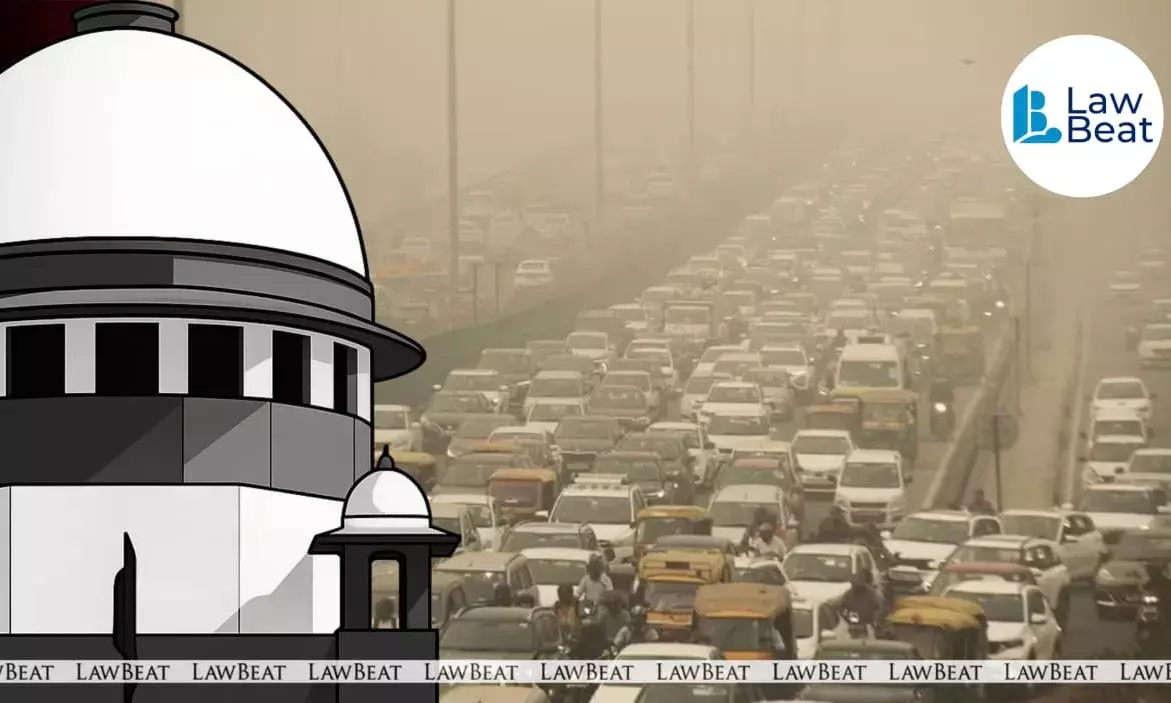
Supreme Court has directed registration of suo motu proceedings on the issues concerning Delhi-NCR air pollution.
The Supreme Court on Tuesday came down heavily on authorities over the persistent air pollution crisis in the Delhi-NCR, expressing serious dissatisfaction with delays, lack of clarity on causes, and the absence of concrete long-term solutions.
The Bench of Chief Justice of India Surya Kant and Justice Joymalya Bagchi made it clear that the Court would hear the matter on a continuous, issue-wise basis and refused to grant long adjournments sought by the Union government.
Hearing the matter, Additional Solicitor General Aishwarya Bhati, appearing for the Centre, requested time to file issue-wise status reports and sought two months to resolve the contentious Environment Compensation Charge (ECC) and toll plaza issues. The Court flatly declined.
“Two months we will not grant,” the CJI said, stressing that merely holding meetings and returning after weeks without solutions was unacceptable. The Court said it intended to deliberate one issue at a time so that each problem is meaningfully addressed, with expert opinions debated to arrive at workable solutions.
The CJI questioned whether authorities had even identified the root causes of worsening air quality, noting that while expert articles, public opinions, and reports were flooding the public domain, there was no unified or decisive approach from statutory bodies. He pointed to heavy vehicles and unchecked construction activity in NCR as major contributors and said simply blaming farmers for stubble burning was inadequate.
During the hearing, conflicting data from expert bodies was flagged. While the amicus curiae cited reports attributing vehicular pollution to around 20%, the CJI referred to another report pegging it at 40%, highlighting the lack of consensus even among premier institutions like the IITs.
The Court noted that despite intermittent judicial monitoring and repeated expert inputs over the years, air quality in NCR remained persistently poor, if not aggravated. Referring to its December 17, 2025 order, the CJI said the Commission for Air Quality Management (CAQM) had been directed to revisit long-term measures and examine additional issues, including the temporary suspension of certain toll plazas.
However, the Court sharply criticised CAQM for filing what it described as a “status note” lacking seriousness or concrete proposals. It also took exception to affidavits filed by bodies like the MCD, which defended toll plazas merely as revenue sources, and applications seeking apportionment of ECC collections.
“CAQM appears to be in no hurry in either identifying the causes of worsening AQI or finding long-term solutions,” the CJI observed, adding that continued delay would only deepen the crisis.
The Bench underlined that expert bodies must be brought under one umbrella to arrive at a uniform identification of pollution sources and their proportionate contribution. Such findings, the Court said, should be placed in the public domain to promote transparency, awareness, and public participation.
Recording suggestions placed by the amicus, the Court noted potential solutions including reduction in vehicular numbers, higher ECC, improved enforcement through technology, cleaner fuels, compliance by power plants, industrial fuel transitions, and stricter control of construction dust and other sources.
While acknowledging that sweeping decisions like an immediate shift to electric vehicles may have fiscal and practical implications, the Court stressed that phased, long-term planning was essential.
Issuing directions, the Court ordered CAQM to convene a meeting of shortlisted domain experts within two weeks. Based on continuous deliberations, CAQM must prepare a report identifying the major causes of AQI deterioration and place it in the public domain. Simultaneously, CAQM was directed to start evaluating long-term remedial measures, prioritising sources causing the maximum pollution, and to independently reconsider the toll plaza issue, uninfluenced by stakeholder pressures.
In the last hearing, on December 17, 2025, the Court, calling air pollution an “annual feature” had said it was time to move beyond firefighting and evolve a phased, long-term plan. It had requested the Commission for Air Quality Management (CAQM) to revisit long-term measures covering urban mobility, industry and energy, stubble burning and farmer incentives, regulation of construction with alternative employment, household pollution, green cover, public awareness, strengthening public transport, and any other relevant areas. The Bench had also underscored the need for coordinated action by Delhi, Uttar Pradesh, Haryana and Rajasthan through a unified NCR-wide body.
On December 15, the CJI had said that orders would be passed in the air pollution case that can be complied with by all the stakeholders. Recently, it had questioned whether stubble burning is the sole reason for the Delhi air pollution crisis. The bench noted that it is easy to blame farmers who engage in stubble burning when they are not represented before the Court.
Case Title: MC Mehta v. Union of India
Bench: CJI Surya Kant and Justices Joymalya Bagchi
Hearing Date: January 6, 2026