
'Every Side Will Get Justice,' CJI Surya Kant On PIL Concerning NEET Paper Leak Protests
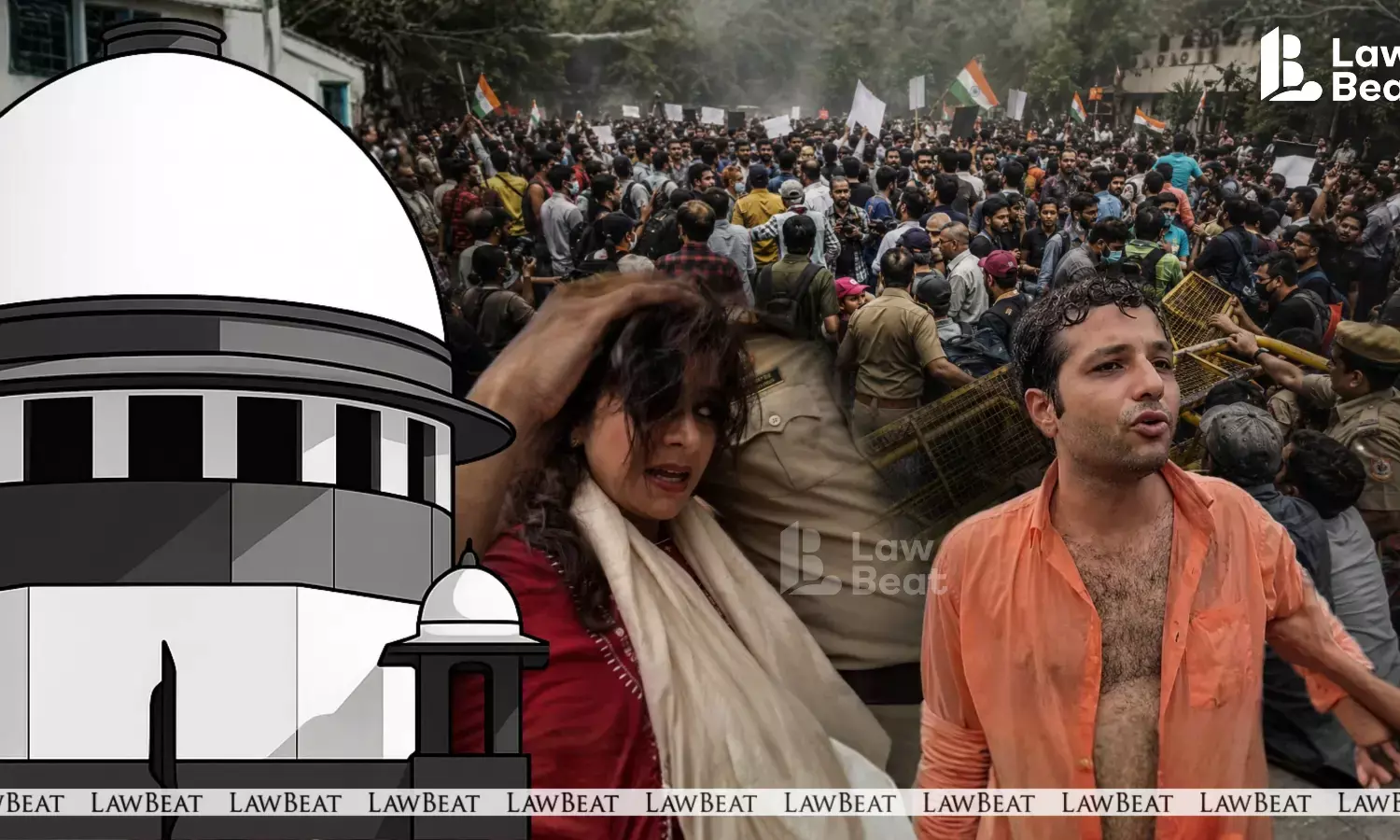
A PIL filed before the Supreme Court sought a neutral investigation into the alleged attacks on journalists covering the NEET protest at Jantar Mantar and requested immediate preservation of CCTV and electronic evidence
As the Supreme Court is slated to hear today PIL seeking a Judicial Commission/SIT led by a retired SC judge to probe the police “excesses” at the NEET Protests, and FIR against delinquent police personnel, Chief Justice of India Surya Kant said yesterday, “every side will get justice”.
Speaking at an interview at the International Conference commemorating 60th anniversary of UN Commission on international trade law, CJI Kant said, “Every side must and will get justice ..those who so deserve ..in accordance with law they should get the justice. It's not that someone has filed the petition therefore it will be one way of listening the matters. The courts always keep the aspect of viewpoint of every party, the aspect of the case and whatever the law requires and the constitutional principles require the court will accordingly act upon.”
Notably, a Public Interest Litigation (PIL) has been filed before the Supreme Court seeking directions for a neutral, time-bound investigation into the alleged attacks on journalists covering the ongoing protests over the alleged NEET examination paper leak at Jantar Mantar in the national capital.
The petition contends that the case is not about choosing between the government and the protesters, but concerns the constitutional protection available to journalists performing their professional duties during public demonstrations.
"This petition does not ask this Hon'ble Court to choose between the Government and the protesters, to certify the editorial fairness of any television channel, or to criminalise peaceful dissent," the petition states.
It adds: "It raises a narrower constitutional question: whether field journalists, camerapersons and media workers may be surrounded, sexually abused, chased, beaten, dispossessed of their equipment or threatened with death because a section of a crowd dislikes the perceived editorial position of their employer."
Referring to incidents reported between July 18 and July 23, the petitioner alleges that several journalists covering the demonstrations were assaulted, intimidated or subjected to gendered abuse. Among the incidents cited are the alleged assault on Times Now reporter Dev Kotak, attacks on Shafali Nigam and her cameraperson, the alleged chasing of Jyoti Mishra, the reported targeting of ABP News reporter Varun Bhasin, and allegations of sexual abuse and rape and death threats directed at a woman television reporter.
The petition urges the Supreme Court to direct the immediate preservation of CCTV footage, police videography, drone and body camera footage, wireless and control room records, deployment records, medical records and original video files voluntarily supplied by journalists and media organisations. It also seeks a neutral investigation by officers unconnected with the crowd-control operation, protection for victims and witnesses, and a status report detailing the complaints received, FIRs registered, evidence preserved and investigative steps taken.
Another PIL has also been filed before the Supreme Court seeking the constitution of an independent Judicial Commission headed by a retired Supreme Court judge to inquire into the alleged excessive and disproportionate use of force by law enforcement authorities against protesters during the NEET examination paper leak demonstrations in Delhi and connected incidents in Bihar.
The petition filed through AoR Abhigya Kushwah and drawn by Advocate Vishal Tiwari states that it concerns "issues of substantial constitutional and public importance concerning the right of citizens to peacefully express dissent, assemble without arms and seek accountability from the Government." It further submits: "The use of force against an assembly is required to satisfy the requirements of legality, necessity and proportionality, and the conduct of particular individuals cannot automatically justify indiscriminate action against peaceful participants."