
“History Will Judge Us”: PM Modi Pushes Unity on Women’s Reservation
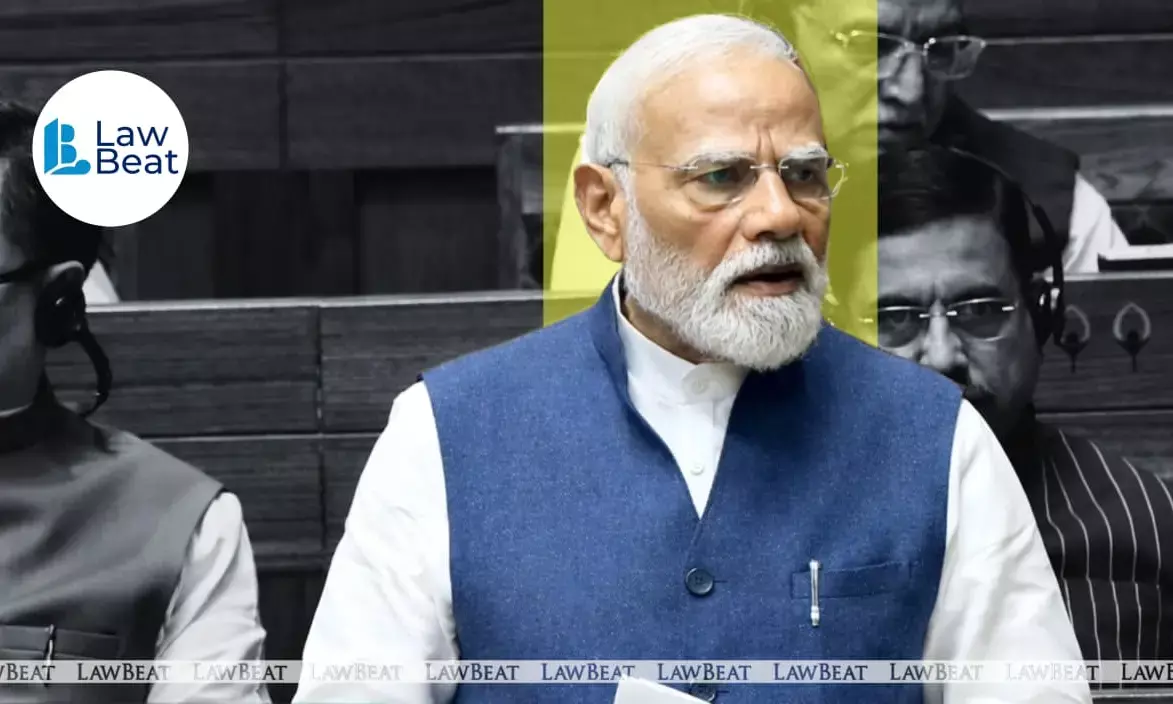
Prime Minister Narendra Modi addresses the Lok Sabha, urging political consensus on implementing women’s reservation in legislative bodies.
“If we move forward together, history will not favour any one political side. It will stand with India’s democracy,” Prime Minister Narendra Modi said in the Lok Sabha on Thursday, urging Opposition parties to back the three Bills aimed at operationalising 33% reservation for women in legislative bodies.
Speaking during the debate, PM Modi made a strong pitch for political consensus, arguing that the legislation should not be viewed through a partisan lens. He said the credit for such a measure must belong collectively to Parliament and the country’s democratic process, rather than any single party or government.
The Prime Minister described the moment as a significant milestone in India’s parliamentary history, while acknowledging that the implementation of women’s reservation had been delayed by decades. He said the country should have acted “25–30 years ago” when the idea first gained ground, adding that the current effort must not be allowed to slip further.
PM Modi also cautioned parties against opposing the measure for political reasons, pointing to past elections where, he claimed, those resisting women’s reservation faced backlash from women voters. At the same time, he noted that when there was broad consensus—as in the 2024 elections—the issue did not translate into political advantage or disadvantage for any party.
Responding to demands for sub-quotas within the reservation framework, including for Muslim women and women from backward classes, the Prime Minister said the Constitution does not permit lawmakers to “think in fragments.” He stressed that national decision-making must remain inclusive and uniform, rejecting what he termed as attempts to divide the issue along community or regional lines.
Seeking to address concerns over fairness, Modi assured the House that the decision-making process would not discriminate against any state or region, and that the existing proportional framework based on earlier delimitation exercises would remain unchanged. He emphasised that the process would be guided by constitutional principles rather than political considerations.
Highlighting the transformation at the grassroots level, Modi pointed to the growing political consciousness among women who have participated in panchayati raj institutions over the past three decades. He said these women are now more vocal and expect representation in higher legislative bodies, noting that their experience in local governance has strengthened their demand for a role in policy-making.
The Prime Minister criticised what he described as decades of “technical delays” that had stalled the proposal, arguing that while few openly opposed women’s reservation, procedural objections had repeatedly been used to defer it. He urged lawmakers to move beyond such tactics and act decisively.
Framing the legislation as essential to India’s development, PM Modi said a “developed India” cannot be imagined without the participation of women in decision-making.
He added that the intent behind the decision would be closely watched by women across the country, calling on MPs to rise above politics and support the measure unanimously.
Also Read | PM Modi Calls Women’s Reservation Law A ‘Civilisational Commitment’