
Inter-Departmental Committee Examining All Facets Of “Digital Arrest”: MHA Tells Supreme Court
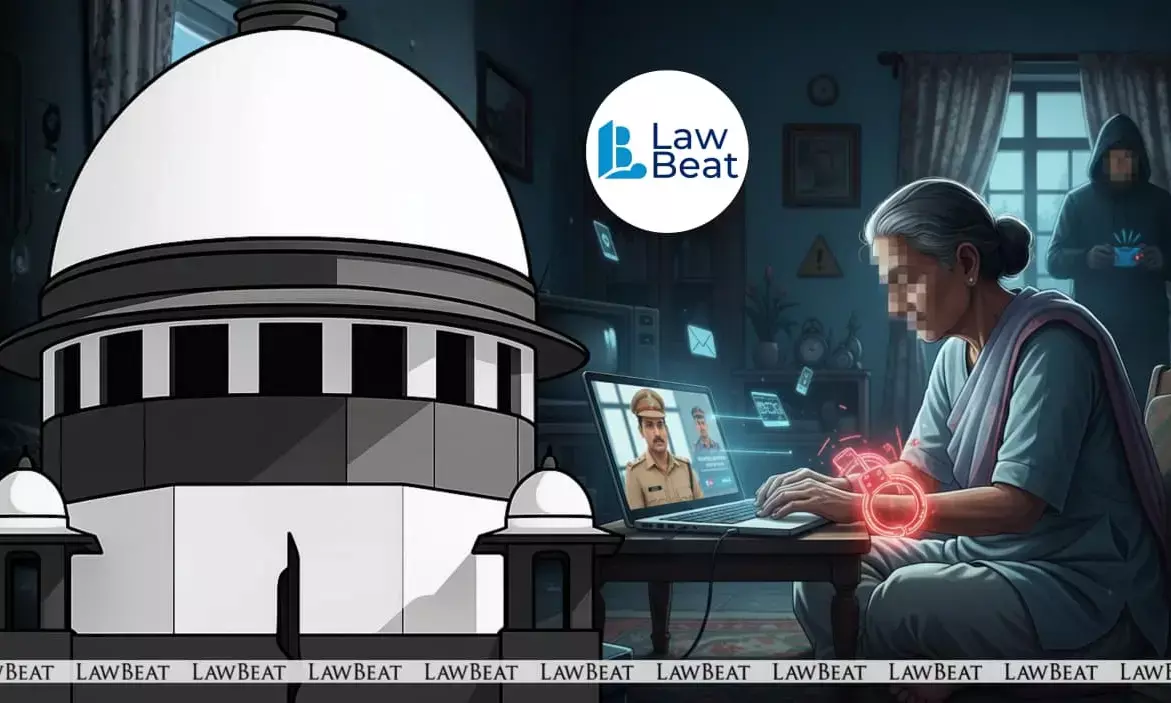
SC flagged urgent safeguards against digital arrest scams, asks banks, RBI and government to act on prevention and recovery mechanisms
The Ministry of Home Affairs has filed a status report before Supreme Court of India stating that it has constituted a high-level Inter-Departmental Committee to comprehensively examine all facets of the issue of “Digital Arrest”.
Said Committee has been constituted under the Chairmanship of the Special Secretary (Internal Security), Ministry of Home Affairs, with representation at the level and above of Joint Secretary officers from the Ministry of Electronics and Information Technology (MeitY), Department of Telecommunications (DoT), Ministry of External Affairs (MEA), Department of Financial Services (DFS), Ministry of Law & Justice (MoLJ), Ministry of Consumer Affairs (MoCA), Reserve Bank of India (RBI), Central Bureau of Investigation (CBI), National Investigation Agency (NIA), Delhi Police, and the Indian Cyber Crime Coordination Centre (I4C), with the CEO, I4C acting as Member-Secretary.
As per the report submitted by MHA, the Committee has been mandated, inter alia, to examine real-time issues faced by enforcement agencies, consider the recommendations of the Amicus Curiae appointed by Supreme Court along with the directions issued by the Supreme Court, and to identify relevant legislations, rules, circulars and implementation gaps, suggest corrective measures, and provide inputs for further directions, as may be required by the Court. The Committee has, notably, been directed to meet at regular intervals to ensure time-bound and coordinated compliance.
Based on the data shared by I4C, CBI has identified digital arrest cases involving losses of ₹10 crore or more for investigation and the same will be taken up for investigation. Necessary action is being taken for obtaining consent under Section 6 of the Delhi Special Police Establishment Act, 1946.
Additionally, the RBI has also proposed establishment of strict accountability for personnel involved in KYC lapses or complicity, including the invocation of the Prevention of Corruption Act,1988, where applicable, will be done.
Notably, Court has been requested to grant a period of at least one month to enable the government authorities to obtain inputs from the members of the Inter-Departmental Committee and to undertake further deliberations thereon, so as to place a consolidated and considered outcome before the Court.
The Committee has been formed post Supreme Court's order flagging the urgent need for coordinated institutional safeguards to curb the rising menace of “digital arrest” scams, stressing immediate preventive mechanisms and victim-centric recovery frameworks.
Placing comparative material before the Court, the amicus curiae had highlighted the UK’s PUSH scam model, under which nearly 90 per cent of defrauded amounts are recovered through prompt intervention by banking channels.
Reacting to this, the CJI had observed that banks must have automatic alert and alarm systems to prevent fraudulent transfers at the earliest stage. The Attorney General assured the Court that existing RBI circulars and systems would be revisited and that all concerns raised would be addressed in a comprehensive response. The Bench further noted that the amicus’ recommendations, including a proposed victim compensation scheme, would require consideration by the Department of Telecommunications, the Ministry of Telecom, the RBI and other intermediaries.
Earlier, Court had issued interim directions to strengthen the hands of Central Bureau of Investigation (CBI) in investigation of digital arrest scams. "CBI shall have a free hand to investigate the role of bankers under the provisions of Prevention of Corruption Act wherever they are found involved in opening of mule accounts used in cyber crime cases", the Court had said.
On October 17, the Supreme Court had taken suo motu cognisance of the alarming surge in ‘digital arrest’ scams. While taking note of the complaint, the Court had observed that the case discloses a pattern of organised cybercrime targeting senior citizens. Between September 1 and 16, multiple victims were contacted through WhatsApp and video calls, shown forged Supreme Court orders, and threatened with arrest under fabricated proceedings. The victims, under duress, transferred about Rs.1.5 crore through multiple transactions. Calling for stern and coordinated action at the national level, the Court issued notice to the Union of India (through the MHA Secretary), the CBI Director, the State of Haryana, and the Cyber Crime Department, Ambala.
Data from the National Cyber Crime Reporting Portal (NCRP) underscores the alarming trend, 2,746 cases of digital arrest scams were reported between January and August 2024, which nearly doubled to 4,439 in the same period in 2025. Authorities have blocked over 1,700 Skype IDs and 59,000 WhatsApp accounts linked to such scams.
According to official estimates, scammers have extorted nearly Rs. 25 billion through ‘digital arrest’ schemes, often targeting vulnerable senior citizens under the guise of law enforcement.
Case Title: In Re: Victims of Digital Arrest Related to Forged Documents