
Judiciary’s Sanctity At Stake: Supreme Court Issues Contempt Notice In NCERT Textbook Case
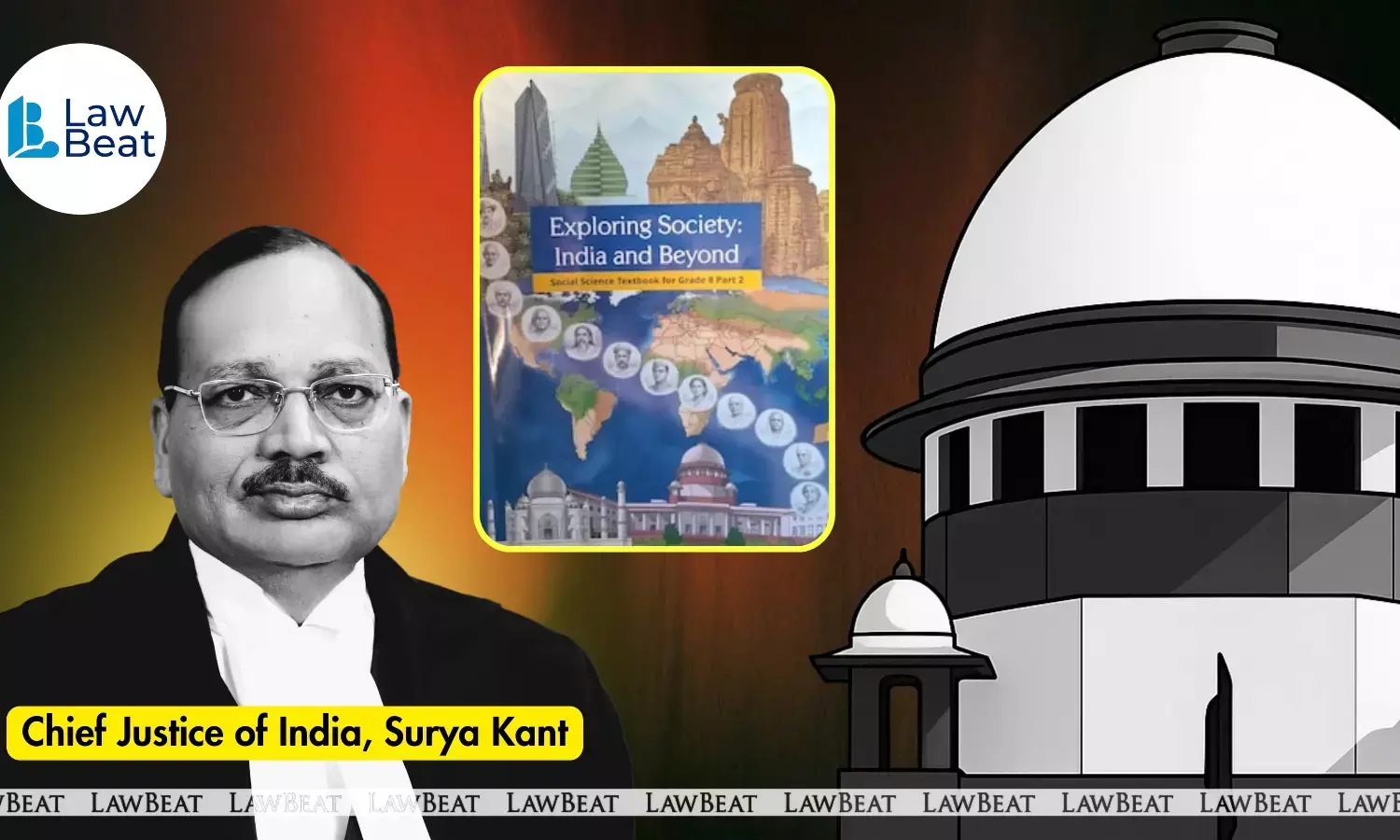
Supreme Court bench led by CJI Surya Kant had registered a suo motu case over the NCERT Class 8 textbook chapter on corruption in judiciary
The Supreme Court on Thursday initiated contempt proceedings in connection with an NCERT Class 8 Social Science textbook containing a chapter on “corruption in judiciary”. Taking suo motu cognisance of the contents, the Court issued show cause notices to senior education officials and ordered an immediate nationwide withdrawal of the book from all physical and digital platforms.
The bench of Chief Justice of India Surya Kant, along with Justice J. Bagchi and Justice Vipul M. Pancholi, directed immediate withdrawal of all physical and digital copies of the book Exploring Society: India and Beyond, First Edition (Part II).
The Court also issued show cause notices to the Secretary, Department of School Education, and to Dr. Dinesh Prasad, asking why action under the Contempt of Courts Act or any other applicable law should not be initiated against them or those responsible for the “offending chapters”.
Expressing strong disapproval in open court, the CJI observed that the framers of the Constitution crafted its provisions with precision to ensure that the three pillars of democracy function with autonomy within the democratic fabric. While acknowledging the constitutionally prescribed demarcation of powers, the Bench said it was “in shock” upon seeing reports about the textbook’s contents.
The Court noted that the chapter incorporates a sub-topic explicitly expounding “corruption in judiciary” and held that inclusion of such subject matter in a foundational academic text warrants rigorous examination in view of the institutional standing of the judiciary. The Bench said it was reluctant to reproduce the contents but observed that the text refers to hundreds of complaints against the judiciary in a manner suggesting no action was taken and selectively extracts portions of a former CJI’s statement, creating an impression that the judiciary itself has acknowledged institutional corruption.
Prima facie, the Court recorded that the material appears to be a calculated move to undermine and demean the dignity of the judiciary. If left unchecked, it would erode the sanctity of judicial office in public estimation. The Bench further observed that while the chapter discusses the role of the judiciary, it omits the substantial contributions of the Supreme Court and High Courts towards preserving the democratic fabric, including initiatives in legal aid and access to justice.
The Court clarified that it does not intend to stifle legitimate criticism or scrutiny of institutions and reiterated that dissent and rigorous public discourse are vital to a living democracy. However, it underscored that students in their formative years cannot be exposed to a biased narrative that may engender lasting misconceptions. The book, the Court noted, inevitably travels beyond classrooms to parents and the broader public.
Observing that such misconduct, if deliberate, could fall within the ambit of criminal contempt for interfering with the administration of justice and scandalising the institution, the Bench questioned whether the apology issued by NCERT through a press release was genuine or merely an attempt to avoid consequences after irreversible damage.
The Court directed NCERT, in coordination with Union and State education authorities, to ensure immediate removal of all copies from retail outlets, schools and digital platforms. The Director, NCERT, has been made responsible for seizure of distributed copies and filing a compliance report. Principal Secretaries of Education Departments across States have been directed to file compliance reports within two weeks.
The Court imposed a complete ban on further production and circulation of the book, warning that any attempt to distribute it would amount to wilful breach of its order. It also directed the NCERT Director to furnish the names and credentials of members of the National Syllabi Board involved in drafting the chapter and to produce original minutes of the meetings in which it was deliberated and finalised.
Solicitor General Tushar Mehta submitted that an unconditional apology would also be published and stated that the Centre was not taking an adversarial stand.
The matter is scheduled for further hearing on March 11.
Case Title: In Re: Social Science Textbook for Grade 8 Part2 Published by NCERT and Ancillary Issues
Bench: CJI Surya Kant, Justices Joymalya Bagchi and Vipul M. Pancholi
Hearing Date: February 26, 2026