
Karthigai Deepam Row: DMK government to approach Supreme Court
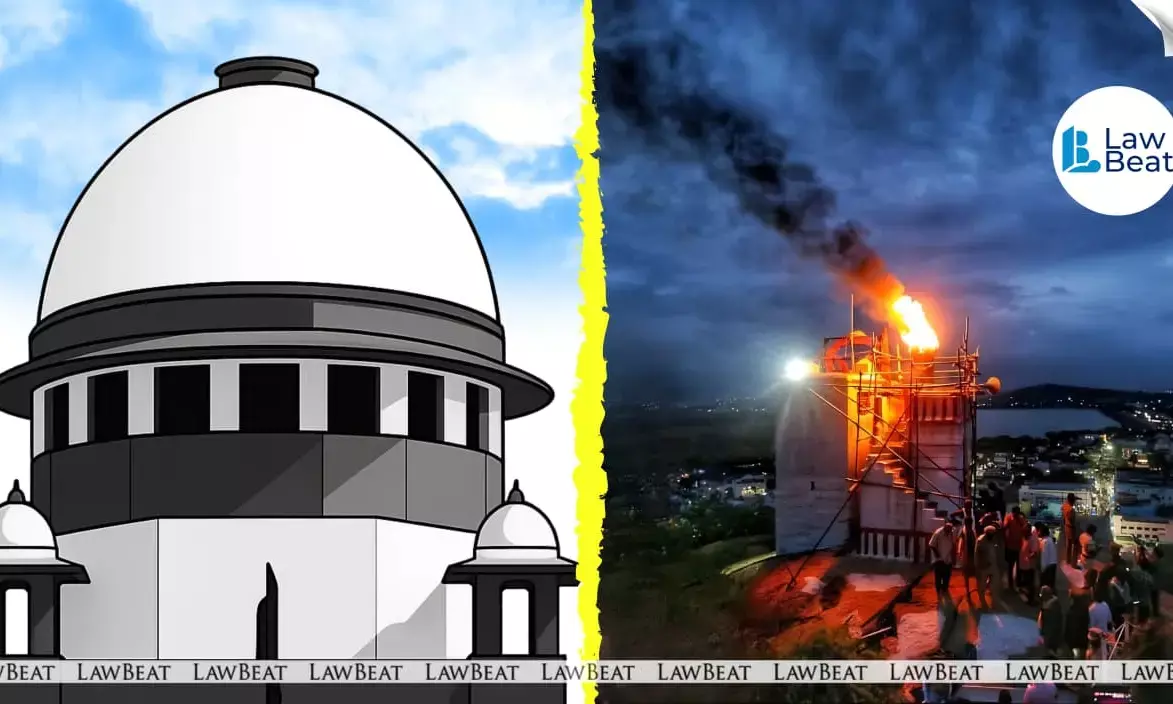
The Supreme Court dismissed the plea, making it clear that the refusal was without expressing any opinion on the merits of the broader issues raised
Reportedly, Tamil Nadu Minister for Natural Resources S. Regupathy, has said the State government will prefer an appeal in the Supreme Court challenging the orders passed by the Madras High Court allowing the lighting of a lamp at a stone pillar near a dargah on the Thirupparankundram hill.
Notably on 6th January 2026, a division bench of the Madras High Court upheld a single judge’s order directing that the Karthigai Deepam ceremonial lamp be lit at the stone pillar known as Deepathoon atop the Thiruparankundram hills in Madurai, rejecting appeals by the State of Tamil Nadu and other parties challenging that direction.
The bench, comprising Justices G. Jayachandran and K.K. Ramakrishnan, while pronouncing its judgment, held that the December 1 single judge order was neither barred by res judicata nor unsustainable in law, and dismissed the batch of appeals arising from it.
The issue arose from a writ petition filed by Rama Ravikumar and others seeking enforcement of lighting the sacred Deepam at the ancient stone pillar on Thiruparankundram hill during the annual Karthigai Deepam festival. On December 1, a single judge of the high court directed the management of the Arulmigu Subramaniya Swamy Temple to light the Deepam at the Deepathoon in addition to the traditional site near the Uchi Pillaiyar Mandapam. The judge observed that the temple authority could not deny devotees’ plea without reasonable basis, and that facilitating the ritual did not infringe the rights of any other community.
The State, joined by the temple management and the Hazarath Sultan Sikkandar Badhusha Avuliya Dargah at Thiruparankundram, filed appeals contending that there was no material on record to establish that the pillar was ever used as a Deepathoon or that there existed a customary right to light the Deepam there. The Advocate General argued before the division bench that neither historical evidence nor temple records supported the assertion of the pillar’s ritual use, and that the single judge had exceeded judicial bounds by effectively creating a new practice without proper foundation.
The appellants also raised concerns over public order, alleging that lighting the lamp at the hilltop, which lies close to the dargah, could foment communal tensions. Counsel for the dargah had earlier urged the bench to note procedural flaws in the way the single judge entertained the petition, arguing that affected parties had not been heard adequately. In its decision, the division bench addressed these contentions, holding that the issue of res judicata did not apply because earlier litigations had not decided the specific question of lighting Deepam at the Deepathoon. Court further observed that the appellants had failed to produce compelling evidence to displace the finding that the practice could be recognised for the limited purpose of the writ petition.
The bench also underscored that concerns about public order or communal harmony, in the absence of concrete incidents, could not outweigh the exercise of fundamental religious rights, and that the petitioners’ prayer fell within the high court’s jurisdiction under Article 226 of the Constitution.