
Passive Euthanasia Case: Supreme Court Reserves Judgment in Harish Rana Matter
Supreme Court of India backs exam authorities and validates SSC CGL 2023 answer key
The Supreme Court on Thursday reserved its judgment on a plea seeking permission for passive euthanasia for Harish Rana, a man who has remained in a permanent vegetative state for over 13 years following a traumatic brain injury.
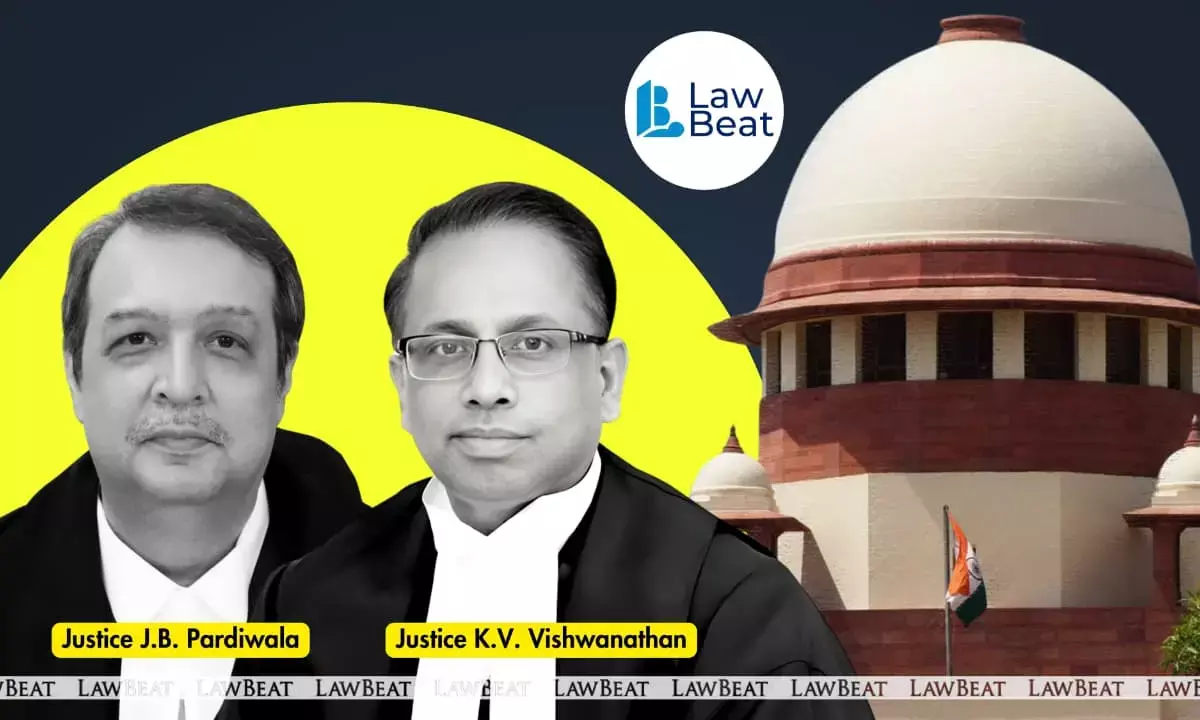
The Bench of Justices J.B. Pardiwala and K.V. Viswanathan heard detailed submissions in a case that once again brings to the fore the ethical, legal and constitutional questions surrounding end-of-life decisions.
Appearing for the petitioner, Advocate Rashmi Nandakumar told the Court that Harish Rana was in his late teens when he fell from the fourth floor of an apartment building in Chandigarh, suffering severe and irreversible brain damage. Since then, she said, he has been in an incurable vegetative state with “100 percent mental retardation,” dependent entirely on clinically assisted nutrition and hydration for survival.
Nandakumar informed the Bench that medical experts had opined that Rana suffers from non-progressive, irreversible brain damage following severe traumatic brain injury with diffuse axonal injury. According to the medical board’s assessment placed on record, Rana fulfils all criteria of a permanent vegetative state and has remained in that condition continuously for the past 13 years.
She argued that the continued administration of clinically assisted nutrition and hydration amounts to mechanical life support and squarely falls within the scope of life-sustaining treatment. Explaining the concept of passive euthanasia, Nandakumar submitted that it involves withholding or withdrawing medical treatment necessary to prolong life, including removing a patient from life-sustaining support.
The Union of India was represented by Additional Solicitor General Aishwarya Bhati, who told the Court that the Centre was assisting the Bench as directed. Bhati submitted that the government had undertaken comprehensive research into the issue and found that the Supreme Court’s landmark directions in Common Cause v. Union of India on passive euthanasia had seen little to no effective implementation on the ground.
Addressing the facts of the present case, the ASG said that Harish Rana was in a state of complete inertness. She informed the Court that his eyes do not track movement, he does not respond to fear stimuli or objects brought close to his eyes, and there has been no meaningful neurological improvement. According to Bhati, these aspects demonstrated a profound and irreversible loss of cognitive and sensory function.
After hearing both sides, the Bench noted that detailed written submissions along with relevant case laws had been filed by the petitioner as well as the Union of India. Recording that arguments were complete, the Court reserved its judgment.
Justice Pardiwala, while thanking both counsel for their assistance, made a poignant observation on the nature of the issue before the Court. “These are very delicate issues,” he remarked, adding that judges too are mortals and often grapple with the question of who they are to decide matters concerning another person’s life.
Notably, on December 18, 2025, the Court had said it wished to personally meet the parents of a 31-year-old man who has remained in a comatose state for over 12 years. The man suffered severe head injuries after falling from the fourth floor of a building in 2013 and has since been dependent on an artificial life support system. The Bench had examined a medical report submitted by a secondary medical board from the All India Institute of Medical Sciences (AIIMS), detailing the patient’s condition and treatment history. Describing the report as “sad”, the Bench had observed, “We cannot keep this boy in this stage.”
Previously, the Court had directed AIIMS, New Delhi, to constitute a Secondary Medical Board to evaluate whether life-sustaining treatment may be withdrawn for Harish Rana. The Court had acted after a team of medical experts reported that his chances of recovery were “negligible”.
Case Title: Harish Rana v. Union of India & Ors.
Bench: Justices JB Pardiwala and KV Viswanathan
Hearing Date: January 15, 2026