
Rajya Sabha Secretary General criticizes Oppositions’ move to remove Justice Yashwant Varma
Mody has said that while the notice, signed by 63 Rajya Sabha MPs, met the numerical threshold under Section 3(1)(b) of the 1968 Act, it suffered from “multiple discrepancies” that strike at the root of its admissibility.
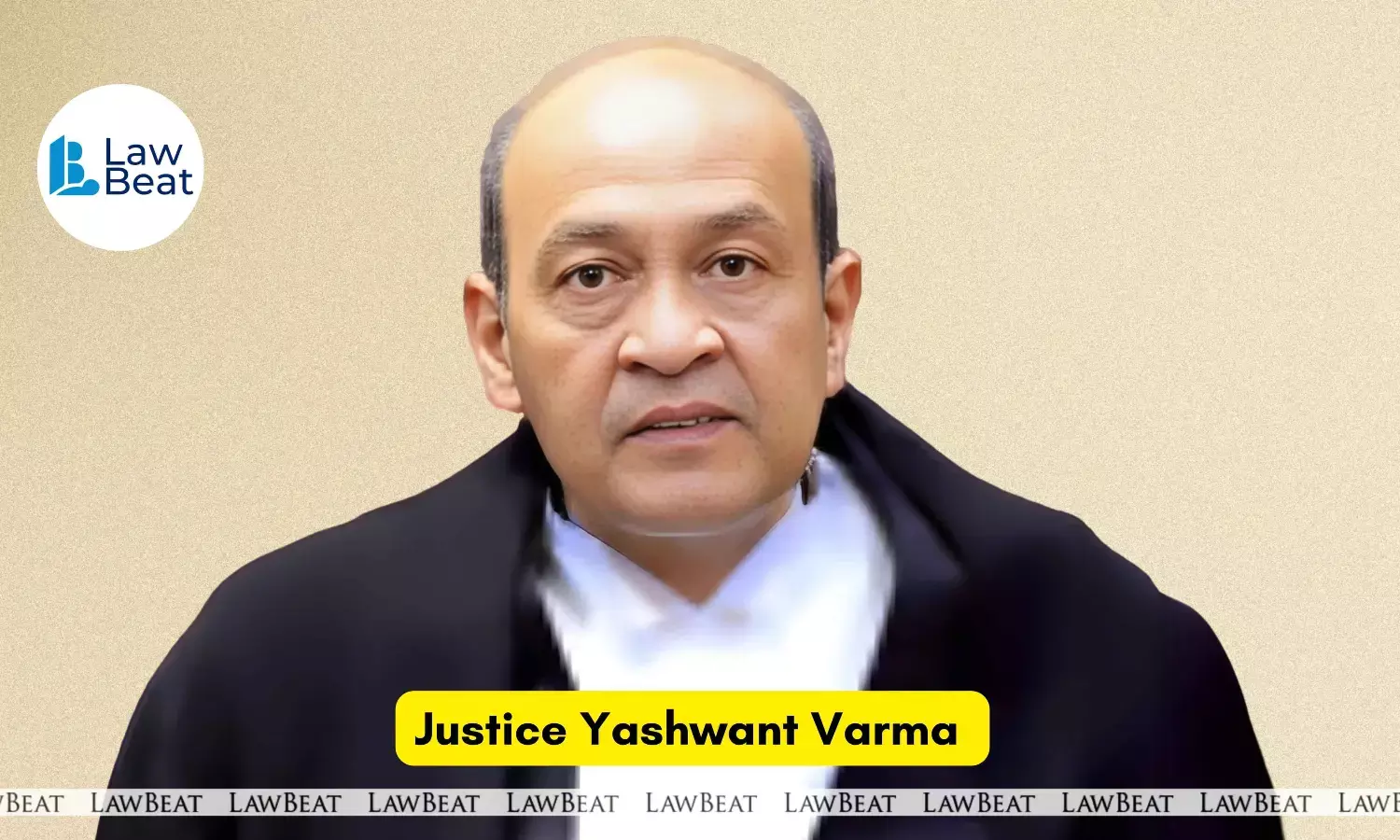
The Secretary General of the Rajya Sabha, PC Mody, has reportedly criticised the Opposition MPs’ notice for removal of Allahabad high court judge, Justice Yashwant Varma, over the alleged recovery of unaccounted cash from his official residence.
The official has said the notice displays a “casual and cavalier approach” to an “extremely serious matter”. Mody has flagged multiple legal, procedural and factual infirmities that rendered the motion “not in order” and “non est” (does not exist).
Said observations were made in a detailed opinion dated August 11, 2025, submitted by Mody to Rajya Sabha deputy chairperson, followed by a formal communication the same day to Lok Sabha secretary general Utpal Kumar Singh, informing him that the motion moved in the Upper House had not been admitted.
Notably on January 8, the Supreme Court has reserved its judgment on a writ petition filed by Justice Yashwant Varma challenging the legality of the Parliamentary Committee constituted under the Judges (Inquiry) Act, 1968, to probe the alleged recovery of unaccounted cash from his official residence. The Bench of Justices Dipankar Datta and Satish Chandra Sharma continued hearing the matter a day after being informed that the impeachment motion against Justice Varma had been rejected by the Deputy Chairman of the Rajya Sabha.
Senior Advocate Sidharth Luthra, appearing for Justice Varma, argued that two identical motions based on the same facts and allegations were initiated simultaneously in the Lok Sabha and the Rajya Sabha, raising a serious constitutional question on whether co-equal Houses of Parliament could allow such proceedings to meet different fates.
Senior Advocate Mukul Rohatgi, also representing Justice Varma, argued that Article 91, which deals with the powers of the Deputy Chairman, had no application to impeachment proceedings. He maintained that the removal of a judge was a “special business” under Article 124(5), distinct from the normal functioning of Parliament. Rohatgi warned that permitting the Deputy Chairman to act could lead to conflicts of interest, especially if the Deputy Chairman or a person appointed to preside over the House happened to be a signatory to the impeachment motion.
Responding for the two houses of parliament, Solicitor General Tushar Mehta defended the process, submitting that the Judges (Inquiry) Act aimed to avoid anomalous situations such as multiple committees examining the same allegations. He argued that the proviso to the Act did not confer any vested right on the judge concerned and that admission of a motion was not automatic. According to Mehta, the Speaker or Chairman was required to apply their mind after examining the available material. Mehta warned that excluding the Deputy Chairman from exercising powers in the Chairman’s absence would render the statutory scheme unworkable and defeat the object of the Act. He emphasised that the law sought to balance judicial independence with parliamentary accountability, and any interpretation that crippled the mechanism for inquiry had to be avoided.
It is Justice Varma's case that while both motions satisfied the statutory requirement of being signed by the requisite number of Members of Parliament, only the Lok Sabha motion was admitted. On August 12, 2025, the Speaker of the Lok Sabha admitted the motion and proceeded to constitute a three-member inquiry committee. The motion in the Rajya Sabha, however, was never admitted.
Justice Varma has approached the Apex Court under Article 32 of the Constitution, through AoR Vaibhav Niti assailing the action of the Speaker of the Lok Sabha in unilaterally constituting a three-member committee under Section 3(2) of the Judges (Inquiry) Act, 1968, to inquire into the grounds on which his removal as a High Court judge has been sought.
It has further been contended that under the first proviso to Section 3(2) of the Judges (Inquiry) Act, when motions are presented in both Houses on the same day, neither presiding officer can act unilaterally. A committee, he argues, can be constituted only if both motions are admitted and only through joint consultation between the Speaker and the Chairman.
The unilateral constitution of the committee, the petition claims, is therefore contrary to the statute and violative of Article 14 of the Constitution. The petition also challenges the subsequent steps taken by the inquiry committee. A notice dated November 26, 2025, issued by the committee, required Justice Varma to file his written statement of defence and appear before it. A later communication dated December 6, 2025, directed him to submit his defence by January 12, 2026, and to appear before the committee on January 24, 2026.