
Supreme Court Allows Meeran Haider To Mark Police Attendance Only On Saturdays; Grants 2-Week Exemption For Marriage
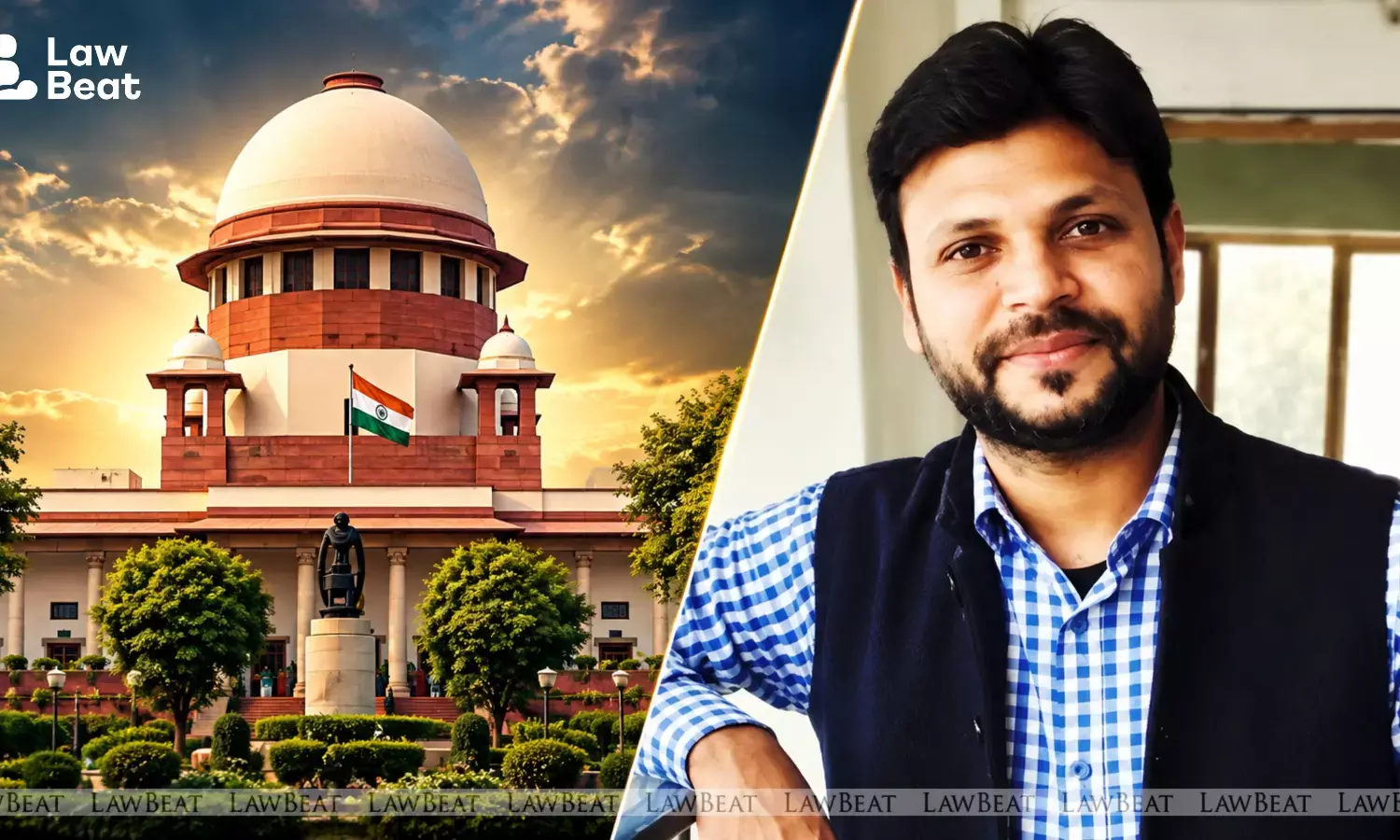
Supreme Court allows Meeran Haider to mark police attendance only on Saturdays and grants two-week exemption in view of his marriage
The Supreme Court on Friday modified the bail conditions of 2020 Delhi Riots accused Meeran Haider, allowing him to mark his attendance at the police station only on Saturdays and granting him exemption from attendance for two weeks in view of his upcoming marriage.
The Bench comprising Justices Aravind Kumar and Vipul M. Pancholi passed the order on Haider’s plea seeking relaxation of the bail conditions imposed on him.
Senior Advocate Siddharth Agarwal appeared for Haider.
During the hearing, Agarwal sought modification of the condition requiring Haider to mark his attendance twice a week. He submitted that the process takes around two to three hours and makes it difficult for Haider to seek employment. “I am only requesting that it be once a week… preferably on a Saturday,” Agarwal submitted.
The Bench asked why Haider could not mark his attendance on Friday.
Agarwal responded that Monday to Friday were working days as Haider was seeking employment.
The Bench also questioned Haider’s submission that he intended to pursue a PhD while simultaneously seeking employment. Agarwal further sought modification of conditions restricting Haider’s participation in gatherings, programmes and related activities.
He clarified that Haider was not seeking any relaxation of the condition prohibiting him from publishing or disseminating information concerning the case or its participants. Agarwal submitted that the other restrictions should be dovetailed with the condition relating to publication and dissemination of information, arguing that the restrictions had become overlapping and should be narrowed.
The Court, however, did not find grounds to modify the remaining bail conditions, observing: “We do not find any good ground to entertain the prayer in respect of the remaining conditions.”
The Bench had indicated that Condition No. 5 required “slight tweaking” and subsequently passed an order allowing the application to the extent that Haider would be required to mark his attendance at the police station only on Saturdays.
The Court also took note of the petitioner being stated to be getting married and exempted him from marking his attendance for a period of two weeks.
During the hearing, Haider’s counsel had submitted that Haider had a six-day trial and that the seventh day was his marriage.
The Supreme Court’s order therefore provides a limited relaxation of the attendance requirement while leaving the remaining bail conditions unchanged.
Haider is an accused in the larger conspiracy case arising from the 2020 Delhi riots.
Background
Case Title: Meeran Haider v. State Govt of NCT of Delhi
Bench: Justices Aravind Kumar and Vipul M. Pancholi
Hearing Date: September 25, 2026