
Supreme Court On Mamata Banerjee’s Appearance Before It: "Not unheard of, shows faith in Constitution"
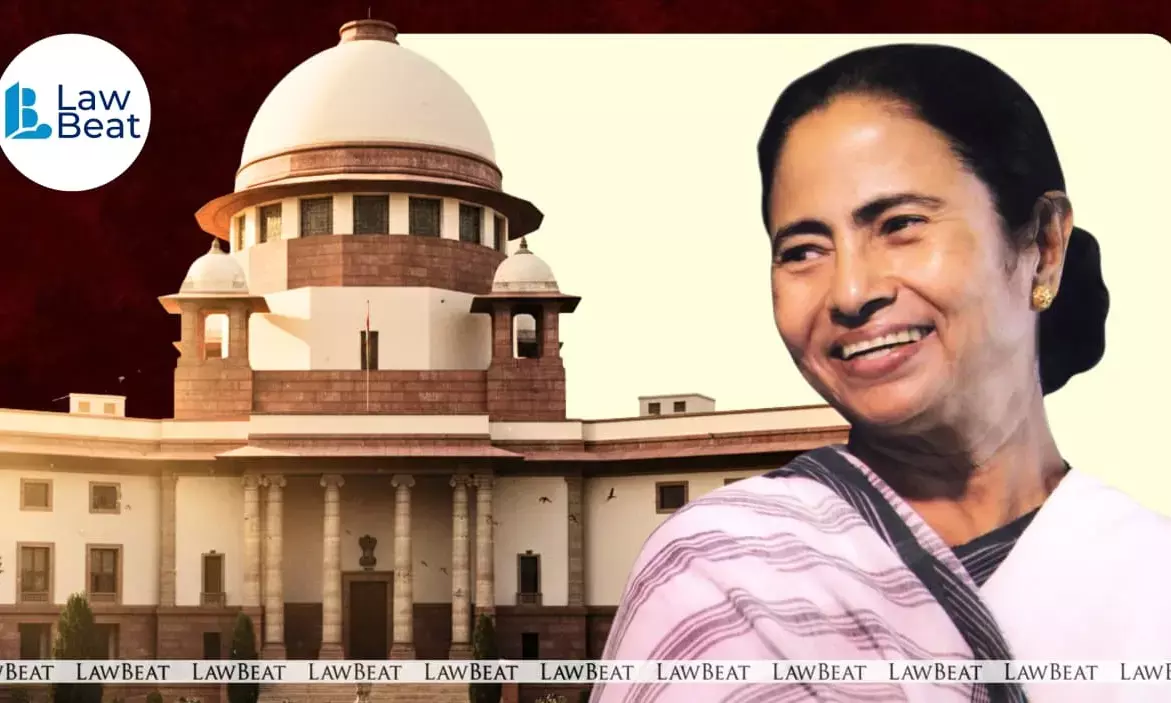
Mamata Banerjee, Supreme Court of India (Representative Image)
The Supreme Court today refused an application challenging the personal appearance of West Bengal Chief Minister Mamata Banerjee in proceedings related to the Special Intensive Revision (SIR) of electoral rolls in the state, terming it “constitutionally improper” and “legally untenable”.
"What is unheard in it? This shows trust and faith in the Constitution," the CJI led bench told the counsel for Akhil Bharat Hindu Mahasabha.
The application was filed by Satish Kumar Aggarwal, former vice president of the Akhil Bharat Hindu Mahasabha, seeking intervention in the writ petition instituted by Banerjee against the ongoing SIR exercise in West Bengal.
On February 4, Banerjee became the first serving chief minister to personally address the Supreme Court while arguing her petition. Banerjee, in her submissions had alleged that the SIR was not an addition exercise but effectively a deletion exercise. She submitted that people often change residences due to marriage or employment, and women frequently change their names after marriage, which can cause a mismatch in identity document details. Moreover, the Chief Minister had accused the ECI of targeting opposition-ruled states, including West Bengal, on the eve of elections.
She had also contended that a process that should have taken two years was being compressed into three months, claiming that over 100 booth-level officers had died during the exercise. Banerjee had further alleged that documents such as domicile certificates were not being accepted and that micro observers, who are appointed by the ECI, were being given the authority to delete names without any hearing to the aggrieved person. Interjecting, the Chief Justice said the court understood that Banerjee was aggrieved but assured her that counsel appearing in the connected petitions were placing the issues before the court exhaustively.
In his intervention application, Aggarwal contended that the subject matter of Banerjee’s writ petition does not involve a personal or private grievance but raises issues of state governance and the constitutional exercise of powers by the Election Commission of India in conducting electoral roll revisions.
“The subject matter of the aforesaid writ petition filed by the petitioner is not a personal or private dispute, but concerns matters of state governance and the constitutional exercise of powers by the Election Commission of India,” the application stated. According to the applicant, the issues raised in the petition directly implicate the institutional functioning of the state of West Bengal and its constitutional relationship with the Election Commission. In such circumstances, it was argued, Banerjee could not claim to appear before the court in her personal capacity.
The application asserted that any representation in a matter of this nature must necessarily be through duly appointed advocates representing the state of West Bengal. It further pointed out that the state is already adequately represented through its appointed counsel in the proceedings.
Describing the February 4 appearance as problematic, the applicant submitted that the personal participation of a sitting chief minister in court proceedings where professional legal representation is already in place is “constitutionally improper, institutionally undesirable, and legally untenable”.
A bench led by Chief Justice Surya Kant is presently hearing a batch of petitions concerning the SIR process in West Bengal, including Banerjee’s plea.
Case Title: Mamata Banerjee v. Election Commission of India
Bench: CJI Surya Kant, Justices Joymalya Bagchi and NV Anjaria
Hearing Date: February 9, 2026