
Supreme Court Questions Plea Challenging Deletion of Names From West Bengal Electoral Roll
Supreme Court of India heard a PIL seeking directions to include the Denotified Nomadic Tribes (DNTs) as a distinct category in the upcoming national Census.
The Supreme Court today expressed its apprehensions over entertaining petitions filed by voters from West Bengal whose names have been deleted from the Electoral Rolls.
As a mentioning was made before a CJI Surya Kant led bench, Senior Advocate Menaka Guruswamy said, "We have been deleted from electoral rolls..they had voted earlier..". To this CJI replied, "We cannot sit in appeal over the decision of judicial officers..".
Agreeing to Guruswamy's submission that an appeal does lie as per provisions of the Section 22 and 23 of The Representation Of The People Act, 1950, court agreed to hear the issue tomorrow. "Anything left to hear other than West Bengal", CJI Kant observed.
Notably, the Supreme Court has maintained that the West Bengal government should not make excuses to stall the ongoing Special Intensive Revision of electoral rolls. Court had made these observations when last month a mentioning was made by Senior Advocate Kapil Sibal who had submitted, "Judicial officers have been given a training module on what to refer and what not to refer. This court stated chief justice of high court will decide modalities...", referring to the Election Commissions' training module for judicial officers who have been engaged in the SIR process.
"Please do not make small excuses to stall the process. This has to end... Let judicial officers work. They will work independently..", CJI Kant had responded then too.
Recently, Supreme Court had also modified its earlier order dated February 24, 2026, in the matter concerning the Special Intensive Revision (SIR) of electoral rolls in West Bengal, issuing fresh directions regarding submission and verification of documents. Clarifying its previous directions, the Bench led by Chief Justice of India Surya Kant directed that all documents referred to in paragraph 3(III) of the February 24 order must be submitted by the Electoral Registration Officers (EROs) to the concerned presiding judicial officers.
It is to be noted that on February 24, the court had permitted the deployment of judicial officers from Jharkhand and Odisha for adjudicating claims and objections arising out of the SIR of electoral rolls in West Bengal, citing an acute shortage of judges in the State. It had also expanded the pool of eligible officers, allowing Civil Judges (Senior Division and Junior Division) with at least three years’ experience to undertake the SIR work, in addition to District Judges and Additional District Judges.
The directions came after the Chief Justice of the Calcutta High Court informed the Court that nearly 50 lakh cases of “logical discrepancy/unmapped categories” were pending, with only 250 judicial officers available, making it practically impossible to complete the exercise within the stipulated timeframe.
Court had clarified that if further manpower is required, the Chief Justice of the Calcutta High Court may approach the Chief Justices of the Jharkhand and Orissa High Courts for deputation of serving or retired judicial officers of similar rank, with travel, honorarium and related expenses to be borne by the Election Commission of India (ECI). Addressing concerns about language barriers, the bench observed that parts of Jharkhand and Odisha were historically part of Bengal. The Court further directed that all documents submitted, electronically or physically, on or before the cut-off date of February 14, 2026, including those recognised by earlier Supreme Court orders such as Aadhaar cards and Maadhyamik certificates, must be considered, with the responsibility resting on EROs/AEROs to satisfy the judicial officers.
Earlier, on February 20, the court had directed for judicial officers to assist in the ongoing Special Intensive Revision of Electoral Rolls in West Bengal. Court reiterated that the SIR process should go on smoothly without any hindrances.
Court had recently sent a strong signal backing the Election Commission of India’s Special Intensive Revision (SIR) of electoral rolls in West Bengal, while firmly cautioning the state government against any obstruction in the process. CJI Surya Kant had then made it clear that the court would not permit impediments to the SIR exercise, which is currently underway in the state ahead of the 2026 Assembly elections. “Whatever orders or clarifications are required, we will issue. But we will not allow any impediment to the SIR process. This must be understood,” the Chief Justice had said.
The observations came while the court was hearing a batch of petitions challenging the SIR process in West Bengal, including a petition filed by Chief Minister Mamata Banerjee. The state government has questioned the manner in which the voter roll revision is being carried out, raising concerns over potential deletions and the deployment of micro-observers. The bench had asked the West Bengal government to extend full cooperation to the Election Commission and questioned delays in providing manpower requested by the poll body. The court specifically flagged the timing and manner in which the state had communicated the availability of officers for the exercise, indicating dissatisfaction with the response.
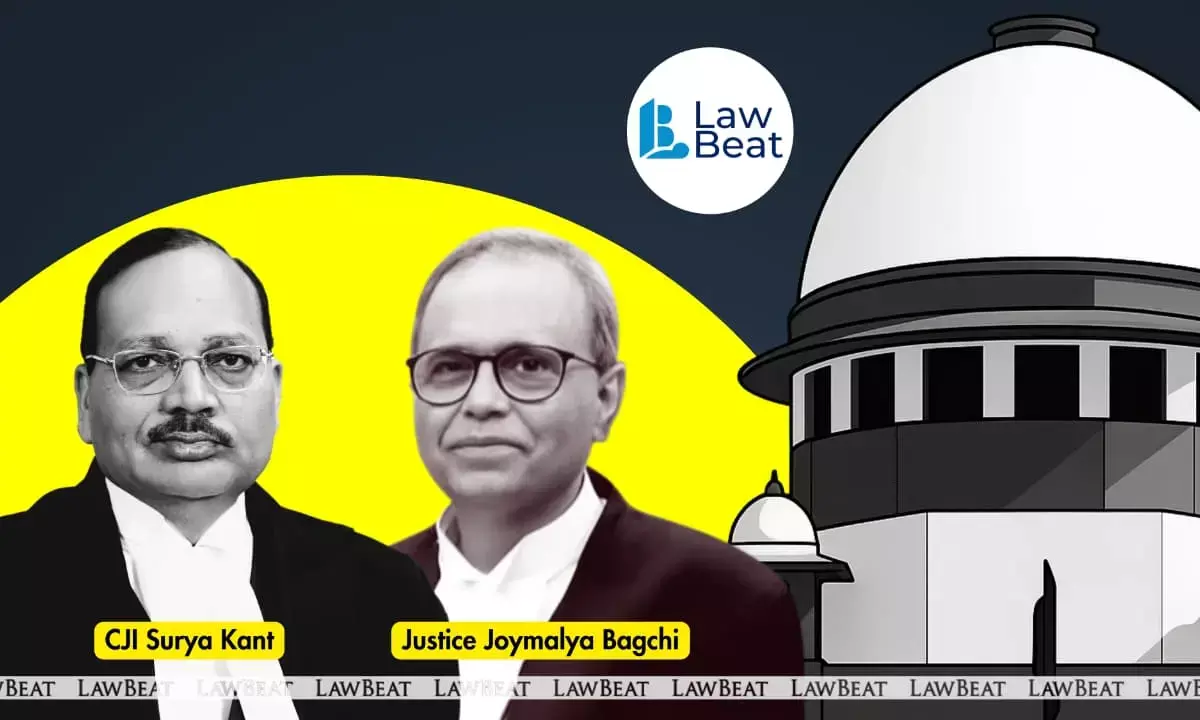
Bench: Chief Justice of India Surya Kant, Justice Joymalya Bagchi
Mentioning Date: March 9, 2026