
Supreme Court Stresses On Men's Role In Menstrual Hygiene Awareness
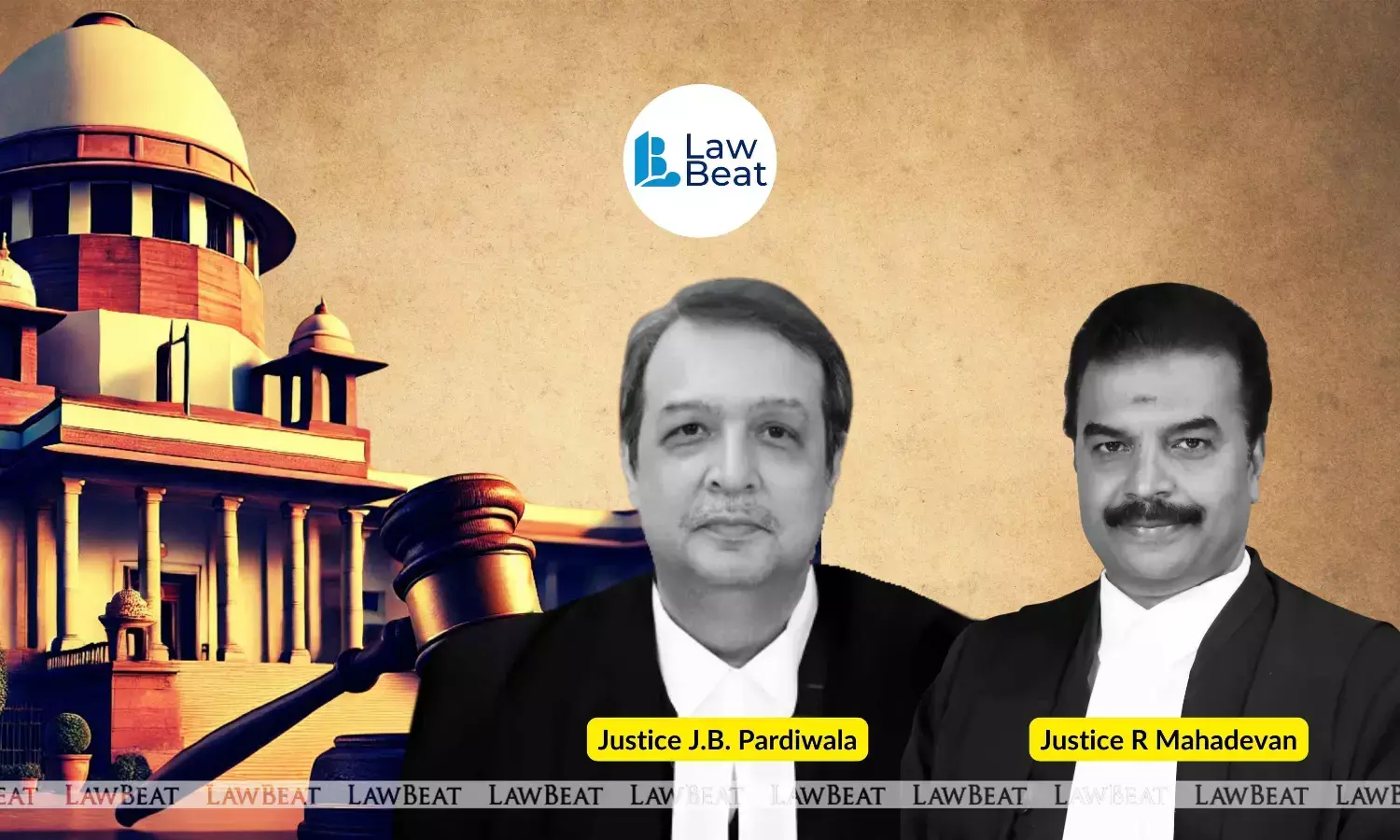
Supreme Court directed strict compliance with its order on providing free sanitary napkins and functional gender-segregated toilets in schools across India
The Supreme Court of India has stressed on men having multifaceted role in menstrual hygiene and awareness for school-going adolescent girls. A bench of Justices JB Pardiwala and R Mahadevan has said that male teachers can integrate accurate, stigma-free information into lessons while at the same time, the male staff in a school would be responsive towards maintaining cleanliness and hygiene in toilets. Peers and classmates would be empathetic and helpful, the court has added.
"Time is over ripe that we recognize menstrual health as a shared responsibility rather than a woman’s issue. Awareness must not be limited to girls, but extends to boys, parents, and teachers. When menstruation is discussed openly in schools, it ceases to be a source of shame. It is recognized as what it is, a biological fact. Needless to say, it must be seen as a collective effort rather than a constitutional pull", the bench has said while noting that menstrual hygiene is far more than an infrastructural problem.
These remarks have been made by court while delivering its judgment on the pan-India implementation of the Centre’s Menstrual Hygiene Policy for school-going girls in government and government-aided schools, with the bench indicating that menstrual health lies at the intersection of dignity, privacy, equality and the right to education.
The absence of menstrual hygiene facilities in schools is not the only barrier that impedes education but rather it is only half the problem the top court has noted. It has thus said that we must also acknowledge the grim reality that the implementation of these laws faces several challenges arising from deep-rooted attitudes and norms which our society is unwilling to break away from.
"A school may have adequate facilities for menstrual hygiene, but an unsupportive, rather hostile and stigmatized environment would render them of no use. The environment at school is not a monolith of females, it consists of young boys, male teachers, and male staff. Until the whole ecosystem is sterilized of the stigma associated with menstruation, the infrastructural efforts would remain underutilized. Menstruation should not be a topic that is only shared in hushed whispers. It is crucial that boys are educated about the biological reality of menstruation. A male student, unsensitized towards the issue, may harass a menstruating girl child which may discourage her from attending school", the top court has observed.
Supreme Court has placed menstrual hygiene within the dignity framework under Article 21, observing that dignity manifests in conditions that allow individuals to live without humiliation, exclusion or avoidable suffering. It has inked menstrual hygiene infrastructure directly with privacy, holding that the right to privacy is not merely a negative obligation on the State to avoid interference but also imposes a positive duty to create enabling conditions.
Court has also indicated that the right to life includes the right to menstrual health, recognising access to safe, effective and affordable menstrual hygiene management measures as essential for achieving the highest attainable standard of sexual and reproductive health.
On December 10, 2025, the Bench had reserved its judgment on the implementation of the Union Government’s national Menstrual Hygiene Policy for School-going Girls, which aims to ensure access to menstrual hygiene facilities and products for adolescent girls studying in Classes 6 to 12 in government and government-aided schools across India. The Bench had reserved the matter after hearing submissions from the Union Government on the proposed implementation framework and monitoring mechanisms.
The case before Supreme Court arose from a public interest litigation seeking uniform access to menstrual hygiene facilities, including free sanitary napkins and proper sanitation infrastructure in schools nationwide. The litigation traces its origin to earlier directions issued by the Supreme Court in 2022 and 2023. In November 2022, the court had issued notice to the Union Government, States and Union Territories on a plea seeking free sanitary napkins and adequate sanitation infrastructure for school-going girls. Subsequently, in April 2023, the court directed the Union to formulate a uniform national policy addressing menstrual hygiene for school students.
Case Title: Dr. Jaya Thakur vs. Government of India & Ors.
Bench: Justices J.B. Pardiwala and R. Mahadevan
Pronouncement Date: January 30, 2026